
How level 1 tech support resolves customer issues


What is level one tech support and what does it do?
Level one tech support is the first point of contact for customers with tech problems, and it handles basic troubleshooting before escalating complex issues to higher teams.
- Agents fix common issues like password resets and network glitches.
- They gather details, follow set steps, and log each case.
- They escalate hard problems to level 2 or level 3 teams.
Tech glitches and software hiccups are part of daily life. Often, they hit us when we least expect it. So picture this: you are finishing an important project when an error message pops up.
In moments like these, level one tech support agents come to the rescue. Whether it is a forgotten password or a network issue, they are the first responders in IT support. Below, we look at how level 1 tech support manages and resolves customer issues.
What is level 1 tech support?
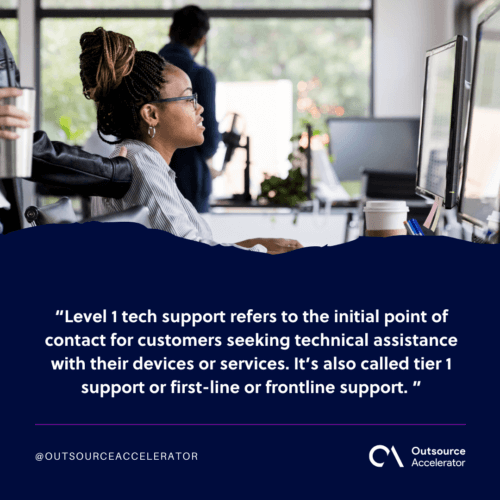
Level 1 tech support is the first point of contact for customers who need help with a device or service. People also call it tier 1 support, first-line, or frontline support.
These agents handle basic troubleshooting and common issues. They also share general information. In short, their main role is to gather details, give step-by-step guidance, and escalate harder problems to higher teams.
Level 1 tech support aims to create a positive customer experience. As a result, it keeps the smooth operation of technical services running. It also fits within the wider IT support levels that structure most teams.
Steps in the level one tech support process
A clear process makes level 1 tech support work better. So it helps agents troubleshoot and resolve common issues fast. The process usually includes these steps.
1. Initial customer contact – A customer reaches out to report an issue or ask for help. First, the agent greets them and verifies their identity. Often, they use account details or a ticket number.
2. Issue identification and documentation – Next, the agent listens closely to the problem. If needed, they ask clarifying questions. Then they log the details in a ticketing system.
3. Troubleshooting and diagnostic steps – After that, the agent guides the customer through first fixes. For example, they may use set scripts or standard steps.
4. Problem resolution or escalation – The agent then checks if the issue is fixed. If not, they escalate it to a higher team with all the needed details.
5. Follow-up and closure – Once the issue is resolved, the agent may follow up. This confirms the fix worked and the user is happy. Finally, they close the ticket with proper notes.
6. Knowledge base updates – Any new fixes found during the case are added to the knowledge base. As a result, future cases get solved faster.
Common customer issues resolved by level 1 tech support
Level 1 tech support works at the first stage of issue resolution. So it keeps the user experience smooth. Here are the most common concerns these agents handle.
Basic hardware and software troubleshooting
Many issues come from software or hardware faults. So level 1 agents troubleshoot crashes, slow startups, and software errors. They may also help with routine maintenance tasks.
Password resets and account access
Login problems are a top reason people call support. In fact, per Entrust’s Future of Identity Report, 51% of 1,450 respondents said they frequently resetting their passwords because they forget them.
So level 1 tech support verifies the user’s identity. Then it guides them through unlocking the account.
Network connectivity issues
Connection problems can block a customer from using a service. As a result, agents help solve common network faults. In turn, users regain access to online services.
Software installations and updates
Customers often need help installing or updating software. So level 1 support walks them through each step. This makes sure installs and updates finish correctly.
Application issues
Users may need help with common apps. For example, this includes Microsoft Office, email clients, and web browsers.
Level 1 support gives guidance on basic use. It also explains configuration settings and answers questions about how an app works.
Email set-up and configuration
Setting up email can confuse many users. So level 1 tech support helps configure email clients. It also troubleshoots delivery issues and manages email settings.
Mobile device support
Statista notes there were 8.58 billion mobile subscriptions, more than the global population. With so many smartphones and tablets, mobile issues are common. So level 1 support helps with app installs, settings, and common device problems.

Peripheral device issues
Problems with printers, scanners, and other devices are common too. So agents help troubleshoot connection faults, driver issues, and errors. As a result, these devices run smoothly again.
System performance
Slow or frozen systems can be frustrating. So level 1 tech support finds and fixes the cause. For example, they clear cache, free up resources, or tune settings.
Offshoring level one tech support with Datamatics
Choosing Datamatics for your level 1 tech support means a partner focused on speed, skill, and great care. Many firms compare providers first, and the clear technical support outsourcing benefits make the case.
The firm uses modern technology and a well-trained team. As a result, your customers get prompt, accurate help. So trust Datamatics to guard your digital setup and keep your customers happy.
Frequently asked questions about level one tech support
What is the difference between level 1 and level 2 tech support?
Level 1 handles basic, common issues and gathers details. Level 2 takes on harder, technical problems that level 1 cannot fix. In short, level 1 escalates to level 2 when needed. This guide on help desk versus technical support explains the split.
What skills does a level one tech support agent need?
They need clear communication and basic troubleshooting skills. Patience and good documentation habits also help. A technical support engineer role builds on these same basics.
Can level one tech support be outsourced?
Yes, many firms outsource it to cut costs and scale fast. Providers offer trained teams and round-the-clock cover. For lighter needs, help desk outsourcing is a common first step.
What issues does level one tech support resolve?
It resolves password resets, network faults, and software installs. It also handles email setup, app questions, and device problems. Harder cases go up to higher teams.
Key takeaways
- Level one tech support is the frontline for basic tech problems.
- Agents follow a clear process, from contact to closure.
- Common fixes include password resets, network issues, and software installs.
- Hard cases get escalated to level 2 or level 3 teams.
- Outsourcing level 1 support can cut costs and improve response times.






 Independent





