
HRA vs. HSA: What’s the difference?


What is the difference between an HRA and an HSA?
An HRA is an employer-funded plan that reimburses medical costs, while an HSA is a personal savings account you own and control.
In short, both help you pay for care and cut taxes. Still, they differ in who owns the money and who funds it. So the right pick depends on your job and health plan.
- An employer owns and funds an HRA.
- You own and fund an HSA yourself.
- An HSA needs a high-deductible health plan.
In general, healthcare can be costly for the average worker. For example, care in the US can run into thousands of dollars per person.
Total healthcare spending in the country topped US$5.3 trillion in 2024. In fact, hospital care alone makes up close to a third of that total.
One way to soften big medical bills is a focused savings or spending account. The health reimbursement arrangement (HRA) and health savings account (HSA) both offer tax perks. Because of this, they help people cover care. However, each has its own features.
This article explores HRA vs. HSA accounts, their pros and cons, and their key differences.
What is an HRA account?
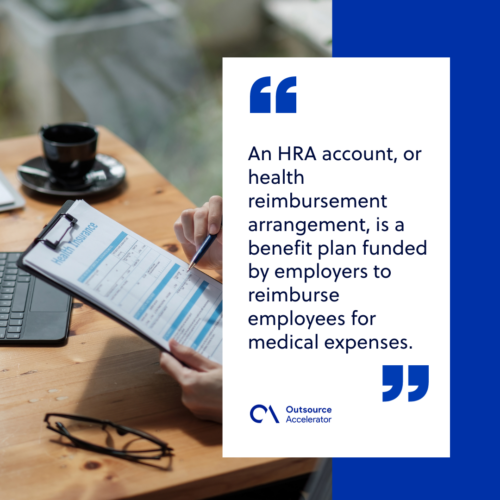
An HRA, or health reimbursement arrangement, is a benefit plan funded by employers. In short, it reimburses staff for medical costs.
With an HRA, the employer sets aside a fixed amount for care. Staff then use it for qualified costs. For example, it can cover doctor visits, prescriptions, and other services. It works much like other non-cash benefits an employer may offer.
Pros and cons of an HRA account
An HRA offers clear benefits and a few drawbacks. Here they are.
Pros of an HRA account
- Tax advantage. For example, the employer’s funds are not counted as taxable income. As a result, staff get a tax break.
- Employer contribution. In addition, staff do not need to fund the account. So it works as a valuable perk.
Cons of an HRA account
- Use-it-or-lose-it. Some HRAs follow a “use-it-or-lose-it” rule. In that case, unused funds may not roll over unless the employer allows it.
- Employer control. The employer usually controls the HRA. So staff who change jobs may lose their remaining funds.
What is an HSA account?
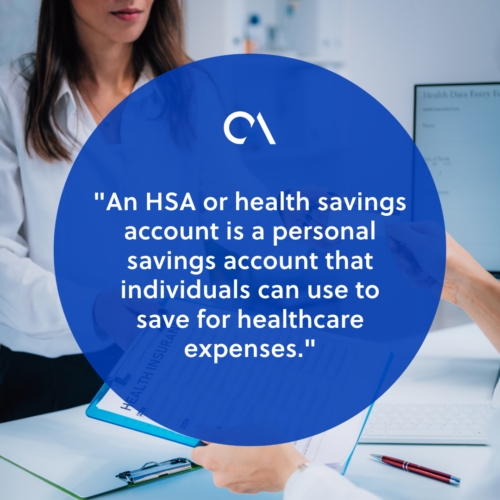
Meanwhile, an HSA, or health savings account, is a personal account for care costs. So it lets individuals save for medical needs.
HSAs are open to staff on a high-deductible health plan (HDHP). With an HSA, you add pre-tax dollars to cover qualified costs. Because you own it, it can suit freelancing and other independent work.
Pros and cons of an HSA account
Here are the main pros and cons of an HSA.
Pros of an HSA account
- Triple tax advantage. HSAs offer three tax perks. Contributions are tax-deductible, the funds grow tax-free, and qualified withdrawals are tax-free too. This can pair well with other tax deductions you may claim.
- Portable and personal ownership. You own the HSA. Self-employed and jobless individuals may open one if they meet the eligibility requirements.
Cons of an HSA account
- Health plan requirement. Besides an HDHP, you must not hold another health plan or Medicare. As a result, this can limit eligibility for some people.
- Contribution limits. For example, HSAs have annual limits you must follow. Also, non-medical withdrawals may face taxes and penalties.
HRA vs. HSA: Key differences
In a nutshell, the key HRA vs. HSA differences show up in a few areas.
HRA vs. HSA: Account ownership
First, one big HRA vs. HSA gap is fund ownership.
With an HRA, the employer owns and controls the funds. Staff then access them under the employer’s rules.
With an HSA, however, the individual owns the account. As a result, the funds stay with you through job or plan changes.
HRA vs. HSA: Eligible medical expenses
In addition, another difference lies in the costs each account covers.
HRAs typically cover many qualified expenses. For example, these include:
- Alcoholism treatment
- Flu shots
- Travel expenses for treatments
- At-home tests and treatments
HSAs, however, have a slightly wider scope. So they also cover some costs HRAs may skip. For example, this can include birth control and acupuncture.
HRA vs. HSA: Health plan requirement
To use an HRA, you must be on an employer-sponsored health plan that offers the benefit.
For an HSA, by contrast, you must be on an HDHP. So not everyone qualifies. As a result, HRAs are usually more widely available.
HRA vs. HSA: Which is better for you?
The choice between HRA vs. HSA depends on a few things. For example, these include your job, your health coverage, and your own goals.
Still, a few points can guide your decision.
An HRA fits employer-funded benefits and flexible spending. Its tax perks and employer funding make it a strong draw for in-house and remote employees. Employers often pair it with employee wellness programs for a fuller package.
An HSA, on the other hand, may suit freelancers, remote contractors, and staff who want more control. If you weigh whether contract workers get benefits, an HSA is often the flexible path.
In the end, weigh your care needs, financial goals, and eligibility. As a result, you can make the best call between an HRA and HSA.
It also helps to consult a financial advisor or benefits specialist. So you get advice built around your team’s situation.
Frequently asked questions about HRA vs. HSA
What is the main difference between an HRA and an HSA?
An employer funds and controls an HRA. You fund and own an HSA yourself. As a result, an HSA stays with you when you change jobs.
Can you have both an HRA and an HSA?
Yes, but only in some cases. The HRA must be a limited or post-deductible type. So check the rules with your employer and plan provider.
Do HRA funds roll over each year?
It depends on the employer’s rules. Some HRAs let unused funds roll over, while others do not. So confirm your plan’s terms before you spend.
Who is eligible for an HSA?
You need a high-deductible health plan to open an HSA. You also must not hold Medicare or another conflicting plan. Because of this, HSAs suit many self-employed workers.
Which is better, an HRA or an HSA?
Neither wins for everyone. An HRA fits staff who want employer-funded help. An HSA fits people who want control and portability.






 Independent





