
Here’s how to resolve and avoid a disputed invoice


What is a disputed invoice and how do you resolve it?
A disputed invoice is a bill a customer challenges over an error or disagreement, and you resolve it by communicating, investigating, and agreeing on a fair fix.
- A dispute pauses the normal payment process until both sides agree.
- Common causes include billing errors, delivery issues, and unclear contracts.
- Clear invoices and good records help you avoid most disputes.
In business, money moves back and forth every day. Yet one thing can create friction fast: the disputed invoice. Dealing with a disputed invoice can be a real drain on time. So it pays to handle it well.
This one document can disrupt smooth operations. It can also strain client ties. In some cases, it even leads to legal trouble. Because of this, we explain what a disputed invoice is, why it happens, and how to fix it.
What is a disputed invoice?
A disputed invoice is a billing document that a customer has challenged. Customers may dispute an invoice for a few reasons. For example, they may see errors, gaps, or terms they disagree with.
A disputed invoice usually needs a clear process to sort out. The aim is a fair fix that both sides accept. Meanwhile, the normal payment process stops until the issue is resolved.
Reasons for a disputed invoice
There can be many reasons for a disputed invoice. So it helps to act fast and stay professional. As a result, you keep things fair and protect the relationship. Here are the most common causes.
Inaccurate billing
The customer may spot errors on the invoice. For example, the price, quantity, or discount may be wrong. These slips can come from human error, faulty systems, or mixed messages.
Delivery disputes
A customer may dispute the bill if goods or services fall short. For example, the order may arrive late. Or the quality may not match the promise. In that case, they may argue the value has dropped.
Contractual disputes
A dispute can arise when the two sides read the contract differently. For example, they may clash over payment terms, warranties, or delivery dates. Clear service contracts help prevent this kind of conflict.
Communication breakdown
Sometimes a dispute simply comes from mixed signals. Unclear or patchy communication leads to wrong assumptions. As a result, the two sides expect different things.
Customer financial issues
In some cases, customers dispute a bill due to their own financial difficulties. For example, they may face cash flow problems or a disputed card charge. Strong receivables management helps you spot these risks early.
7 steps to resolve a disputed invoice
To resolve a disputed invoice, you need a clear and calm approach. The key is to stay professional. So aim for a fair outcome at every step. Here are the seven steps you can take.
1. Initiate communication
First, open a respectful line of communication with the customer. Ask them to share more details that back up their claim. Show that you want to understand their view.
2. Investigate
Next, dig into the details of the dispute. Review the contract, order forms, delivery receipts, and any related messages. If needed, check with colleagues or other teams involved.
3. Clarify thoroughly
Then, explain the charges on the invoice in plain terms. This matters most when the dispute came from miscommunications. So make sure both sides share the same view of the issue.
4. Offer solutions
After that, propose fixes based on what you found. For example, you might adjust the invoice, share more proof, or offer a discount. In addition, address any fair points the customer raised.
5. Negotiate a resolution
Work with the customer to find common ground. Be open to their ideas where you can. Aim for a fair result that keeps the relationship strong. Still, protect the financial health of your business.
6. Document
Once you agree, keep detailed records of all related messages. Make sure both sides understand the agreed terms. As a result, you cut the risk of future disputes. These records also serve as a reference later.
7. Follow-up
Finally, check back with the customer to confirm they are happy. Make sure the disputed invoice is fully resolved. If needed, confirm the payment plan and clear up any loose ends.
Avoiding a disputed invoice
Preventing disputes beats fixing them later. So good habits keep operations smooth and clients happy. Sound financial management practices also reduce the chance of a dispute. Here is how you can avoid a disputed invoice.
Regular communication
Keep in touch with your customers through the whole project. As a result, you can clear up questions and changes early. Remember to share updates on progress, timelines, and any delays.
Accurate invoicing
Double-check every invoice before you send it. Confirm that charges, quantities, and prices match the agreed terms. In addition, use invoicing software and a set process to cut errors. Many firms also use outsourced billing services to keep this work accurate.
Clear and detailed contracts
Set up clear, complete contracts from the start. Spell out all terms, services, and payment rules. So both sides fully understand and agree before work begins.
Transparent billing
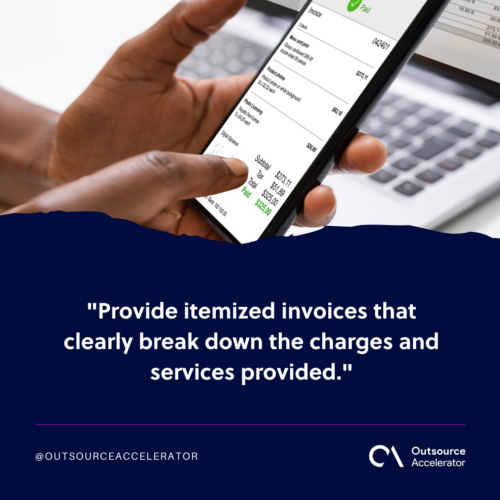
Send itemized invoices that break down each charge. This helps customers see what they pay for. As a result, you reduce surprises and confusion. It is also best to avoid hidden fees.
Delivery and quality assurance
Send invoices on time and on a set schedule. Also use quality checks so your products meet or beat standards. When you deliver on time and do great work, you cut the risk of a dispute. A clean accounts payable process on both sides helps too. In the end, these steps lower your risk and build trust with customers.
Frequently asked questions about a disputed invoice
What does it mean when an invoice is disputed?
It means the customer has challenged the bill. They may see an error, a delivery issue, or a term they disagree with. So the payment process pauses until both sides settle the matter.
How long do you have to dispute an invoice?
The time limit depends on your contract and local rules. Many firms set a window, such as 30 days after the invoice date. So check the payment terms in your agreement first.
Who is responsible for resolving a disputed invoice?
Both sides share the job. The seller should investigate and explain the charges. The customer should share proof for the claim. Then they work together toward a fair fix.
Can you still get paid during an invoice dispute?
Often, only the disputed part is held back. The customer can still pay the undisputed amount. So it helps to split the bill and settle the clear charges first.
How can you prevent disputed invoices?
Send accurate, itemized invoices and keep clear records. Use strong contracts and steady communication. As a result, you remove most of the causes of a dispute before they start.
Key takeaways
- A disputed invoice is a bill a customer challenges, which pauses payment until it is resolved.
- Common causes include billing errors, delivery gaps, unclear contracts, and mixed messages.
- Resolve a dispute with seven steps, from open communication to a documented follow-up.
- Clear invoices, strong contracts, and good records prevent most disputes.
- Aim for a fair fix that keeps the client relationship and your finances healthy.






 Independent





