
Why should you hire a technical support representative?


Why should you hire a technical support representative?
You should hire a technical support representative because they keep your systems running, protect customer trust, and free your core team to focus on growth.
A technical support representative fixes technical problems fast. As a result, your staff and customers lose less time. Here is the short version:
- They solve software and hardware issues before these slow the business down.
- They guide users through complex systems with clear, simple steps.
- They cut costs, because one skilled hire prevents many costly breakdowns.
Today, technical support plays a vital role in keeping companies running. In most cases, a technical support representative is the first person a user turns to when something breaks. So the role matters more than many owners expect.
What does a technical support representative do?
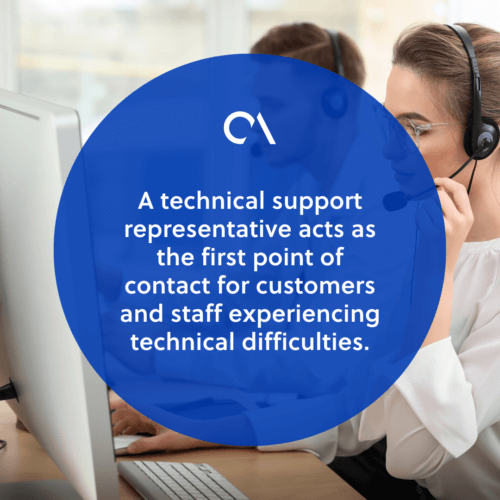
A technical support representative resolves technical questions for staff and customers. First, they act as the first point of contact when something goes wrong. Compared to a customer support agent, they focus more on systems and networks. The role sits close to that of a technical support engineer, yet it leans more on day to day help.
Their main job is easy to describe. For example, they troubleshoot devices, give step by step guidance, and offer remote or on site help when needed.
Responsibilities of a technical support representative
The daily work is varied and demanding. In short, they are expected to:
- Resolve technical problems. They have the skills to find and fix issues fast. They work within the right support levels and aim for a guaranteed result.
- Document and track issues. They keep clear records of each case. This includes the problem, the fix, and any follow up steps.
- Collaborate with internal teams. They often work with other departments and outside clients. As a result, complex problems get solved faster.
Skills possessed by a technical support representative
A strong technical support representative needs a wide skill set. Below are the skills that matter most.
Technical expertise
They must know the product or service inside out. So they stay sharp at troubleshooting software and hardware. They also understand system configurations and pick up new tools quickly. The right technical support tools help them work faster, too.
Strong communication skills
Clear communication is key. They must explain hard ideas in simple words. In addition, they listen closely, so they fully grasp the problem before they act.
Problem-solving abilities
Every day brings new technical puzzles. As a result, they need sharp problem solving skills. First, they find the root cause. Next, they apply logical thinking. They stay calm, resourceful, and quick on their feet.
Patience and empathy
Dealing with rude customers is common in this role. So patience and empathy matter a lot. These traits help them handle hard moments with grace. By showing they care, they build trust and calm nerves. OP360 understands how this customer first approach drives great support.

Challenges in hiring a technical support representative in-house
Building an in house team is not easy. In fact, companies face several clear hurdles.
Limited talent pool
Finding skilled staff can be hard. The local talent pool is often small. For instance, the supply of support representatives in the US keeps shrinking, like many roles there. So the hunt for the right person can drag on.
Cost of recruitment and training
Hiring and training in house is costly. Companies spend time and money on recruiting and onboarding. As a result, budgets get stretched thin.
Scalability limitations
In house teams are hard to scale. As your company grows, support requests grow too. Still, hiring and training more staff takes time. So rapid growth becomes a real strain.
Retention and turnover
Keeping good staff is vital for happy customers. However, in house teams often see high turnover. According to LinkedIn, the turnover rate for tech roles is 13.2%. Burnout, low pay, or few growth paths all add to the problem. Strong staff retention practices can help, yet they take real effort to build.
Hiring a technical support representative offshore
Many companies hire a technical support representative offshore. This helps them get past the in house hurdles above. Outsourcing technical support opens a much wider talent pool. So they find skilled people with diverse backgrounds.
Offshore hiring also saves money. For example, offshore teams come ready to handle support tasks. This cuts extra setup costs. Some firms even outsource technical support for telecom work, where demand runs high.

Offshore teams also scale fast. They grow or shrink with demand. So companies adapt without long hiring cycles. In short, in house hiring brings real challenges, while offshore hiring offers a cheaper and more flexible path. Either way, a good technical support representative delivers strong service, clear communication, and genuine empathy.
Frequently asked questions
What is the difference between technical support and customer service?
Customer service handles general questions about a product or account. Technical support focuses on systems, software, and hardware. So a technical support representative digs into the deeper technical fixes.
What skills should a technical support representative have?
They need strong technical knowledge first. On top of that, they need clear communication, patience, and problem solving. Together, these traits help them solve issues fast and keep users calm.
Is it cheaper to outsource technical support?
Yes, in most cases it is. Offshore teams cut recruitment and training costs. They also scale with demand, so you pay for what you actually need.
Will AI replace technical support representatives?
AI now handles simple, repeat questions well. Still, people remain key for complex issues and empathy. For more, see whether AI will replace support agents.
How do I measure technical support performance?
Track response time, resolution rate, and customer satisfaction. Also watch repeat contacts and first contact fixes. Together, these numbers show how well your support works.






 Independent






