
What is a virtual legal assistant? A quick 101


What is a virtual legal assistant?
A virtual legal assistant is a remote worker who handles a lawyer’s routine legal and admin tasks, so the firm saves time and money while staying focused on clients.
- They take on clerical and paralegal work, from scheduling to legal research.
- You pay for skill and speed, not for a full-time in-house desk.
- You can hire one directly or through a staffing provider for a faster, easier setup.
A virtual legal assistant (VLA) handles the repetitive but essential tasks of a lawyer or law office. This work can be administrative or personal. In short, you pay a VLA for efficiency and expertise.
You can engage an independent VLA on your own. However, virtual assistant service providers already exist to make the process faster and easier.
This article explains what a VLA does, the benefits of hiring one, and how to outsource the right candidate.
What does a virtual legal assistant do?
Cloudstaff, a provider of remote staffing solutions, offers virtual legal assistants who help lawyers make the most of their time and resources. As a result, legal practitioners can focus on advising and representing their clients. Clerical and paralegal duties are assigned to these assistants.
They work remotely as an online secretary. Because of this, they add speed and order to law firms with many clients. For firms that need deeper legal support, outsourced paralegal services can also fill the gap.

Skills needed from a virtual legal assistant
Any existing virtual assistant can become a virtual legal assistant. Still, some lawyers ask for these traits to get the best legal support. It helps to know the core virtual assistant skills before you hire.
- Technical writing is a top skill because every VLA represents a lawyer. They must write error-free text with clean spelling, grammar, and structure.
- Legal terms must be known well. This way, they can build clear documents and research for each client’s needs.
- Written and verbal communication skills matter too. As a result, they can talk with clients and avoid mix-ups.
- Ethics, time management, and a positive attitude round out the list. Together, these prove a VLA can focus on what matters: preparation and confidence for legal work.
5 tasks you can outsource to a virtual legal assistant
All VLAs are flexible and adaptable. However, here are the main responsibilities one must master to serve a law firm or lawyer.
Administrative tasks
These include managing the lawyer’s schedule, appointments, documents, and draft letters. For example, a virtual legal assistant reminds you of key deadlines and details before you meet clients.
The big benefit is order. As a result, the legal team’s workflow stays clear, with proper and effective communication.
Conducting researches
A lawyer needs strong support to protect and defend a client. So a virtual legal assistant runs a thorough search of past cases and statutes.
This work feeds briefs, legal arguments, and case strategies. In addition, the VLA can help create and review contracts and legal papers.
Pre-trial preparations
These documents must show only the truth and follow the correct legal format. For example, a VLA may prepare affidavits and formal statements.
This step needs a firm grasp of professional guidelines and legal terms. Because of this, accuracy is key.
Legal transcription
There will always be proceedings, depositions, and interviews tied to a case. Patience and a good ear give way to accurate transcripts. Many firms treat legal transcription services as a core VLA task.
A one-hour recording can take around six hours to transcribe. Still, case files and pleadings need this work for basis and validity.
Inbox management and client communication
Unread emails are common among busy lawyers. Yet important messages must still be answered. A VLA can guide clients through legal documents in plain terms.
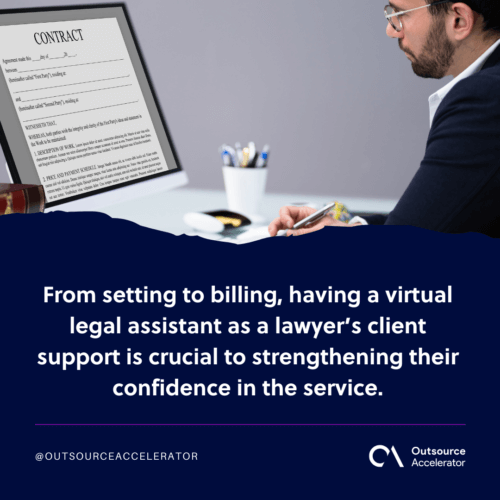
From scheduling to billing, a VLA acts as client support. As a result, clients feel more confident in the service.
Outsourcing the right virtual legal assistant
A virtual legal assistant can boost client satisfaction through better management and order. Still, it is up to each firm to hire the person who fits its needs. A legal receptionist is another remote role worth weighing for front-desk support.
Consider the following when you hire a virtual legal assistant.
Define your outsourcing needs and expectations
First, list the skills and traits your VLA must have. This attracts the right applicants to your job post. Be specific with your standards. As a result, you cut time, cost, and mistakes when choosing VLAs.
Find suitable virtual assistant service providers
Referrals and recruitment platforms are open to help with your VLA needs.
Next, review every detail of each resume. It is best to value credentials, backgrounds, and legal skills. For complex needs, legal process outsourcing may be a better route than a single hire.
Onboard your virtual legal assistant
Talk about working hours, salary, and confidentiality terms. In addition, set a trial period. This helps you check if the VLA can deliver quality work from your procedures.
Improve communication with the hired virtual legal assistant
A good relationship shapes how long your VLA stays. So give respect and trust for the help they provide. For a healthy work setup, feedback and guidance matter as they hit their KPIs.
With the right VLA, a lawyer or firm can welcome more clients and serve them well. Meanwhile, their core duties stay on track.
Hire a virtual legal assistant through Emapta to keep your legal team on course with the stakes of each case.
Frequently asked questions about a virtual legal assistant
What is a virtual legal assistant?
A virtual legal assistant is a remote worker who supports a lawyer or law firm. They handle admin, research, and document tasks. As a result, the legal team can focus on client work.
What tasks can a virtual legal assistant handle?
Common tasks include scheduling, legal research, and pre-trial prep. They also cover legal transcription and inbox management. In short, they take on the routine work that eats a lawyer’s day.
How much does a virtual legal assistant cost?
Costs vary by skill, location, and hours. Still, a remote VLA usually costs far less than an in-house hire. Because of this, many small firms start with one part-time assistant.
Is a virtual legal assistant the same as a paralegal?
Not exactly. A paralegal often has formal legal training and deeper duties. A VLA may handle paralegal work, but the role also covers admin and client support.
How do I hire the right virtual legal assistant?
First, define your needs and expectations. Next, screen resumes for legal skills and clear writing. Finally, run a short trial period before you commit.
Key takeaways
- A virtual legal assistant handles routine legal and admin tasks from a remote setup.
- Core skills include technical writing, legal terms, and clear communication.
- Common tasks span admin work, research, pre-trial prep, transcription, and inbox management.
- Define your needs, screen carefully, and set a trial period before you hire.
- The right VLA lets a firm serve more clients without dropping its core duties.






 Independent





