
Eight fundamental types of software development


What are the main types of software development?
The main types of software development are full-stack, desktop, web, data science, software tools, API, cloud computing, and security engineering.
- Each type solves a different technical need.
- Together they power apps, websites, and systems.
- Many firms outsource these skills to cut cost and scale fast.
Types of software development
- Full-stack development
- Desktop development
- Web development
- Data science
- Software tools development
- API development
- Cloud computing
- Security engineering
What is software development?
The term “software development” covers the computer science tasks used to build, deploy, and maintain software.
Software development is how programmers create computer programs. People also call this the software development life cycle. To go deeper, see our guide to the stages of the software development life cycle.
It also includes research, prototyping, changes, and upkeep of programs. In the end, these steps result in software products.
One key task is requirement analysis. Skilled developers spot gaps, unclear needs, or conflicts in user requests.
The work moves through several phases. Each phase offers a method to build the product. So different types of software development meet different technical needs.
Firms often delegate this work to outsourcing hubs like the Philippines. For example, Arcanys is a trusted Philippines-based software development company for startups and large firms alike. Many teams also weigh outsourcing software development to move faster.

What does a software developer do?
In short, software developers are the creative minds behind computer applications.
They use set types of software development to build large networks or core systems. These systems then power other programs.
There are two kinds of software developers:
- Application software developers. They design computer software and mobile applications.
- Systems software developers. They build software for medical, industrial, military, and general computing use.
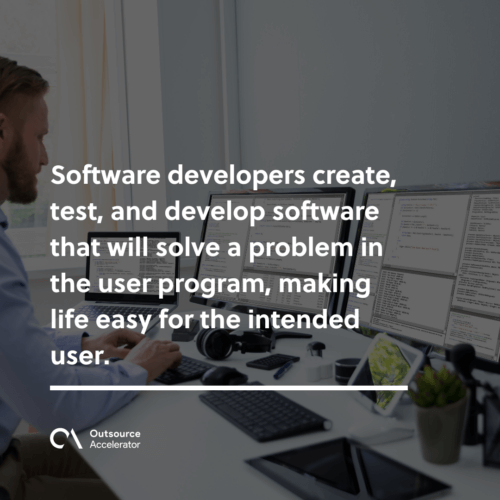
First, a developer studies what users need. Next, they create, test, and refine the software. As a result, the tool solves a real problem and makes life easier.
Importance of software development
Software development matters because firms must manage big data. Smart tools keep that data safe and accurate.
It also helps a business stand out and stay competitive. In fact, it can be vital for survival.
In addition, it improves the client experience and adds features. So setups become safer, faster, and more efficient.
Software development is also key for data analysis. With the right software, daily data reveals useful trends.
Software development lets your firm build a solution that grows with you. So you can adapt as your needs change. You may also compare custom software development versus turnkey options first. Or extend your team with talented developers from Cloudstaff.
Eight types of software development
The goal of software development is to help firms understand clients and rivals.
Here are the eight fundamental types of software development:
1. Full-stack development
Full-stack development is one of the core types of software development. It blends client-side and server-side work.
In simple terms, it covers all the parts that make up a website. It ties together networking, hosting, and server elements. So a full-stack developer needs deep knowledge of both client and server software.
2. Desktop development
Desktop development is a primary type, but it is less common now. It builds apps that run only on desktop operating systems, like Windows, Mac, or Linux.
Still, it can boost a team’s workflow. As a result, it creates a unified space for staff.
3. Web development
Web development is a key type of software development. It is the process of building web applications. It covers both front-end and back-end work.
4. Data science
Meanwhile, data science blends programming and data analysis. It is another vital type, since it helps banks detect fraud.
It also finds trends and patterns in customer behavior. So it can guide a strong advertising campaign.
5. Software tools development
Here, developers build tools for other developers. These tools help programmers create more software.
6. API development
The application programming interface (API) links software to software. It lets one program work with other systems.
API is a core type because it speeds up innovation. As a result, firms build better products and stand out. Many teams rely on API integration to connect their tools.
7. Cloud computing
Developers in cloud computing build the software behind storage apps. Examples include Amazon Web Services (AWS), OneDrive, and GitHub.
Instead of a local server, these services use remote servers on the internet. So they store and manage data at scale.
8. Security engineering
Finally, security engineering builds systems that stay reliable under threats and errors. This type keeps technology systems safe.
These experts know the tools and tricks that hackers use. So they can block cyberattacks before harm is done.
Key takeaways
- There are eight fundamental types of software development.
- They range from full-stack and web to cloud and security engineering.
- Each type meets a specific technical need.
- Requirement analysis shapes every strong build.
- Outsourcing gives firms fast access to skilled developers.
Frequently asked questions
What are the eight types of software development?
They are full-stack, desktop, web, data science, software tools, API, cloud computing, and security engineering. Each one solves a different need.
What is the most in-demand type of software development?
Web and full-stack development stay in high demand. Cloud computing and data science are also growing fast.
What does a software developer do?
A developer studies user needs, then builds and tests software. The goal is to solve a real problem for the user.
Why do companies outsource software development?
Outsourcing gives fast access to skilled developers. It also helps firms cut cost and scale their teams.
What is the software development life cycle?
It is the full process of planning, building, testing, and maintaining software. Each phase offers a clear method to reach the final product.
Outsourcing software development lets firms build new tools, streamline work, and automate routine tasks.
Hiring dedicated developers can be hard in this tight market. So if you seek offshore software developers, consider Outsourced and its services.
Outsourced has over a decade of experience in building dedicated remote development teams.






 Independent





