
Top data management platforms in 2026


What are the top data management platforms?
The top data management platforms are tools that help you collect, organize, secure, and analyze data, with strong options from Google, Adobe, Amobee, Lotame, and Oracle.
- They turn scattered data into clean, usable insight.
- They support marketing, sales, and business decisions.
- Leading names include Google, Adobe, Amobee, Lotame, and Oracle.
The digital age has driven a huge increase in the amount of data that moves between people, firms, and institutions each day. In fact, IDC estimates the world created about 182 zettabytes of data in 2025, and that figure keeps climbing fast.
Today, most companies use data and analytics to cut costs and grow. As a result, they feel more pressure to manage all that data well. So data management platforms have stepped in to fill the gap. This guide covers what data management is and the top data management platforms to know.
What is data management?
Data management is the process of organizing data to get the most from it. It covers the collection, sorting, protection, and storage of a firm’s data for better choices.
As a result, good data management makes sure decisions rest on data that is reliable and current. Today, many kinds of data management software are online. For example, these tools help with cataloging, search, and governance, so data is easier to find and study.
Data management breaks down into several parts:
- Data preparation – cleans and reshapes data into the right format for analysis.
- Data pipelines – move data from system to system on their own.
- Extract, transform, and load (ETL) – pulls data from one system, reshapes it, then loads it into a data warehouse.
- Data catalogs – organize metadata so you can see quality, changes, and location at a glance.
- Data warehouse – a system where many data sources come together for analysis.
- Data governance – a set of rules and standards that protect data security and integrity.
- Data architecture – gives a formal way to design and manage data flow.
- Data security – guards data from theft and corruption. For more depth, see these tips on data security in outsourcing.
- Data modeling – documents how data flows through a firm.
Because data volumes keep rising, many firms now turn to data management outsourcing to handle the load.
Types of data management systems
Data management software falls into different systems based on its purpose. While there are many kinds, below are the most common.
Customer relationship management system (CRM)
A CRM is a database that holds all customer data. This includes personal details, sales data, revenue, renewals, and more.
For example, sales reps use CRM systems to track accounts, leads, and other customer info. These systems can also store marketing data, such as event and sales call records. To see why this matters, read about the benefits of CRM.
Marketing technology (MarTech) systems
MarTech systems come in many forms. For example, they range from email tools and ad tech to marketing automation platforms.
The common thread is simple: they all help marketers run marketing campaigns and daily work. MarTech can stand alone, but marketers often pair it with a CRM. As a result, campaigns update on their own as customer data changes.
Data warehouse systems
Data warehouse systems are the main store for customer data. This is where product usage and satisfaction data often land.
These systems then feed clean, standard data to other tools, such as finance and operations platforms. In addition, tools like cloud business intelligence pull from this data to reveal trends.
Analytics tools
Analytics tools cover a wide range of software for marketing and sales teams. Marketers use them for data visualization, reporting, and business intelligence.
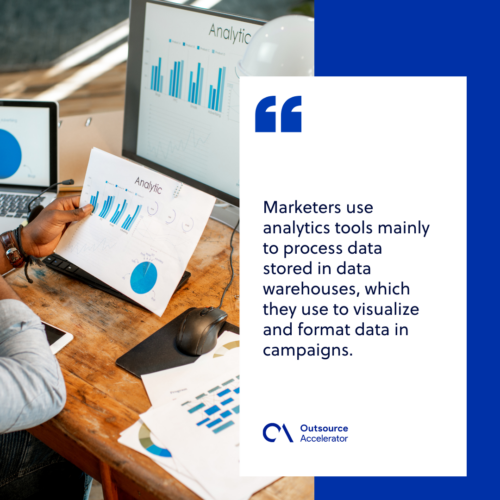
Most of all, they process data stored in warehouses. So marketers can shape and show that data in campaigns. Firms that handle huge datasets often lean on big data consulting for extra support.
5 best data management platforms
As noted, many top data management platforms are online today. To help you choose, we have listed five of the best platforms on the market.
Google Marketing Platform
Tech giant Google offers a single platform that joins data management and advertising on Google Cloud.
Google splits its platform into two formats: enterprise and small business. The enterprise tier links with Google Analytics and its built-in data management features. For example, these include visualization, segmentation, reporting, and predictive analytics.
Adobe Audience Manager
Adobe is best known for creative software, yet it also offers data management through Adobe Audience Manager.
For example, this platform lets users collect data from many sources, build new audience segments, and gain deeper insight. In addition, it works closely with Adobe’s other tools, especially Experience Cloud products.
Amobee
This independent ad platform gives users end-to-end campaign and portfolio management. Its Discover tool adds data management features.
For example, these include segment creation, data onboarding, audience intelligence, and trend tracking. Discover also links with the rest of the platform for planning, analysis, and execution. As a result, it offers features that many other platforms lack.
Lotame
Lotame is a private firm focused on unstacked data solutions. Its platform brings together three products: Lotame Lab, Lotame Connect, and Lotame Data Exchange.
Users can use Lotame Lab to build and scale audiences, Lotame Connect to bring in customer data, and Lotame Data Exchange to buy audience data. Because it is unbundled, customers only buy what they need. Also, the platform is media-agnostic and takes data from almost any source.
Oracle BlueKai
Database heavyweight Oracle offers its data management platform, Oracle BlueKai, inside its Customer Experience (CX) suite.
Also, the BlueKai platform links with Oracle’s database software. So users can join their customer experience data with their financial data. It also handles both B2C and B2B needs, with personalization, segmentation, campaign management, and customer intelligence features.
Importance of having data management platforms
In short, the value of these platforms rests on the value of data management itself.
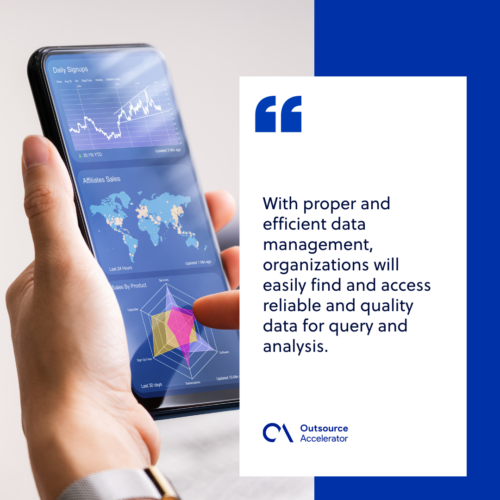
With good data management, firms can find and use reliable, quality data with ease. As a result, they can run analysis at scale. In short, these platforms make data more visible, reliable, and secure.
Frequently asked questions
What is a data management platform used for?
A data management platform gathers data from many sources into one place. It then cleans, sorts, and stores that data. So teams can build audience segments and run smarter campaigns.
How do I choose the best data management platform?
First, list the features your team truly needs. Next, check how well each tool links with your current systems. Finally, compare pricing and support before you commit.
What is the difference between a CRM and a data management platform?
A CRM stores known customer data, such as names and sales history. A data management platform handles broader audience and behavior data. Many teams use both together.
Are data management platforms only for large companies?
No. Many top data management platforms offer small business tiers. So even growing firms can start small and scale up later.
Key takeaways
- Data management platforms collect, clean, and organize data for better decisions.
- Common systems include CRMs, MarTech, data warehouses, and analytics tools.
- Google, Adobe, Amobee, Lotame, and Oracle rank among the top options.
- Pick a platform based on features, integrations, and support, not price alone.






 Independent





