
A quick look at sales enablement and its benefits


What is sales enablement and why does it matter?
Sales enablement gives sales teams the tools, training, content, and data they need to win more buyers and close deals faster.
- It aligns sales and marketing so both teams share goals and content.
- It uses coaching, technology, and data to lift each rep’s results.
- It builds a smoother buyer journey that turns more leads into customers.
Like any team in a business, a sales team works better with the right tools and resources. Generic scripts and speeches may work at first. However, companies should change their approach once their customer base and revenue go stale.
When firms are not maximizing their sales enough, it is time for a new plan. This is where sales enablement comes in. Below, we explain how sales enablement can be a game-changer for your business.
What is sales enablement?
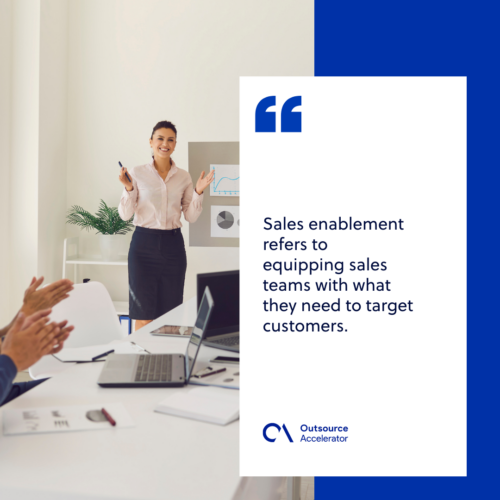
Sales enablement means giving sales teams the tools, training, and best practices they need to reach customers. In short, it covers everything from the tools to the tactics for winning more buyers.
With sales enablement, companies help salespeople engage prospects better. As a result, buyers get a smoother buying process and experience.
Sales enablement is usually part of a broader sales management strategy. It also fits easily into teams with the help of online tools that support this work.
Sales enablement principles
A strong sales enablement program rests on five guiding principles.
Communication
Sales and marketing are closely linked. So both teams should build strong communication.
For example, useful content needs input from both sides. Marketing brings the creativity to attract more leads. Meanwhile, sales bring the skill to turn those leads into paying customers.
As a result, good communication helps both teams create more useful content together.
Proper coaching and training for sales reps
A big part of sales enablement is coaching and training reps to grow revenue.
So companies should invest heavily in their sales teams. A one-size-fits-all approach rarely works. Instead, leaders can tailor training to each team’s strengths, traits, and skills.
A flexible coaching style helps reps sharpen their tactics. In turn, they win customers more easily. Tracking sales performance shows which reps need more support.

Content
Beyond coaching, sales enablement content plays a big part in attracting and converting customers. Sales and marketing teams combine their knowledge to create content that drives traffic.
A strong content process rests on three elements.
Organization
Content must be organized in a single content management system. So enablement teams can see what to optimize and reuse for a fresh look.
Type
Different content types must fit their audience and purpose. So sales and marketing pros need the right content for each buyer and stage.
Distribution
Finally, buyers will not notice content without proper distribution. With the marketing team’s help, post all content online so clients can find it easily.
Technology
Modern sales leaders need a strong revenue enablement platform for a faster sales cycle.
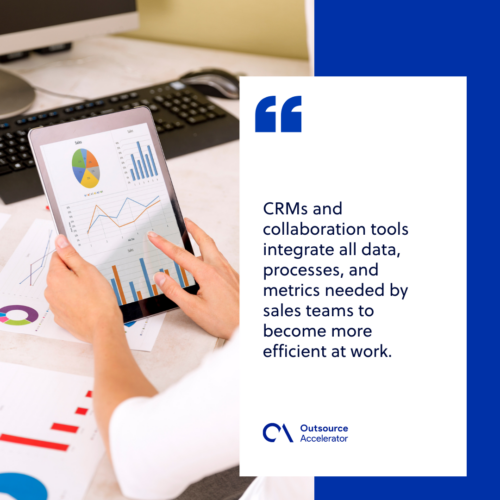
As part of this, teams should use proven sales enablement tools to make selling easier. For example, CRMs and collaboration tools bring together the data, processes, and metrics reps need. A good CRM setup keeps all of this in one place.
Engagement
A good sales rep knows that engagement drives revenue enablement.
So sales enablement peers need clear, data-driven plans. In turn, these plans help more buyers say yes and improve the whole sales cycle.
How an efficient sales enablement strategy benefits your firm
Firms that want more revenue need a strong sales enablement process. Beyond empowering reps, it brings other benefits too. Here are the main ones.
Aligned sales and marketing
At times, sales and marketing do not work together enough. As a result, content and revenue suffer. Through sales enablement, both teams align their work.
So it becomes easier to produce useful content for the right audience. A shared sales pipeline view keeps both teams on the same page.
Customized buyer’s journey
With sales enablement, teams do not rely on scripts alone.
Instead, sales enablement software lets them tailor each buyer’s journey. In turn, they capture more suitable customers.
Better cross-selling and upselling strategies
Sales enablement also opens the door to better upselling, cross-selling, and reselling. For example, reps can use a buyer persona to offer added services that grow revenue.
Virtual selling is one useful sales enablement tactic. It works well for both cross-selling and upselling.
Increase productivity
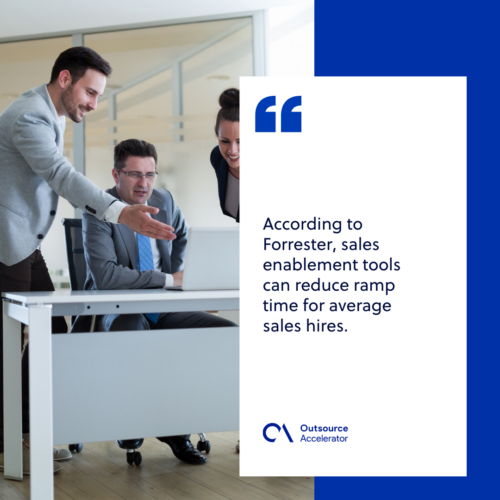
According to Forrester, sales enablement tools can cut ramp time for the average new hire.
Meanwhile, the right tools and tactics help the team close deals and measure success. As a result, the whole sales operation runs better.
Build better client relationships
Finally, sales enablement helps build better client relationships. With buyer data in one place, reps can build rapport fast. In turn, they create better interactions with buyers.
Best practices for successful sales enablement
Companies usually take time to roll out sales enablement well. Still, the results show up as steady growth in revenue, customers, and satisfaction. Here are some best practices to follow.
Tailor sales speech to each customer
Reps tend to use generic speeches with customers. Instead, give ongoing training and the right materials. As a result, their pitches stay dynamic and relevant.
Provide ongoing training
People forget most of what they learn in training within a month, according to research. So do not let learnings go stale. Provide ongoing training instead.
Another option is to hire coaching services from trusted sales enablement pros.
Always utilize data
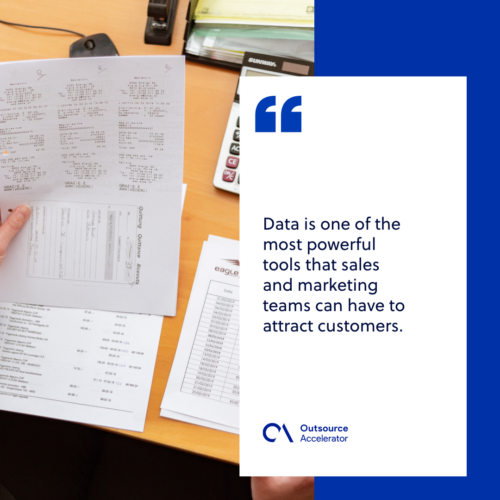
Data is one of the most powerful tools a sales team can use. So use it as much as possible to improve customer relationship management.
Implement sales enablement across the whole organization
Sales enablement will not thrive inside sales and marketing alone. So it needs input from the whole company to improve over time.
Hire a reliable sales enablement manager
A reliable sales enablement manager can lift team results. They make sure reps have the right tools, resources, and training to succeed.
A seasoned manager also drives sales and marketing alignment. In addition, they streamline processes and use analytics to guide decisions. As a result, sales operations improve and revenue climbs. Some firms even use sales outsourcing to scale this support.
Sales enablement tools
Sales enablement resources also help boost your sales funnel. With so many tools on the market, companies should find a system that fits their process. Here are some strong options.
Brainshark
Brainshark uses data to drive sales productivity. Its flexibility lets a team:
- Access information
- Get proper training anytime and anywhere
- Create effective sales enablement content
Boomerang
Boomerang helps teams get more from email marketing and selling. It shows patterns and behavior. So a team learns how to use email better.
Cloze
Cloze helps marketers and reps manage outreach via email and social media. It also puts all customer interactions in one place. As a result, teams track relationships and boost sales.
Salesforce
Salesforce is a strong tool for uniting sales and CRM. It is mostly a CRM tool. Still, it lets managers fold their enablement plans into one system.
Fostering sales enablement success
Sales enablement is a core part of the modern sales world. In short, it bridges the gap between marketing and sales.
Investing in the right platform gives teams the resources and knowledge to engage prospects and close deals. As a result, reps work with more confidence.
Strong enablement leadership adds structured training, useful content, and clear analytics. So leaders lift both individual performance and company growth.
Frequently asked questions
What is sales enablement in simple terms?
Sales enablement means giving sales teams the tools, training, content, and data they need to sell. In short, it helps reps engage buyers and close more deals.
What are the main parts of sales enablement?
The core parts are communication, coaching, content, technology, and engagement. Together, they help sales and marketing work as one team.
How does sales enablement help revenue?
It shortens ramp time, aligns teams, and improves the buyer journey. As a result, reps close deals faster and grow revenue over time.
Who owns sales enablement in a company?
A sales enablement manager often leads the work. Still, it needs input from sales, marketing, and leadership to succeed.
What tools support sales enablement?
CRMs, training platforms, and content tools all help. For example, teams use tools like Brainshark, Cloze, and Salesforce to organize their work.






 Independent





