
Top 7 upselling tactics that guarantee success

Which upselling tactics actually work?
The best upselling tactics focus on real customer needs: study buying behavior, pick the right upgrade, highlight clear benefits, use good timing, and never pressure the buyer.
- First, use customer data to know what and when to offer.
- Next, frame each upgrade around a benefit the customer already wants.
- Finally, stay patient and accept a “no” without pushing.
Sometimes one sale is not enough. So sales teams look for ways to sell more and lift profit. Upselling is a proven way to do this. Done right, it helps the customer too. In fact, strong upselling tactics can boost customer satisfaction at the same time. Let us look at how to retain and please your customers through upselling.
What is upselling?
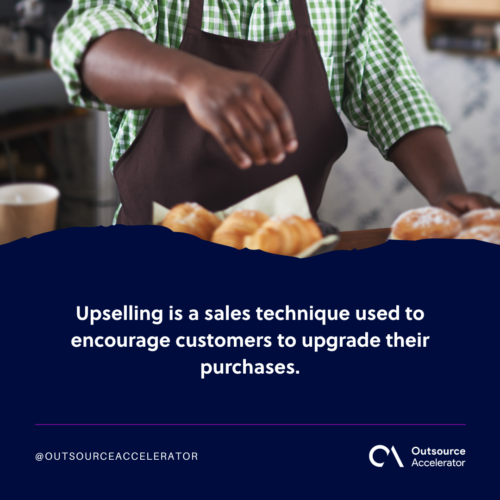
Upselling is a sales technique that nudges customers to upgrade a purchase. It lets them choose between tiers of a product. So they can see the better features they gain with an upgrade.
The main goal is to help customers get more value. For example, a small fee or a discount can unlock a better version. It is also a smart way to retain existing customers and attract new ones. In addition, strong customer retention often starts with helpful offers like these. Upselling works in both B2B and B2C businesses.
Upselling vs cross-selling
Put simply, upselling means upgrading a customer’s purchase. So companies offer value-added options to improve the product.
Meanwhile, cross-selling offers a matching product on top of the first item. For example, it may come as an add-on or a bundle. For more on both, see these best practices for cross-selling and upselling.
Online shopping shows the difference well. Microsoft moving a user from a monthly to an annual plan is upselling. On the other hand, offering a case and adaptor with a charging cord is cross-selling.
Why do customers hate upselling
Upselling can be a win for both sides. Still, some customers dislike it. Here are a few common reasons.
- Disinterest. Customers want the best value and offers. However, some simply do not want add-ons.
- Limitations. Many would love the upgrade. Still, budget often keeps them on the base product.
- Intimidation. Some salespeople come across as too pushy or aggressive. As a result, buyers back away.
8 upselling tactics to satisfy your customers
Upselling will not harm your customer relationships when you do it well. Your team may already have its own methods. Still, a few tweaks can help a lot. Here are eight tactics to add to your playbook.
Study your customers’ behavior
First, use your customer data to know what and when to upsell. So get to know their demographics and buying patterns. Also note how often they buy and what they prefer.
Choose which upsell suits best
Next, offer more than the usual premium upgrade. You can also try suggestive selling at the right moment. For example, these options work well:
- Customization. Let customers tailor a purchase to their needs. Each add-on raises the price a little.
- Extended service. Instead of a bigger product, offer a longer service contract at a discount.
- Added protection. Offer cover for theft or malfunction. This works well for laptops and other devices.
Create solutions
Find out your customer’s problem and why they chose a product. Then offer options that add real value. Keep in mind that you are solving their problem through upselling.
Highlight the benefits
This is where your sales training pays off. So highlight the benefit of the upgrade right away. For example, echo their current pain point and show the fix. You can also compare the upgrade to their current purchase.
Provide testimonials if needed
Most buyers want social proof before they upgrade. So share reviews and recommendations from other customers. For example, Amazon shows ratings and a “people also buy” section. As a result, shoppers feel more sure of their choice.
It’s all about the timing
Good upselling comes down to timing. So learn the right moment to offer more. Then let customers know you are there when they need it. Also plan your next step once a purchase is done.
Don’t be aggressive
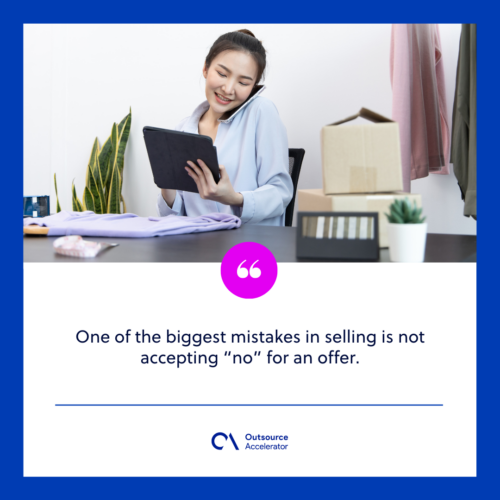
One of the biggest mistakes in selling is not accepting a “no.” A good salesperson never forces a sale. So never pressure a customer into an upgrade. Pressure often pushes people away for good.
Offer vouchers, discounts, and freebies
Who does not love these three? After a sale, many firms send a limited, one-off offer. So the customer has a reason to come back. Over time, these perks also build customer loyalty.
Using upselling tactics to your advantage
Good upselling takes time, patience, and real sales skill. It does not happen overnight. With rising competition, firms must take better care of customers. So train your sales team to adapt to market shifts. The tactics above are a great place to start. Remember, growth starts from within.
To make things easier, you can also outsource this task to leading BPO providers like 123Employee. 123Employee handles sales and can also manage your customer support functions.
Frequently asked questions
What is the difference between upselling and cross-selling?
Upselling moves a customer to a better version of the same product. Cross-selling adds a related product on top. So one upgrades, while the other expands the order.
When is the best time to upsell?
The best moment is often at checkout or just after a purchase. For example, a customer who just bought a laptop may want a warranty. So match the offer to their current need.
How do you upsell without annoying customers?
Keep the offer relevant and low-pressure. So frame it as help, not a hard sell. Then accept a “no” with grace and move on.
Does upselling only work in retail?
No. Upselling works in software, services, and B2B deals too. For example, a SaaS firm may offer a higher plan with more seats. The same ideas apply across industries.
Can you outsource upselling?
Yes. Many firms use trained BPO teams to handle sales and support. As a result, they can upsell at scale without stretching their in-house staff.






 Independent






