
Remote infrastructure management: Challenges and best practices

At a glance
- Remote infrastructure management (RIM) means monitoring, managing, and maintaining your IT systems from anywhere, without staff on site.
- It relies on monitoring tools, automated alerts, secure remote access, and reporting dashboards.
- The main challenges are security risks, connectivity problems, limited visibility, and IT skill gaps.
- Best practices include automation, clear escalation rules, regular patching, tested backups, and a trusted managed service provider.
Being able to oversee and fix IT systems remotely is no longer a luxury. Instead, for remote and hybrid businesses, it’s a necessity.
Remote infrastructure management (RIM) lets you keep services running smoothly without anyone needing to be on site. As a result, teams spread across cities, or even continents, get the same reliable systems.
To get full value from it, though, you need to understand how it works, where it can go wrong, and what good practice looks like. This guide covers all three.
What is remote infrastructure management?
Remote infrastructure management is the practice of monitoring, managing, and maintaining an organization’s IT infrastructure from a remote location. That infrastructure includes servers, networks, storage, endpoints, and cloud services.
With RIM, you don’t need to send technicians to every site. Your systems keep running even when they’re spread across regions and time zones.
How does remote infrastructure management work?
RIM combines monitoring platforms, automation, and secure connections. Together, these let your IT team or a managed service provider manage systems in real time.
Here’s how it typically works:
- Monitoring tools track the health of your infrastructure around the clock. They measure things like CPU use, memory, bandwidth, and response times.
- Automated alerts flag unusual activity or failures right away. That way, your team can act before users notice a problem.
- Secure remote access lets authorized staff connect to servers and network devices. Encryption and strong authentication keep those connections safe.
- Reporting dashboards turn the data into clear visuals. They help you track performance, spot risks, and plan capacity.
With this setup, you keep control of your IT operations at all hours, without depending on physical presence.
Key challenges in remote infrastructure management
RIM brings big benefits, but it also creates new challenges. Knowing them early helps you build stronger systems from the start.
Security and data privacy risks
First, security is the top concern. Every remote connection is a possible way in for attackers, so data security has to be designed in from day one.
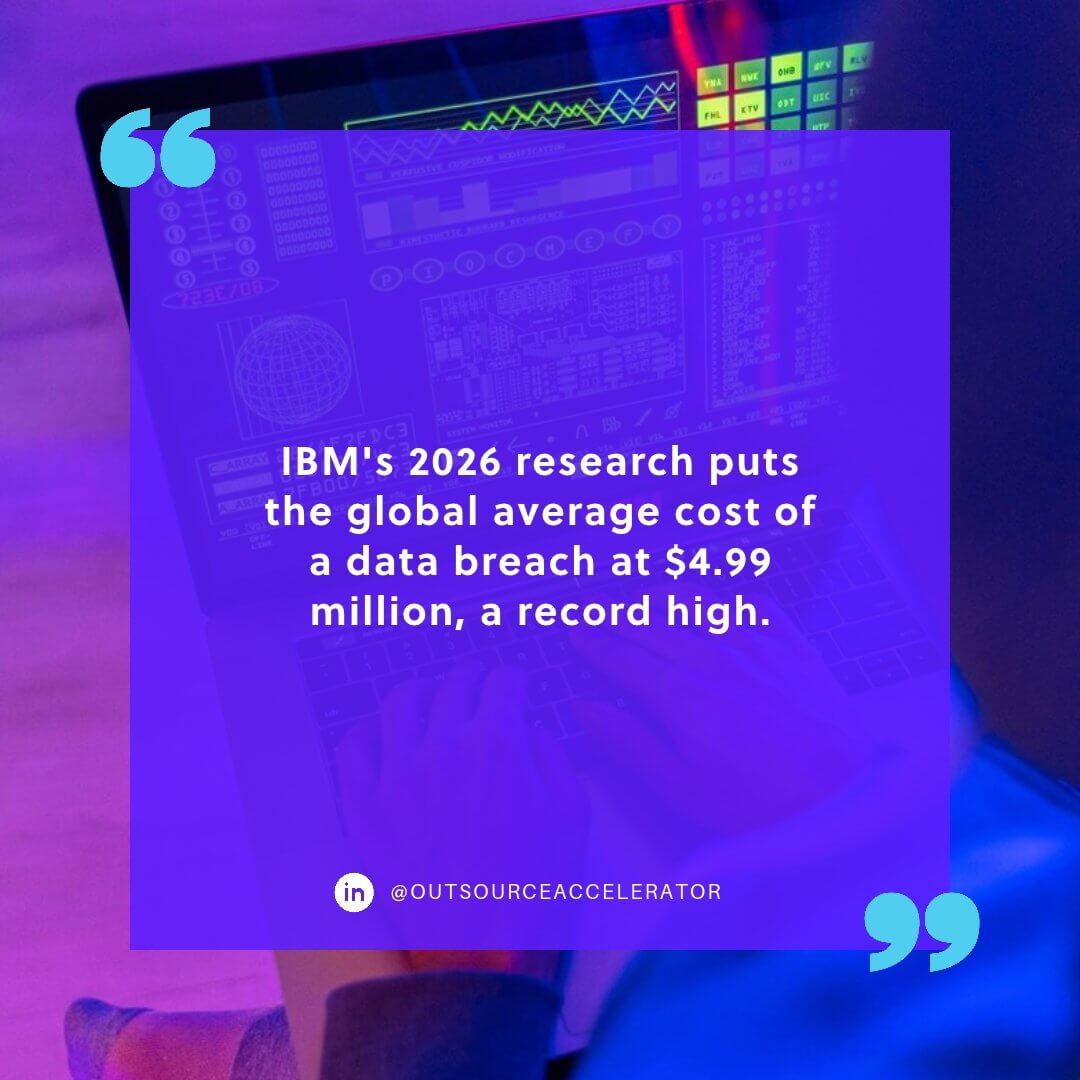
Weak passwords, unsecured connections, and unpatched systems all create openings. The cost of getting it wrong is high, too. IBM’s 2026 research puts the global average cost of a data breach at $4.99 million, a record high.
Network downtime and connectivity issues
Second, RIM depends on stable connections. When the network slows or drops, you face problems such as:
- Delayed monitoring data
- Lost remote access to key systems
- Slower fixes when something breaks
If your team can’t reach servers or critical apps, downtime hits the business directly. So redundant network paths and backup internet connections are essential.
Limited visibility and control
Third, as your IT estate grows across systems and locations, seeing everything at once gets harder.
Scattered tools, siloed data, and inconsistent reports hide the true state of your systems. Consequently, problems take longer to find, and weak spots get missed.
Talent and skill gaps
Finally, modern IT environments are complex, and skilled staff are hard to find and keep.
RIM calls for expertise in cloud computing, cybersecurity, and data analysis. Many businesses don’t have all of that in-house. As a result, some choose to work with remote IT professionals to fill the gaps.
Best practices for remote infrastructure management
To overcome these challenges, put these five practices in place.
Use comprehensive monitoring and automation tools
Automation is one of the most powerful parts of RIM.
With the right IT monitoring tools, you can detect issues, apply patches, and shift resources without manual work.
Choose tools with real-time data and predictive analytics. These help you spot bottlenecks before they affect users.
Set clear communication and escalation rules
Clear communication keeps remote operations on track.
Because teams and systems sit in different places, everyone needs to know how to report issues, escalate incidents, and coordinate a response.
Hold regular check-ins between in-house staff and external providers. Also document standard operating procedures (SOPs) for troubleshooting, maintenance, and changes.
Update and patch systems regularly
Unpatched systems are one of the most common ways attackers get in.
So set a regular schedule for software updates, firmware patches, and security fixes. Prioritize flaws listed in CISA’s Known Exploited Vulnerabilities Catalog, because attackers are already using them.
Staying current also keeps your systems compatible with each other. Regular vulnerability assessments help confirm nothing slipped through.
Prioritize data security and backups
A strong RIM setup protects data at every layer. Back up regularly, using both on-site and cloud storage.
Encrypt your backups, and test your recovery process often to make sure it actually works.
Beyond backups, use endpoint protection, intrusion detection, and strict access controls. A recognized framework such as the NIST Cybersecurity Framework can help you cover the gaps systematically.
Partner with a trusted managed service provider
For many businesses, outsourcing RIM to a managed service provider (MSP) is the smartest move.
A good MSP brings specialist skills, flexible capacity, and round-the-clock monitoring.
When you compare providers, look for proven experience, clear service level agreements (SLAs), and strong security practices.
Invest in remote infrastructure management
As your business grows and spreads out, reliable and secure IT becomes even more important. Remote infrastructure management gives you control, efficiency, and resilience without the limits of on-site support.
Investing in RIM is more than a technical decision. It also shapes how well your company handles digital transformation.






 Independent






