
5 Proven remote employee engagement strategies

Table of contents
- The importance of remote employee engagement
- Actively engaged vs disengaged employees
- 5 Remote employee engagement strategies that surely work
- How Remote Employee supports remote employee engagement
- FAQs
How to improve remote employee engagement
- Remote employee engagement drives productivity, retention, and culture.
- Actively engaged employees contribute ideas and collaborate; disengaged employees isolate themselves.
- Managing remote staff comes with unique challenges, particularly when it comes to maintaining motivation, collaboration, and productivity. This is where remote employee engagement becomes essential.
- Without effective engagement strategies, remote workers may feel isolated or disconnected from the organization.
- Outsourcing providers like Remote Employee can help implement engagement strategies at scale.
The importance of remote employee engagement
Keeping remote teams engaged is one of the biggest challenges for growing businesses. Without visibility and consistent communication, even high-performing employees can become disengaged over time.
Remote teams offer flexibility and efficiency, but they also require intentional leadership to stay connected and productive. Organizations that invest in remote employee engagement often see higher performance, stronger employee retention, and better collaboration.
Remote Employee CEO and Co-founder Ruffy Galang says that: “Connection isn’t optional; it’s the backbone of engagement in dispersed teams. It’s not just theory; it’s the industry pulse.”
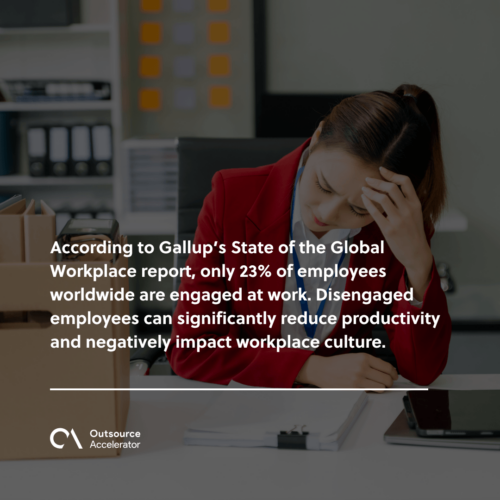
According to Gallup’s State of the Global Workplace report, only 23% of employees worldwide are engaged at work. Disengaged employees can significantly reduce productivity and negatively impact workplace culture.
In addition, Gallup reported that low employee engagement costs the global economy $438 billion in 2024.
Key takeaway: Remote employee engagement is a key driver of long-term business success.
Actively engaged vs disengaged employees
Understanding the difference between engaged and disengaged employees can help managers identify potential problems early and build stronger remote teams.
Below is a simple comparison.
| Actively engaged employees | Disengaged employees |
| Feel motivated and enthusiastic about their work | Often feel disconnected from their responsibilities |
| Contribute ideas and participate in team discussions | Do the bare minimum required |
| Take ownership of projects and outcomes | Avoid additional responsibilities |
| Feel connected to company goals and values | Feel detached from the company’s direction |
| Support collaboration and teamwork | Work in isolation and lack team involvement |
Pro tip: Companies must proactively build remote employee engagement strategies that maintain connection, communication, and motivation.
5 Remote employee engagement strategies
Building strong engagement in remote teams requires intentional leadership and consistent communication.
Here are five proven remote employee engagement strategies that help organizations improve:
1. Set clear expectations and goals
Clarity is critical when managing remote teams.
Remote employees perform best when they clearly understand their responsibilities, performance expectations, and key deliverables. Managers should establish clear KPIs, deadlines, and communication channels to ensure everyone stays aligned.
Regular check-ins, project management tools, and transparent goal tracking can help employees stay focused and accountable.
When expectations are clear, employees feel more confident and engaged in their work.
2. Celebrate wins
Recognition plays a major role in improving remote employee engagement.
Celebrating achievements, whether big or small, helps employees feel valued and appreciated. This recognition can take many forms, including:
- Public shout-outs during team meetings
- Recognition in company chat channels
- Performance bonuses or incentives
- Employee appreciation programs
Acknowledging success motivates employees to maintain high performance and reinforces a positive workplace culture.
3. Collect feedback regularly
Virtual team engagement is a two-way process. Companies must give employees opportunities to share their thoughts, concerns, and suggestions.
Regular feedback can be gathered through:
- Employee engagement surveys
- One-on-one meetings
- Anonymous feedback tools
- Team retrospectives
Listening to employees helps leadership understand what works and what needs improvement. It also shows employees that their voices matter, which strengthens remote employee engagement.
4. Foster a sense of community
One of the biggest challenges of remote work is the lack of social interaction. Without opportunities to connect, employees may feel isolated.
Companies can strengthen team bonds by creating spaces for collaboration and social interaction, such as:
- Virtual coffee chats
- Online team-building activities
- Slack or Teams channels for casual conversations
- Collaborative projects across departments
These initiatives help strengthen relationships and reinforce a shared sense of purpose within remote teams.
5. Support professional development
Employees are more engaged when they see opportunities for growth and career advancement.
Companies can improve remote employee engagement by investing in employee development through:
- Training programs and workshops
- Mentorship opportunities
- Online courses or certifications
- Clear career progression paths
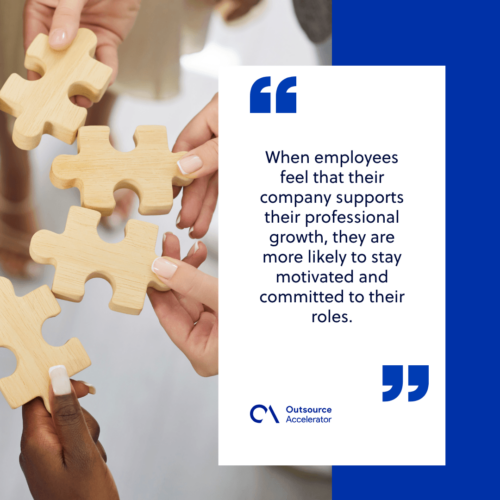
When employees feel that their company supports their professional growth, they are more likely to stay motivated and committed to their roles.
How Remote Employee supports remote employee engagement
Building and managing a remote workforce requires the right infrastructure, support systems, and management strategies.
To support this process, BPO firms like Remote Employee provide businesses with access to skilled remote professionals across various roles.
Some of the ways Remote Employee supports remote teams include:
- Providing vetted remote professionals
- Supporting communication and collaboration frameworks
- Encouraging structured performance management
- Helping companies maintain a strong remote team culture
By partnering with a trusted outsourcing provider, businesses can focus on growth while ensuring their remote workforce remains engaged and productive.
To learn more about Remote Employee’s outsourcing solutions, get in touch with them here.
FAQs
What is remote employee engagement?
Remote employee engagement refers to the level of motivation, commitment, and connection remote workers feel toward their work and their organization.
Engaged employees are more productive and invested in company success.
What are common challenges in remote employee engagement?
Some common challenges include employee isolation, lack of communication, unclear expectations, and limited opportunities for collaboration. Companies must actively address these issues to maintain engagement.
Can outsourcing help improve remote employee engagement?
Yes. Outsourcing providers like Remote Employee offer structured management systems and support services that help businesses build well-supported and engaged remote teams.






 Independent





