
Best customer relationship management strategies in 2026


What are the best customer relationship management strategies?
The best customer relationship management strategies set clear goals, keep steady communication, deliver on promises, reward loyalty, show gratitude, and use CRM software to know customers better.
- These strategies turn one-off transactions into lasting partnerships.
- Data and CRM tools help you anticipate needs and personalize offers.
- Better relationships drive retention, referrals, and more sales.
Customer relationship management is integral to any business. After all, companies with poor relationships with their customers are likely to lose loyalty.
As a business owner, you should treat customers as your most valuable assets. So sound customer relationship management strategies belong among your top priorities. In fact, following tried-and-tested relationship management strategies can help you improve client satisfaction[1] and retain your customer base.
To help you here, we’ve compiled some of the best customer relationship management strategies you can use.
What are customer relationship management strategies?
Customer relationship management strategies help you build lasting partnerships with customers, partners, and other stakeholders. So they aim to create real partnerships, not just transactions.
Using data analytics and tools like customer relationship management (CRM), you can build effective strategies. These tools give you the insights to improve rapport with customers and partners.
Typically, these strategies work best alongside other marketing activities, such as segmentation or targeting, for a greater impact on a business’s success.[2]
Good strategies are client-centric and focus on customer needs. In short, the goal is to spot problems early and prevent them before they grow.
Why businesses must have customer relationship management strategies
Effective strategies build and nurture a business’s ties with customers and partners. In addition, they attract new clients and lift a company’s reputation and market standing.
Below are other benefits businesses gain by adopting relationship management strategies.
Gain better knowledge of your customers
When you build these strategies, you’ll likely use CRM platforms. As a result, you understand customers better: their preferences, jobs, and links to other contacts. This is the same payoff behind a smart customer relationship management approach.
Better anticipation of needs
As noted, effective strategies help you know customers better. In turn, you can anticipate their needs and offer better deals.
Increased sales
Better relationships mean better retention, which means more sales. Also, happy customers recommend your company to their contacts. So this further grows your sales and customer loyalty.
New leads
To repeat the earlier point, strong strategies win more customers through referrals. They may not be buyers yet. Still, they are qualified leads you can nurture.
Customer relationship management strategies to help you win clients
There is no one-size-fits-all way to improve relationship management. Instead, you win by applying best practices in customer relationship management again and again.
So here are some actionable strategies you can use to improve customer relationships.
1. Define your goals and visions for your CRM strategies
First, be clear about what you want each strategy to achieve. As a result, you can plan your moves and make sure every step supports your high-level goals.
2. Stay in touch, but not too much
Next, keep in touch so customers do not feel neglected. For example, reach them by email, SMS, or chat. However, too many promo messages will push them away. So find a balance between regular contact and spam. Strong customer engagement depends on that balance.
3. Promise only what you can deliver
Few things disappoint customers more than a broken promise. So the key here is simple: underpromise and overdeliver.
4. Reward loyalty
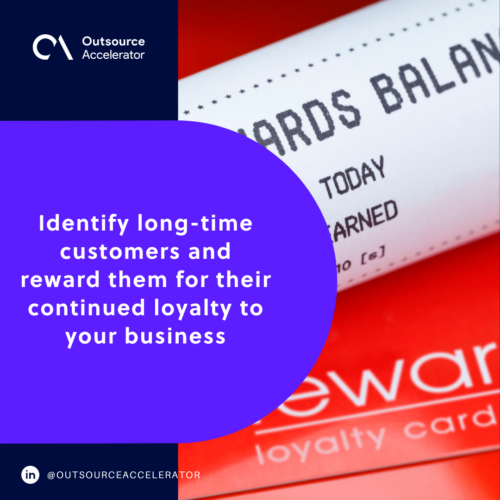
Identify long-time customers and reward them for their loyalty. For example, give them exclusive offers and promos, or invite them to special events. In turn, this supports better customer retention.
5. Show gratitude
Remember that your business exists for and because of your customers. So give them over-the-top service. As a result, they keep coming back.
6. Implement customer relationship management software
Improving customer relationships is hard without the right software. So rely on CRM tools to help you with:
- Customer segmentation
- Customer data collection
- Customer data management
In turn, these tools help you understand customers and meet their needs. For more, see the full benefits of CRM.
References
[1] improve client satisfaction. Bal, P. M., & Boehm, S. A. (2019). “How do i-deals influence client satisfaction? The role of exhaustion, collective commitment, and age diversity.” Journal of Management, 45(4), 1461-1487. https://doi.org/10.1177/0149206317710722
[2] impact on a business’s success. Saura, J. R., Palos-Sanchez, P., Grilo, A. (2019). “Detecting indicators for startup business success: Sentiment analysis using text data mining.” Sustainability 11, 3(917). https://doi.org/10.3390/su11030917
Frequently asked questions about customer relationship management strategies
What is a customer relationship management strategy?
It is a plan to build lasting ties with customers, not just one-off sales. Typically, it uses data and CRM tools to guide contact, offers, and support. So the goal is loyalty and long-term value.
Why do CRM strategies matter for small businesses?
Small firms often win on service and relationships. So a clear CRM strategy helps them keep customers and earn referrals. In addition, it makes limited marketing spend go further.
Do you need CRM software to manage relationships?
You can start without it. However, software makes segmentation, data collection, and follow-up much easier. As a result, most growing businesses adopt a CRM tool early.
How do you measure customer relationship success?
Track retention rate, repeat purchases, and referral numbers. Also watch satisfaction scores and response times. Because of this, you can see which strategies actually work.






 Independent






