
5 outbound lead generation strategies for improved business results


What is outbound lead generation and why does it matter?
Outbound lead generation is the process of reaching out first to people who do not yet know your brand, then guiding them into your sales pipeline.
- It uses direct channels like calls, email, and ads to start the conversation.
- It gives you control over which prospects you target and pursue.
- It works best with a clear plan, the right message, and steady follow-up.
Lead generation is crucial for businesses. Simply put, it is a process where you spark interest in potential customers. A business without a lead plan tends to struggle. After all, without leads, there is little growth or revenue.
So how do you draw the attention of people who know nothing about your products? First, you need to reach out. However, that is not always easy. According to Hubspot’s report, 61% of marketers find lead generation hard.
Because of this, the right approach can lead to much better results. So it helps to learn how outbound lead generation works before you commit. To start, it is worth knowing the main types of leads you can pursue. A partner like Executive Boutique Call Center can also help with your lead generation efforts.
What is outbound lead generation?
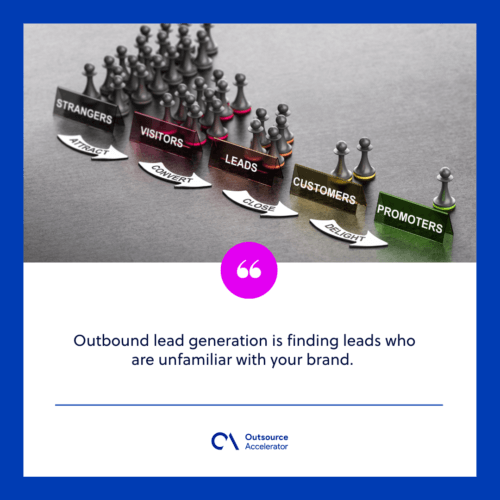
Outbound lead generation means finding leads who are not familiar with your brand. In practice, you reach these prospects through direct mail, phone calls, email, TV ads, online ads, billboards, or print.
Usually, the marketing or sales team runs outbound lead generation. However, some leads may ignore or dismiss you. That is because these emails and calls are unsolicited.
The main goal is to catch the interest of your prospects. Once they respond, they can enter your sales pipeline. From there, you can nurture them into paying customers.
How outbound lead generation works
Your outbound lead generation process depends on your market, goals, and brand. Generally, marketing and sales teams follow a few clear steps.
Step 1: Creating an ideal customer profile (ICP)
First, outbound teams build an ideal customer profile (ICP). This profile maps their target buyer, buying pattern, and other traits in one clear character.
When building the ICP, the team sets Specific, Measurable, Achievable, Relevant, and Time-bound (SMART) goals. In addition, they weigh factors like business model, revenue, industry, and location.
Step 2: Prospecting leads
Next, the team finds potential leads. For example, they use online databases, social media, hiring platforms, or lead generation software. Meanwhile, they also gather each prospect’s details and study the company to grasp its needs.
Step 3: Setting up and running a campaign
Then, the team plans how to reach the prospects. This step is crucial, because a weak start can lose the connection fast. Once the campaign is ready, you launch it.
Step 4: Closing deals
After that, the team nurtures the leads and converts them. Cold calling is a common way for sales reps to connect. Still, patience and good timing matter here.
Step 5: Evaluating the approach
Finally, you review what worked, what went wrong, and what to improve. Commonly, not every lead in your funnel will say yes. So both teams study the pain points and plan better next time. After the review, the process starts again from step one.
Inbound vs outbound lead generation
Lead generation can be inbound or outbound. While these two differ, both can drive strong results. Here are the key similarities and differences between them.
Similarities
Objective
Both aim to close a deal. To get there, you nurture the relationship with the prospect. So earn their trust, add value, and watch them move through your pipeline.
Familiarity
Both methods need marketers who know the target audience well. As a result, they can reach out, do research, and read buyer behavior. Once familiar, they can build a strong campaign.
Difference
Contact initiation
The main difference is who reaches out first. Think of outbound as the push and inbound as the pull. Inbound draws people in through social media, content, and SEO. Outbound, on the other hand, works the opposite way. Here, you reach out first, then try to win people over.
Campaign cost
Outbound often costs more than inbound. For instance, you may buy banner ads and cold email lists. Meanwhile, inbound can be nearly free, since visitors come to you through SEO or social media. Still, paid options can boost inbound traffic too.
Longevity
Outbound can produce leads right away through ads. However, you must keep paying for those ads or lists. Once you stop, the leads dry up. Inbound takes more time to build. Yet SEO, content, and social media can pay off for months.
5 outbound lead generation strategies that work
One perk of outbound lead generation is control. In short, you pick the type of leads you want in your pipeline. However, you still need a solid plan to convert them. So here are five outbound strategies that get results.
1. Cold calling
Contrary to popular belief, outbound is not only cold calling. Instead, cold calling is one of many outbound methods.
Cold calling means phoning B2B prospects to promote your product. The word cold means they know nothing about you yet. So to win, you need the right leads, the right message, and the right time. Many firms also outsource this work through cold calling services you can outsource.
2. Cold emailing
Cold emailing works like cold calling. It is the first email you send to a prospect who does not know you yet.
The main difference is that email feels less pushy. Still, the subject line matters a lot. In fact, 33% of email recipients open their emails because of catchy subject lines. So craft a strong subject line to lift your open rate.
3. Multi-channel outreach
A multi-channel approach reaches prospects on several channels at once. As a result, you stand out and get more attention. First, start with one channel, then add more over time. This way, you can still engage a prospect who missed your first message. Some teams pair this with appointment setting to book meetings faster.
4. Paid ads
Some examples of paid ads are Google Ads, Facebook Ads, and LinkedIn Ads. In simple terms, paid search means renting space on a platform. For instance, Google Ads places your ad on the search results page. When someone clicks, you pay Google, and that visitor lands on your site.
5. Social selling
LinkedIn is the top platform for social selling. In fact, Hubspot reports that LinkedIn is 277% more effective for lead generation than other social platforms. So reps build awareness by answering questions and joining real conversations. Over time, this adds value and earns trust. For more ideas, see these effective lead generation tools you can use.
Outbound lead generation tools
Beyond tactics, the tools your team uses shape your success. So here are a few outbound lead generation tools worth a look. You can also compare them with other outbound telemarketing options.
HubSpot
HubSpot is an all-in-one sales, marketing, and CRM platform. In short, it stores your customer data and tracks buying behavior. It also supports both outbound and inbound plans in one place.
Salesforce
Like HubSpot, Salesforce blends sales, CRM, and marketing in the cloud. As a result, your team can store, access, and use lead data across the whole sales process.
Overloop
Overloop is a multi-channel tool built for outbound teams. For example, it helps you run personalized campaigns that mix cold email and LinkedIn steps.
Why your business needs an outbound lead generation
Building trust with new customers is crucial. Outbound lead generation is a direct way to reach your target audience. It takes effort, yet it often pays off. However, you must keep up as tactics change. What works today may fade next month. So stay on top of the trends, and watch prospects turn into paying customers.
Outbound lead generation FAQs
What is the difference between inbound and outbound lead generation?
The main difference is who starts the contact. Outbound means you reach out first through calls, email, or ads. Inbound means people come to you through content, SEO, or social media. Many teams use both together for the best results.
Is outbound lead generation still effective?
Yes, it still works well when done right. The key is targeting the right leads with a clear message. In addition, steady follow-up on several channels lifts your response rate. So it remains a reliable way to fill your pipeline.
How much does outbound lead generation cost?
Costs vary by channel and volume. For example, paid ads and cold email lists add direct spend. Cold calling mainly costs staff time. So set a budget first, then track cost per lead to see what pays off.
What channels work best for outbound outreach?
Cold calling, cold email, paid ads, and social selling all work well. However, the best mix depends on your audience. So test a few channels, then double down on the ones that convert.
Key takeaways
- Outbound lead generation means reaching cold prospects first and guiding them into your pipeline.
- A clear ICP, good targeting, and steady follow-up drive better results.
- Cold calling, cold email, multi-channel outreach, paid ads, and social selling are proven tactics.
- Tools like HubSpot, Salesforce, and Overloop help teams run and track campaigns.
- Tactics change fast, so review your approach often and adjust.






 Independent





