
An overview of international expansion strategy and how it works


What is an international expansion strategy?
An international expansion strategy is the plan a company uses to enter and grow in a foreign market.
- It sets your target markets, buyers, and the way you reach them.
- It guides how you use money, people, and other resources.
- It protects the value of your brand as you cross borders.
Globalization gives firms a chance to grow on a world stage. This is why a clear international expansion strategy matters so much. Firms move into new markets to raise sales and build steadier income. So they must plan with care to succeed abroad.
This article explains the international expansion strategy, its six methods, and its main benefits. It covers what you plan, how you decide, and where you can find help. It also touches on how you can scale operations through outsourcing as you grow.
An international expansion strategy covers market entry, target buyers, and how you deliver value. It also shapes your channel plan, your brand positioning, and your operating model. When done well, it makes the most appropriate and effective use of your resources.

Six methods of international expansion strategy
There are six methods of international expansion strategy to help your business grow. Each one needs its own skills, background, and drive.
Managing an expansion process in-house
The first method means building your own mobility structure around what you want and can do. This path is open-ended and takes real time to prepare and research. So it needs your full commitment.
To start, you must set a clear path. This becomes your base, a record of where you are and where you want to go. Next, you decide what steps to take and which rules apply. Finally, you review your firm and check that the plan is workable. You also choose who will lead the work.
Exporting
The next method is a simple way to enter a market. In fact, it is one of the most common. One perk is that you can skip the cost of building a branch abroad.
Still, exporting can be hard, since your product must be marketed well. It is a real investment, and it carries risk. For example, high transport costs and tariffs can eat into your profits.
Licensing arrangements
Another method is a licensing agreement, which carries lower risk than the first two. These are contracts that let other firms use your intellectual property (IP) rights, which can be exclusive or shared.
This group includes private labeling and franchising. In franchising, owners use your brand and model while they keep their own profits. In private labeling, other firms resell your product under their name or yours.
However, since the work crosses borders, it can bring intellectual property (IP) risks from tough legal and tax rules. Even so, licensing is a fast and cheap way to sell abroad.
Partnerships
Partnerships let local firms form alliances with firms in other countries. As a result, both sides can chase a shared goal. Small firms and startups that need funding can gain a lot from this route.
A good partnership can also bridge home and foreign markets. Still, both sides must find common ground. The main risk is losing control if one partner takes over. So each side should vet the other before any deal. This is where a clear joint venture setup can help.
Mergers and acquisitions
In this method, two firms merge or one buys the other. This can be a strong way to enter a market fast. However, it can also be risky and costly.
For example, interest rates and currency swings can shape the price. A buyer with deeper funds will find the deal cheaper. Firms must also study the laws on foreign ownership in the target country. In fact, reports say around 40% to 60% of these deals fail to lift market value. To learn more, see this guide to how mergers and acquisitions work.
Working with a global PEO
In-house management can work, as the earlier methods show. However, some tasks need the right training and experience. A Professional Employer Organization (PEO) studies legal, tax, and cultural gaps and checks if a firm is ready to grow.
Working with a global PEO helps you handle expansion issues while you stay on plan. So the right PEO can set your firm on the path to success. The best ones update their tools with modern analytical tools. A clear PEO partnership can also share the load of foreign hiring.
Benefits of an international expansion strategy for businesses
Before you enter a global market, weigh both the factors and the gains. Here are some clear benefits.
Access to new markets
Once you win your local market, further growth at home gets harder. So a global strategy opens a brand new base of buyers. You can also protect your products and keep selling to fresh groups. To go deeper, learn how to expand your customer base across regions.
Access to the global talent pool
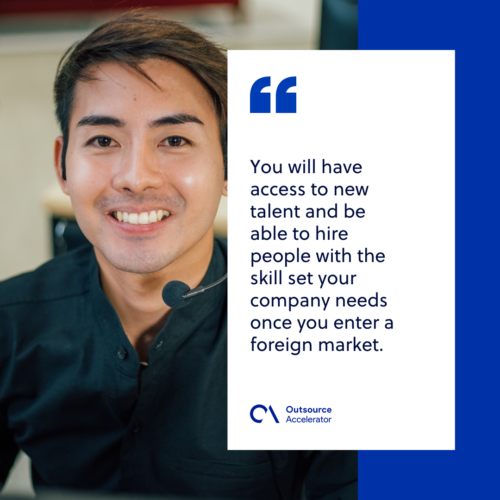
A foreign market gives you access to new talent. As a result, you can hire people with the exact skills you need. Smart global talent acquisition makes this step easier and faster.
Chances for corporate expansion
Firms can also grow by making goods at a fair price. In many cases, they outsource production to countries with lower labor and setup costs. So they cut spending while they reach new buyers.
Some precautions for international expansion
Still, a global strategy carries risks that you must plan for.
- Linguistic and cultural barriers. First, learn the customs and culture of your target country. This makes talks and deals far easier.
- Compliance risk. Foreign countries have their own laws, taxes, and duties. So you must follow them and work with the right local parties.
- High setup and termination costs. New laws and rules add cost to both entry and exit. Because of this, budgets can stretch fast.
- Difficulty in managing foreign staff. You need strong HR support to handle foreign taxes, rules, and pay.
In the end, always weigh the gains and drawbacks of global growth before you plan.
Frequently asked questions
Which international expansion method has the lowest risk?
Licensing tends to carry the least risk and cost. You let another firm use your brand or product for a fee. So you avoid the heavy spend of building a branch abroad. Still, you must protect your IP with a clear contract.
How long does international expansion usually take?
It depends on the method and the market. Exporting can start in a few months. In contrast, mergers and new sites can take a year or more. Careful research and planning keep the timeline realistic.
Do small businesses need an international expansion strategy?
Yes. A clear plan helps small firms avoid costly missteps. It also shows where demand is strongest. So even a lean firm can grow abroad with the right approach and partners.
What is the biggest mistake in international expansion?
The most common error is skipping local research. Firms often assume one market works like another. As a result, they miss cultural, legal, and tax gaps. So local study should come before any launch.
How does a PEO help with international expansion?
A PEO handles hiring, payroll, and compliance in a new country. Because of this, you enter faster without setting up a full entity. It also lowers legal risk while you test the market.






 Independent





