
Contract vs. Direct hire: Which option fits your business best?


Contract vs. direct hire: which one should you choose?
Choose contract-to-hire when you need speed and flexibility, and direct hire when you need long-term stability and loyalty.
- Contract-to-hire gives you a trial period and quick scaling.
- Direct hire offers full benefits, security, and faster team integration.
- The right pick depends on your budget, project, and long-term goals.
Several options exist when you recruit new hires. In the contract vs. direct hire debate, these two paths stand out. Both have clear pros and cons. So the best route depends on your goals and needs.
This article explains the key differences between contract vs. direct hire. Next, we look at the pros and cons of each. Finally, we share tips for a smooth staffing process.
Contract vs. direct hire: understanding the difference
First, it helps to know what contract vs. direct hire means. So let us define each one.
Contract-to-hire definition
Contract-to-hire (C2H) means you hire someone on a temporary basis at first. This usually lasts until a project ends or a set period is over.
Under C2H, the worker can become a permanent employee later. So it gives both sides a trial period to check the fit.
Recently, more companies have shifted toward hiring contractors. For example, Robert Half reported that 64% of managers turned to recruiting more C2Hs.

Direct hire definition
Direct hire means you hire an employee for a permanent role from day one. There is no interim contract phase. So the worker becomes a full, long-term member of the company right away.
Direct hires also get employee benefits. These include retirement plans, health insurance, and paid time off. For a deeper look, see this guide to a direct hire agreement.
Contract vs. direct hire: pros and cons of each recruitment process
Now let us look closer at the pros and cons of each process.
Contract-to-hire advantages
Here are the main reasons C2H can help:
More strategic hiring process
C2H lets you check if a candidate fits before you commit. As a result, the company can avoid a bad hire, which brings cost and productivity losses.
Allows for immense adaptability
C2H gives you a flexible way to staff up. So you can hire fast to meet business needs.
Adding temporary staff also helps you scale quickly. For example, it works well for seasonal or project-based needs.
Cuts down expenses
C2H can save money too. You do not have to invest in costly onboarding or training until a candidate proves to be a good fit.
Contract-to-hire disadvantages
However, contract hiring can bring a few challenges:
Uncertainty for the employee
C2H offers a path to a permanent role. Still, there is no promise the company will make an offer once the contract ends.
So this can create uncertainty for the worker. As a result, planning a long-term career gets harder.
Moreover, highly skilled people may avoid contract roles due to perceived instability.
Benefits and leave policies
Contract hires do not get health insurance, retirement plans, or paid time off. So this may put off some strong candidates. As a result, fewer of them take contract roles.
Potential conflicts with direct-hire employees
Contractors may feel left out of company culture and events. Because of this, they can feel disconnected from the team.
This gap can spark friction with direct hire staff. As a result, it may hurt morale and productivity.
Direct hire advantages
Now let us look at the benefits of direct hire recruitment:
Employee benefits and perks
Direct hire gives employees access to benefits and perks. So it shows the company values their well-being. As a result, loyalty and retention often rise.
Long-term stability
Stability is one of the biggest direct hire perks. Full-time staff can plan a long-term career and feel secure in their role. So direct hiring can also lower employee turnover. For a broader view, compare temporary vs. permanent employees.
Immediate integration
Direct hires join the team fully from the start. So they connect with peers right away. As a result, you often see better productivity, collaboration, and communication.
Direct hire disadvantages
Meanwhile, direct hiring has some drawbacks too:
Longer hiring process
Direct hiring needs a bigger investment in recruiting and onboarding. So it can take more time. It may also raise training costs, which affects the budget.
For example, the Society for Human Resource Management (SHRM) reports that the average time to fill a role is around 33 days.
Less flexibility
Direct hiring means a long-term commitment to pay and employment. As a result, it can limit your flexibility to scale up or down or change your model.
Risks of hiring mistakes
Hiring mistakes can be costly. Because direct hires are a long-term investment, a wrong choice strains resources. So it can bring productivity losses and lower morale.
Contract vs. direct hire: compensation and salary comparisons
When you weigh contract vs. direct hire, think about pay and salary expectations.
Contract staff usually earn hourly or fixed-term wages with no benefits. However, some contractors negotiate higher pay than direct hires in similar roles.
Direct hire staff get benefits and perks, and they set salary at the time of hire. Because the company invests long term, they can also negotiate raises, promotions, and bonuses.
Contract vs. direct hire: job security and stability
On job security, direct hire is clearly the steadier choice.
Direct hires enjoy the highest security since they join as permanent staff. So they get stable, long-term employment. Permanent workers also gain the protection of laws that guard against unfair firing.
Meanwhile, C2H job security depends on the contract terms. As a result, it can shift with company needs or a project’s end.
Contract vs. direct hire: work-life balance and flexibility
Work-life balance can also differ between the two.
Direct hires often work a regular schedule with set hours each day. So this gives them a routine and helps them plan life outside work.
However, contractors usually have a more flexible schedule. As a result, they can balance work with family or personal needs.
Contract vs. direct hire: career growth and development opportunities
On career growth, direct hire again offers more.
Direct hires get regular reviews, training, promotions, and career planning. Contract workers often see fewer of these, since their role may end on a set date. Companies also invest less in them, so they rarely move into leadership.
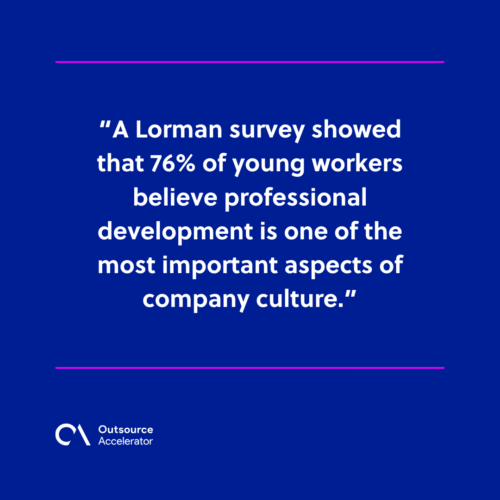
Still, firms that want top talent should invest in these chances. For example, a Lorman survey found that 76% of young workers see professional development as a key part of company culture.
Contract vs. direct hire: strategies for a smooth staffing process
Both paths need some planning to work well. It also helps to know the difference between staffing vs. recruiting. Here are tips to get you started.
Tips for successful contract-to-hire staffing
So consider these best practices for a C2H strategy:
- Define the job requirements. Set clear tasks, timelines, and expectations so candidates understand the role.
- Create a clear contract. Write a clear contract with the role’s details. Also state how and when the worker may move to a permanent role.
- Provide opportunities for integration. Host events so contract staff can meet other employees.
- Have clear communication. Set clear channels so a contractor’s time stays efficient and productive.
- Provide onboarding support. Give solid onboarding so contractors learn your culture, tools, and systems fast. As a result, they stay productive and enjoy the work more.
- Offer regular feedback. Share feedback throughout their tenure to help them improve and align with goals.
- Establish performance metrics. Set measurable performance metrics to judge fit for a permanent role.
Tips for successful direct hire staffing
If you hire directly, follow these tips for a smoother process. You can also apply proven talent acquisition best practices:
- Create a strong employer brand. Build a brand that shows your culture and values to attract top talent.
- Streamline hiring processes. Make recruiting steps efficient, and keep in touch with candidates.
- Provide growth opportunities. Offer growth and development so staff stay invested for the long term.
- Give thorough assessments. Use skills tests, culture-fit checks, and reference checks.
- Offer competitive compensation. Provide strong salary packages and benefits to attract skilled talent.
- Conduct an employee orientation program. Build a clear orientation to welcome and integrate new hires.
- Invest in mentoring and support. Assign a mentor or buddy to guide new hires through their first weeks. A solid contractor onboarding plan helps here too.
In the end, the choice between contract vs. direct hire depends on your needs, project, and goals. Both strategies have a place in the modern workforce. Each offers some mix of flexibility, stability, and lasting success. So match the approach to your goals, and you can make smart staffing calls.
Frequently asked questions about contract vs. direct hire
What is the main difference between contract and direct hire?
Contract hires work for a set period, often with a path to permanent. Direct hires join as permanent staff from day one, with full benefits.
Is contract-to-hire better than direct hire?
Neither is always better. Contract-to-hire suits flexible, short-term needs. Direct hire suits roles where you want stability and loyalty.
Do contract employees get benefits?
Usually not. Contract staff rarely get health insurance, retirement plans, or paid leave. However, some negotiate higher hourly pay instead.
Which option is cheaper for employers?
Contract-to-hire often costs less at first, since you skip heavy onboarding. However, a bad direct hire can cost more over time.
How long does direct hiring take?
It varies by role. On average, SHRM puts time-to-fill at around 33 days, though senior roles can take longer.
Key takeaways
- Contract vs. direct hire comes down to flexibility versus stability.
- Contract-to-hire gives you a trial period, quick scaling, and lower upfront cost.
- Direct hire offers benefits, security, and faster team integration.
- Contract staff miss benefits, while direct hires face a longer hiring process.
- Match your choice to your budget, project needs, and long-term goals.






 Independent





