
The pros and cons of having a remote accounting staff


What are the pros and cons of a remote accounting staff?
A remote accounting staff can cut costs and boost output, but it also brings control and security trade-offs you must manage.
- Pros: lower costs, higher productivity, and access to modern tools.
- Cons: less direct control, data risks, and some hidden costs.
- A strong provider gives you most of the pros with fewer of the cons.
The age of remote staff has arrived. New work models now open the door to a global talent pool. A remote accounting staff is one clear example of this shift.
Accounting fits this model well. The role needs little face-to-face contact. So with the right tools, it can run smoothly from anywhere. Many firms now treat outsourced accounting as a normal part of how they operate.
So is hiring a remote accounting staff the right move? It helps to know the pros and cons first. Thankfully, a good provider gives you most of the pros while limiting the cons. If you want a worthy partner, consider the Remote Group to fill your remote accounting staff.
Pros of a remote accounting staff
Here are a few of the strongest reasons to hire a remote accounting staff.
Increased productivity
LinkedIn’s Workforce Confidence Index found strong support for remote work. In fact, 83% of people in the Finance sector say remote work makes them more effective. A similar 82% believe their whole industry can thrive this way.
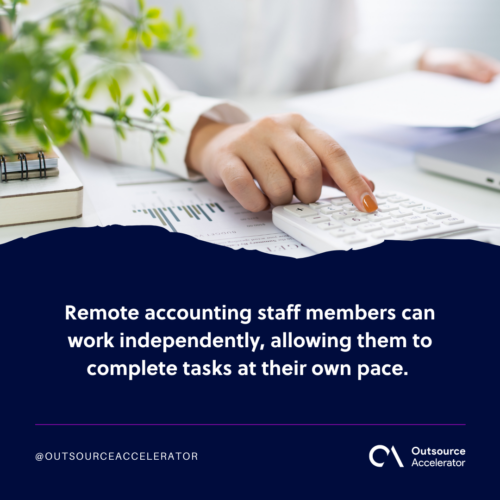
Remote accounting staff can work on their own and set their own pace. They choose when to work and how to plan their time. This may sound risky at first. However, it often lifts output. As a result, your company gains higher productivity.
Cost savings
A remote accounting staff means you skip extra office space and overhead. For example, you save on rent and insurance. So you keep more profit.
Accounting is one of the costlier parts of running a business. Many small firms cannot afford in-house hires. So a remote accounting staff gives you the benefits of an accountant at a lower cost. There are clear reasons to outsource finance and accounting to the Philippines, where skilled talent meets strong value.
Superior technology
Remote accounting services use modern tools to automate routine work. For example, a cloud platform lets staff reach financial data from anywhere. This makes tasks like taxes far easier.
Much of this technology is web-based by design. So it helps a remote accounting staff work from home or on the move. Many teams also rely on virtual bookkeeping tools to keep records clean and current.
Reduced fraud
Fraud is a big issue for businesses today. It often happens when staff can access sensitive data or alter records. A remote accounting staff can lower this risk.
Remote staff are not on-site. So you can control how much access they have to your records. As a result, fewer people can tamper with your books.
Cons of a remote accounting staff
Here are some of the drawbacks when hiring a remote accounting staff.
Limited control
It can be hard to monitor and guide remote staff. You rely on online contact, which can be slower than face-to-face talks. Because of this, it may feel unsettling at times.
Without close oversight, small errors can slip through. In turn, those mistakes can cost you money. Clear processes help, and so do proven ways to manage a remote team from a distance.
Data security threats
Financial data is a prized asset. So accounting software firms work hard to keep their tools secure. Companies also pay more attention to cyber risk each year.
Analysts at Gartner predicted that 60% of organizations will use cybersecurity risk as a determinant when doing third-party deals. Even so, concerns remain with remote staff.
In-house work gives you more control over data. A remote accounting staff may store files in less secure ways. So your sensitive data could be at risk. To avoid this, hire staff with strong security skills or certifications.
Restricted collaboration
A physical office offers many chances to work side by side. This synergy helps on shared projects. However, those moments are limited with remote staff.
Tools like Slack and video calls can help. In fact, they bridge this gap to a point. Still, they cannot fully match live camaraderie.
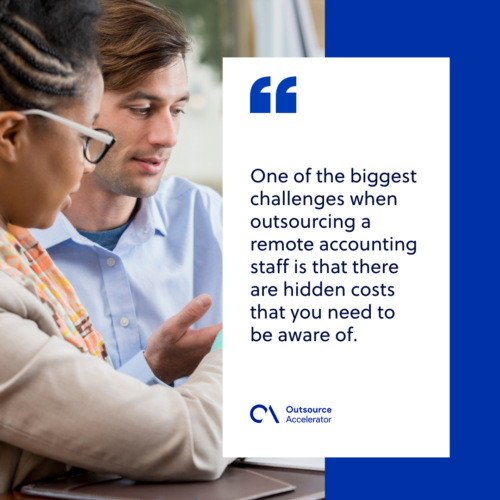
Hidden costs
One big challenge is the hidden cost of remote work. You need to plan for these. Some extra expenses include:
- Travel costs for emergency face-to-face meetings
- Training costs
- Onboarding costs for new employees
- Communication costs (phone, video chats, etc.)
Outsource accounting roles through The Remote Group
The Remote Group knows that accounting and finance are vital roles. So it sources staff with deep knowledge, real experience, and sharp thinking. As a result, your company gains a strong team.
The Remote Group also makes sure your staff know the software the job needs. So you can lean on technology and stay ahead. If you want to scale further, it helps to know how leading firms rank, such as these top accounting BPO firms in the Philippines.
Contact the Remote Group for remote accounting staff today.
Frequently asked questions
What does a remote accounting staff do?
A remote accounting staff handles your books from another location. Tasks can include bookkeeping, payroll, taxes, and reports. They use cloud tools to access data securely. So you get full accounting support without an on-site hire.
Is a remote accounting staff safe for sensitive data?
It can be safe with the right safeguards. Choose staff with strong security skills or certifications. In addition, limit access to only what the role needs. Clear policies and secure tools lower the risk further.
How much can a remote accounting staff save you?
Savings come from lower overhead and no extra office space. You also avoid full in-house salary costs. Many small firms find this far more affordable. So they get expert help within a tight budget.
How do you manage a remote accounting staff well?
Set clear goals and simple reporting routines. Next, use shared tools for tasks and updates. Regular check-ins keep work on track. So you keep control even from a distance.
Who should hire a remote accounting staff?
Small and growing firms gain the most. They often cannot afford in-house accountants. A remote accounting staff fills that gap at a lower cost. Larger firms also use it to scale finance work fast.






 Independent





