
A quick guide to improving employee attendance

This article is a submission by Jake Tillings of The HR Guy. Jake is an expert at helping organizations reach their full potential through talent acquisition, leadership development, and organizational culture.
How can you improve employee attendance?
You improve employee attendance by setting clear rules, building a workplace people enjoy, and handling absences early and fairly.
- Set a simple attendance policy, then reward the people who show up.
- Make work a place staff want to be, with flexible hours and real support.
- Track absences, talk often, and step in before small issues grow.
Poor attendance is costly. In fact, it costs businesses around $2,650 per salaried employee each year. That is enough to pay for a week in the Bahamas. Instead, you sit at home covering gaps from tardiness and absences. So the point is clear: employee attendance matters, and this quick guide shows how to improve it.
Implementing systems that promote good attendance
First, let us look at how you can encourage good employee attendance. A few simple systems go a long way. They also help you keep staff engaged and accountable.
1. Creating an effective employee attendance policy and system
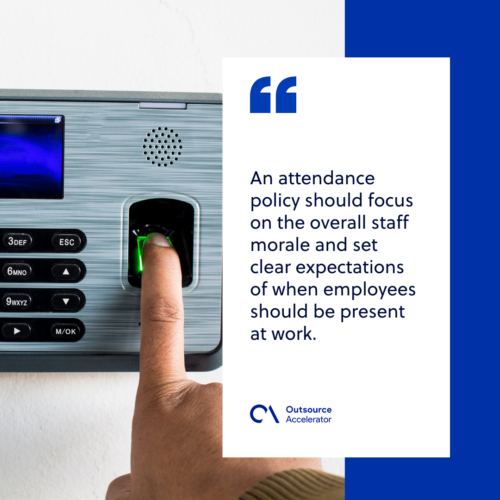
An attendance policy should support overall staff morale. It should also set clear expectations for when staff need to be at work. One easy way to do this is a points system.
Staff who arrive on time can earn points for rewards. For example, you can offer extra days off, gift cards, or bonuses. So do not hold back, and get creative with the prizes.
You could even let the team pick a silly forfeit for you once they hit a points goal. Will you enjoy it? No. Will it work? Yes, and that is what counts here.
Meanwhile, staff who show up late lose points. As a result, the system nudges people toward punctuality. Be sure to explain it during onboarding.
2. Setting clear expectations for employees
This sounds obvious, but it still matters. It is not just about when and where staff show up. It also means being upfront about what happens when rules are broken.
After all, rules without consequences do not work. So spell out both parts clearly, and do it kindly.
Start early, ideally during onboarding. For example, use short video training, regular check-ins, or similar steps. Clear flexible work hours also help staff plan their day.
Improving the workplace environment to encourage better attendance
Let us do some quick math. Your staff spend about 8 hours at work, 8 hours asleep, and 8 hours on free time. That is their whole day.
So one third of daily life happens at work. If that place feels miserable, life feels miserable too. As a result, you miss the chance to increase productivity by 12%.
Because of this, you need to invest in a healthy work atmosphere. So how do you improve the workplace? Here are three simple moves.
1. Flexible scheduling
Nothing says “we care” like a friendly hybrid setup. By allowing remote roles or flexible hours, you show that you respect work-life balance.
In addition, SHRM’s survey found that 77% of remote workers were more productive. Of those, 30% did more work in less time, and 24% did more in the same time. Clearly, remote work can lift productivity for many teams.
So it works both ways. Your staff enjoy the flexibility, and you enjoy the extra output. That is a real win.
2. Providing positive and constructive feedback regularly
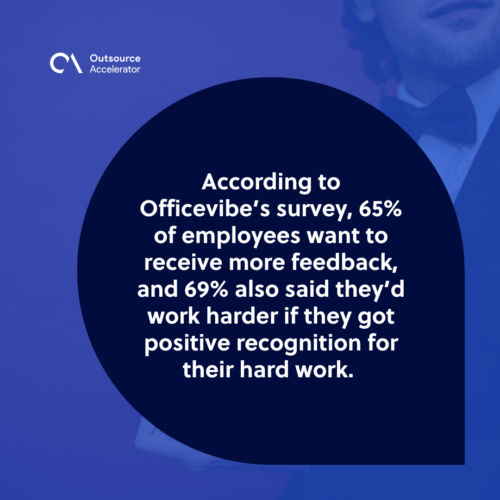
According to Officevibe’s survey, 65% of employees want to receive more feedback. Also, 69% said they would work harder with positive recognition.
So the takeaway is simple: talk to your staff more often about their work. As a result, they take more ownership and feel valued. For fresh ideas, browse these recognition ideas for your team.
3. Providing resources for employee well-being and stress management
Good attendance is not just about a comfy office or a raise in average salary. Small steps help too. For example, offer yoga classes, short meditation sessions, or healthy snacks in the breakroom.
These steps support employee wellness and better mental health. After all, staff are people, not machines. So treat them well if you want their best work.
Dealing with absenteeism when it does occur
Absenteeism is tricky to handle. Sometimes a person is simply unwell. Other times they take unplanned days off or keep arriving late and leaving early.
Whatever the cause of absenteeism, managers should act early. So step in before the issue grows. Here are a few simple tips.
1. Keep accurate records of absences
First, you want to know who is struggling to show up. You also want to reward those who never miss a day.
In addition, records protect you in a dispute over vacation or excused time. So keep clear records, however small they seem. You will thank yourself later.
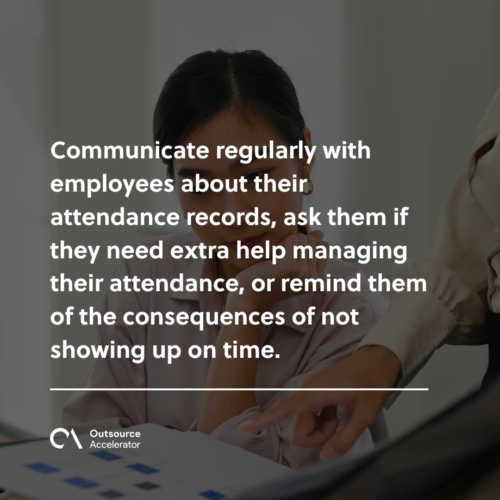
2. Communicate regularly with employees about their attendance record
Next, ask staff if they need help managing their attendance. You could even send a friendly weekly check-in.
Still, keep it positive, not punitive. So do not scold people over their record. Instead, remind them gently and point them to help.
When staff feel safe to be honest, it is easier for them to be accountable. As a result, problems surface sooner and get solved faster.
Conclusion
So that is your quick guide to improving employee attendance. Hopefully, it helps you tackle the issue with more confidence.
If it does, share it with friends and colleagues. Because of this, more teams can benefit. Good luck!
Frequently asked questions
What causes poor employee attendance?
Common causes include burnout, unclear rules, weak morale, and health or family issues. Sometimes a rigid schedule is the real problem. So look for patterns before you assume someone is simply careless.
How do you measure employee attendance?
Most teams track absence rates, late arrivals, and unplanned days off. Time-tracking tools make this easy. As a result, you can spot trends early and act with facts, not guesses.
Does flexible scheduling really reduce absences?
Often, yes. Flexible hours help staff handle appointments and family needs without missing full days. For many teams, this also lifts morale and output at the same time.
What is an attendance points system?
It is a simple scoring setup. Staff earn points for good attendance and lose points for lateness or no-shows. So the rules stay clear, and rewards feel fair to everyone.
How should managers handle frequent absences?
Start with a calm, private chat about the cause. Then offer support and remind the person of the policy. Finally, keep records so you can act consistently across the team.






 Independent






