
What differentiates outbound customer service from inbound customer service?


Outbound customer service is when agents reach out to customers first. Today, buyers care deeply about the brands they support. They also expect great service every time.
The main reason people stay loyal is strong customer service. The more valued they feel, the more they return. This is where outbound customer service comes in.
Its counterpart, inbound customer service, also gives solid support. So which one works best? When does each matter, and how do they differ? Let’s break it down.
What is outbound customer service?
Outbound customer service is proactive contact where agents call customers to sell, update, or gather feedback.
- Agents reach out first to pitch products and services.
- It helps a brand stay visible to a wider audience.
- It also collects feedback straight from users.
In other words, outbound calls aim to drive sales for the business. Agents connect with many customers to share what the company offers. As a result, the brand reaches more people through active, direct contact. For example, a team may call past buyers about a new plan or a renewal. Many firms scale this work through top outbound call centers.
What is inbound customer service?
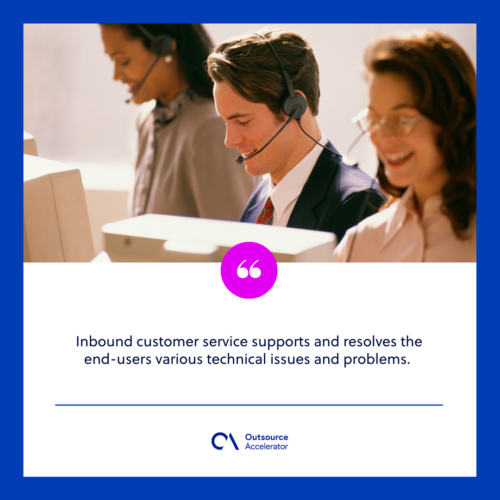
On the other hand, inbound customer service solves the user’s technical issues and questions.
Usually, agents answer a long line of calls. They file tickets and give quick fixes. So services stay smooth and clients stay comfortable. As a result, inbound support gives buyers a better journey with the brand.
For example, a customer may call about a billing error or a broken feature. The agent listens, checks the account, and fixes the issue on the spot. So the customer hangs up happy. In turn, this builds trust and keeps the buyer loyal.
Difference between inbound and outbound customer service
As noted above, the two focus on different parts of the customer journey. The first sits near the start. The second keeps the relationship going. Here are the other key differences.
Objectives
Inbound customer service centers on the users. Customers call the company with concerns, ideas, and questions. Basically, inbound teams work through incoming calls to give great service.
These teams must be accurate and helpful. After all, this drives the customer satisfaction score. So the team works hard to keep clients are satisfied and happy and engaged.
Outbound customer service, on the other hand, reaches out to clients. Agents upsell, cross-sell, or collect payments when needed. Most users do not plan to talk to the brand during these calls. As a result, each outbound call carries some risk. For more on this, see our guide to cross-selling and upselling.
Technology used
These two roles need different tools. Inbound service takes many calls that seek answers. So it uses the following:
- Automatic IVR: handles specific cases. You can pair it with AI for more speed.
- Call tracking and monitoring: helps you learn customer habits and needs. It shows common problems and fixes.
- Call distribution and transfers: routes clients to the right agent fast.
Outbound customer service, meanwhile, needs tools for call processing:
- Auto-dialer: lets agents reach many clients each day. This helps them hit their sales targets.
- Knowledge-base software: builds familiarity before the pitch. So agents make fewer errors and close more deals.
CRM software also gives agents a clear view of each user. As a result, they know each person’s needs and the right approach. Tracking call center metrics keeps both teams sharp.
Training of agents
Customers always come first, both in inbound and outbound work. Still, companies train each team in a different way.
Inbound agents receive concerns and feedback. So they need empathy, patience, and calm. They stay polite even when a customer is upset.
Outbound agents are the initiators. They call users, pitch, and encourage a purchase. As a result, their training leans on emotional intelligence, negotiation, and sales skills. They learn to read each customer’s mood.
Relationship between inbound and outbound customer service
Many people think these two roles work alone. In fact, they are closely linked.
Call center companies use both to build strong client rapport. Their goal is to lift a brand’s visibility and trust. So they combine both to keep sales and satisfaction high. Good outsourcing customer service partners blend the two with care.
This is true for BPO companies like SPLACE BPO, which also provide these services. They use insights from both sides to build a plan that fits each customer. Strong service also lifts long-term customer satisfaction.
Frequently asked questions about outbound customer service
What is the goal of outbound customer service?
Its main goal is to reach customers first. Agents sell, upsell, share updates, or gather feedback. So the brand stays active and visible.
How is outbound different from inbound customer service?
Outbound agents start the contact, while inbound agents receive it. Outbound leans on sales skills. Inbound leans on empathy and quick fixes.
What tools support outbound customer service?
Teams use auto-dialers, CRM, and knowledge-base software. These tools help agents reach more people and close more deals.
Can one team handle both inbound and outbound work?
Yes, many call centers blend both. They use shared data to serve customers better. As a result, sales and satisfaction both rise.
Key takeaways
- Outbound customer service means agents reach customers first.
- It focuses on sales, upselling, and feedback.
- Inbound service handles incoming issues and questions.
- Each role needs its own tools and training.
- Blending both keeps sales and satisfaction strong.






 Independent






