
Driving employee performance using HR analytics


How does HR analytics drive employee performance?
HR analytics drives employee performance by turning employee data into clear actions that lift engagement, cut turnover, and place the right people in the right roles.
- It spots the factors that shape engagement, output, and retention.
- It guides better hiring, training, and pay decisions.
- It helps leaders act early, before small issues grow.
The use of HR analytics is growing fast as businesses look for an edge. By making better use of employee data, HR analytics can find the factors that shape engagement, output, and turnover.
This, in turn, helps businesses perform better. First, they put the right people in the right roles. Next, they cut the costs tied to lost output and staff churn.
What is HR analytics?
HR analytics is the process of gathering and studying data to improve decisions in human resources. It covers organizational policies and procedures too.
It can spot trends and patterns in how employees behave. As a result, teams can use that insight to improve hiring and retention and to build better processes.
By understanding what drives employee behavior, businesses can design targeted steps that improve results.
It boosts performance in many ways, including higher profit and lower costs. It can also reveal patterns in recruiting, hiring, and letting people go.
Which HR metrics should you analyze?
Employers need to track certain metrics to judge how well their HR team works. By studying HR metrics, they can see if they meet their goals. They can also spot areas that need work.
Some of the most useful HR metrics to track include the following:
- Employee turnover rate
- Recruitment costs
- The time it takes to fill a position
- Employee engagement
- Employee satisfaction rates
By studying these metrics, employers learn how well their workforce performs. They also learn whether staff feel happy at work. For example, rising employee turnover statistics often signal a deeper problem to fix.
3 types of HR analytics
Here are the three most common types of HR analytics:
Predictive analytics
Predictive HR analytics uses past data, statistics, and machine learning to forecast future trends. As a result, it can point to likely business outcomes.
Organizations can then make smart choices about workforce planning, hiring, and performance. They do this by reading patterns in the data.
This type of analytics helps HR staff see challenges early. So they can act ahead of time to address them.
Workforce analytics
Workforce analytics is also called talent analytics. It focuses on understanding and improving the workforce. In short, it studies employee demographics, skills, performance, and engagement data.
It can reveal insight into output, satisfaction, team dynamics, and training needs. As a result, organizations can make data-driven choices that improve the employee experience and drive success. Clear workforce planning builds on these findings.
Data analytics
HR data analytics covers a broader set of methods. It collects the data needed to process and study HR insights.
Data analytics helps HR staff make informed choices across many areas, such as:
- Recruitment
- Performance management
- Compensation
- Employee engagement
It acts as a base for other HR analytics work. Because of this, it helps organizations use data to improve their HR strategy.
What are the benefits of HR analytics?
HR analytics uses data mining, predictive models, and machine learning for strategic decisions. It is a fairly new field, and it has gained ground as firms collect more data.
When done right, HR analytics gives businesses many benefits, including the following:
Improved employee experience
The employee experience is key to any company’s success. Happy, engaged employees are more productive. They also build a better company culture.
HR analytics can improve the employee experience in several ways. When data is gathered and studied in a clear way, HR staff gain insight they lacked before.
It can flag issues early, before they turn serious. So once you know what drives satisfaction and engagement, you can act and improve the experience. Strong employee engagement is often the clearest sign of progress.
Gain workforce insights
HR analytics tracks, shares, and studies performance data for each employee. As a result, hiring managers can spot the top performers on the team.
It also helps managers see who may be struggling with their workload. When you spot where the workforce is growing or shrinking, you can plan and act in good time.
Reach data-driven decisions
HR analytics can help an organization learn the following:
- How well they are staffing their teams
- What types of performance management are working best
- Whether or not they have too much turnover
Organizations that use this data make better hiring choices. They also set clearer development goals.
By studying data on interactions, hiring, training, and performance, firms see what works. In turn, they can make more informed decisions to strengthen operations.
How to use HR analytics in boosting your company’s performance
More businesses now see a better return from HR analytics. It can help in many parts of the workplace. Some of them include:
Talent acquisition
HR analytics lets companies sort through thousands of applications. As a result, it can produce a shortlist of the most promising candidates.
After the first round, you can use it again to review resumes. So you can decide who to invite for an interview. Smart talent acquisition often starts with this kind of data.
Training
The real test of hiring is welcoming new talent into their roles. New employees must learn company processes. Then they learn the details of their job and the tools they will use.
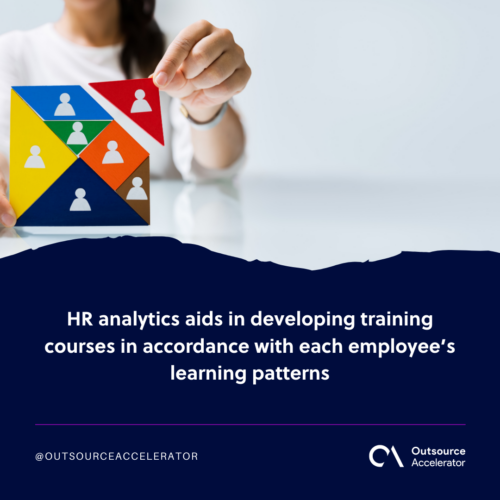
HR analytics helps build training courses around each person’s learning style. So employers can shape training that works best for them and their recruits.
Evaluation
Evaluating performance is one of the most important HR roles. HR analytics helps companies track and judge the key performance indicators of each employee. Ongoing employee performance monitoring makes this far easier.
Recruiters and managers can then spot flaws at work and give feedback. As a result, this saves time and adds a personal touch. A clear performance management system keeps this process fair and consistent.
Retention
No organization can be sure its workforce will stay long-term. Retention is a top priority for most companies today. Skilled staff can be hard to keep.
HR analytics flags issues such as low pay or poor management before they spiral. So HR leaders can find fixes or make changes before problems grow.
Compensation
The basic driver of satisfaction is financial pay. It is the first thing many people weigh when they look for a job. Having a good salary helps keep them content.
HR teams can now use analytics to find the best pay model for each member. It also helps the company judge which raises are needed to keep workers happy.
Frequently asked questions about HR analytics
What is the goal of HR analytics?
The goal is to turn employee data into better decisions. As a result, teams can lift performance, engagement, and retention.
Which HR metrics matter most?
Start with turnover rate, recruitment costs, time to fill, engagement, and satisfaction. These give a clear view of workforce health.
How does HR analytics improve employee performance?
It spots what helps and what blocks performance. So managers can give feedback, adjust training, and set fair goals.
Do small businesses benefit from HR analytics?
Yes. Even simple metrics guide better hiring and pay choices. So small firms can cut churn and boost output too.
Key takeaways
- HR analytics turns employee data into clear, useful actions.
- It guides better hiring, training, pay, and retention choices.
- The main types are predictive, workforce, and data analytics.
- It flags issues early, so leaders can act before problems grow.
- Done right, it lifts engagement, output, and company culture.






 Independent





