
Building a virtual team: How to get started


What is the best way to build a virtual team?
Building a virtual team works best when you hire skilled remote staff, set clear roles, and back them with simple tools and steady communication.
- A virtual team lets you work with talented people from many places at once.
- Clear tasks, shared tools, and regular check-ins keep everyone aligned.
- The right outsourcing partner can help you set up and lead the team fast.
Virtual teams are a smart choice for almost any business. They give you a diverse group of skilled people who can support daily work. As a result, you get more talent without the cost of a full office.
Virtual teams are not a new idea. However, remote work is now the norm, so building and managing one is a common challenge for team leaders. This guide shows you how to get started and what to focus on.
What is a virtual team?
A virtual team is a group of people who work together on tasks from a distance. They work online, and they are often based in different countries around the world.
Trust and clear communication matter a lot here, because there is no face-to-face contact. So remote members use tools like email, chat, and video or voice calls to work together well. In addition, these tools keep the whole team connected day to day.
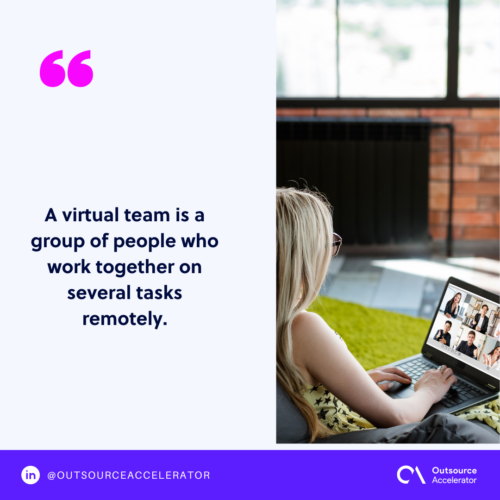
The rise of virtual teams
Remote work has grown fast over the past few years. Many firms first moved online during the COVID-19 pandemic. Because of this, they had to run key tasks without a shared office.
That shift proved a big point. Virtual teams can be just as productive as in-house ones. As a result, working from home is now a standard option in most industries.
Today, companies keep virtual teams for good reasons. They cut office costs, widen the talent pool, and let staff work from safe, flexible spaces. Still, success takes clear planning and steady support. For a fuller view, see these benefits of a remote team.
How do you create an effective virtual team?
Building a virtual team is not as simple as it looks. Every leader has to learn habits that office work does not always require. So here is a clear list of steps to help you build an effective team.
Clarify tasks and processes
Remote work gets tricky because people rarely share one location. To fix this, make each task and process clear. Be specific about who does what, and by when.
It also helps to split work among small groups of two or three members. You can then review their remote team results often. As a result, you can spot when someone needs a new plan or more training.
Establish communication channels
Setting up communication channels should be one of your first steps. On virtual teams, chat is often less frequent and less rich than face-to-face talk. So you need to make the rules clear from the start.
Be precise about how the team should reach you and each other. Explain which tools to use, when to use them, and how fast to reply. In addition, the right work from home software keeps messages, files, and calls in one place.
Agree on a shared language
Virtual team members often sit in different countries. Because of this, culture and language can cause mix-ups. A word you use daily may mean something else to a teammate abroad.
So take time to agree on shared terms and phrases. Talk with your team and set clear meanings for words you use a lot. As a result, everyone reads updates the same way.
Track productivity and deadlines
With remote teams, you need to track output and deadlines. Watch daily progress, plan the workload with care, and hold regular meetings. First, set clear goals for each person.
Next, give deliverables and follow their progress. This keeps members focused and on time. It also gives the team a chance to flag any problems early. Strong remote work culture makes these check-ins feel supportive, not heavy.

Interact with your team
Regular contact drives the performance of every virtual team member. It is also key to helping a team work well as one unit. So make interaction a normal part of your team rhythm.
Use these moments for more than task checks and feedback. Meanwhile, use them to keep people tied to your goals and vision. For steady results, follow proven ways to manage a remote team.
Build your virtual team with HireSmart Staff
Remote work is now the norm. Still, it takes a real adjustment for many companies to make it work. Fortunately, outsourcing firms can help you build and lead your virtual team.
You can work with HireSmart Staff for this. Their team gives your business skilled people across many fields. In addition, they use a careful hiring process to place only strong candidates on your team. A trusted remote staffing agency can shorten your search and lower your risk.
With their help, you can build a strong virtual team that drives real growth. So partner with HireSmart Staff to get started.
Frequently asked questions about building a virtual team
How long does it take to build a virtual team?
It depends on the roles and skills you need. A small team can start within a few weeks. Meanwhile, a larger or specialist team may take a couple of months to fill and train.
Which tools do virtual teams need most?
Every virtual team needs three basic tool types. First, a chat and video app for daily contact. Next, a shared drive for files. Finally, a project tracker to follow tasks and deadlines.
How do you keep a virtual team motivated?
Clear goals and honest praise go a long way. Celebrate small wins, and give useful feedback often. In addition, tie each person’s work to the bigger mission so they feel part of it.
Is a virtual team cheaper than an in-house team?
Often, yes. You save on office space, equipment, and local salary rates. Still, budget for good tools and training, since these protect quality and keep the team productive.
Can any business run a virtual team?
Most can, with the right setup. Tasks that happen online suit remote work best. So map your workflows first, then decide which roles you can move to a virtual team.






 Independent






