
How to become a successful contact center professional


What does a contact center professional do?
A contact center professional is a trained agent who helps customers across many channels, such as phone, chat, email, and text.
- They answer questions, fix problems, and process orders every day.
- They work across several channels, not just phone calls.
- They need strong people skills, tech skills, and patience to do the job well.
A contact center is the central point of contact between a business and its customers. So it is one of the most vital parts of any company. This is where a brand talks directly with the people it serves.
Still, a contact center cannot run without skilled contact center professionals. We usually call these people agents or representatives. Many folks use the terms contact center and call center as if they mean the same thing. However, the two are not identical.
Both handle customer service. A call center only manages inbound and outbound calls. A contact center, by contrast, uses many communication channels. As a result, contact center reps become experts at giving a great service experience.
What is a contact center professional?
Contact center professionals are customer service and sales experts. They meet customers’ needs through phone calls, live chat, email, SMS, and web support tickets. So their day covers far more than one channel.
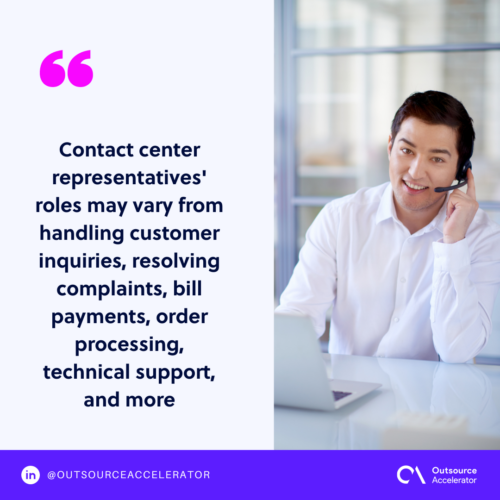
Their roles vary widely. For example, they handle inquiries, resolve complaints, take payments, process orders, and give technical support. On a typical day, an agent manages a large volume of customer requests.
Five required skills to become a successful contact center professional
Customer service can be a demanding field. So if you want to become a contact center professional, some skills matter more than others. Here are the top five you need to excel.
Strong interpersonal skills
The goal is always to give a great service experience. Beyond meeting needs, agents should build good rapport with customers. Strong interpersonal skills help them form positive bonds. As a result, customers feel heard and valued.
Technical skills
Part of the role is recording each customer engagement. So most firms hire people who type fast and accurately. Being tech-savvy is a must for this job. Contact centers use Customer Relationship Management (CRM) systems to make the work easier. In addition, good contact center agent tools let agents solve many technical problems on their own.
Effective listening and comprehension skills
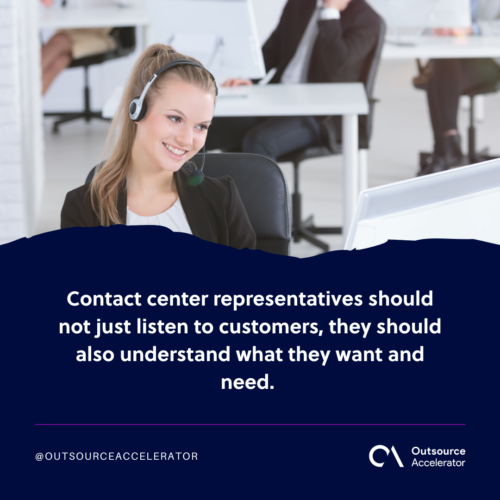
Reps should not just hear customers. They should also grasp what customers want and need. So excellent listening and comprehension skills are key. Because of this, agents can offer the right solution the first time.
Organizational skills
Contact centers run on omnichannel platforms. So agents juggle many tasks each day. Being well organized helps them move between tools and channels with ease. As a result, they serve customers in a timely way.
Multitasking
Multitasking is part of the job in any contact center. On an average day, an agent may handle 30 to 50 leads or tickets. Some firms also set a daily quota for calls or tickets.
Managing many tasks at once can feel heavy. One minute an agent takes a sales call. Next, they switch to a support request. However, most of these skills grow with time. In addition, providers train and coach their staff to sharpen them. Regular call center coaching makes a big difference here.
These skills can be honed with the help of a great team. OP360 makes sure that they train and develop agents’ skills throughout their stay with the company. Beyond people, the right contact center platforms support agents at every step.
Tips to become a successful contact center professional
Contact center agents are the front line of customer service. The role is demanding, and it can be repetitive too. So a few habits set the best agents apart.
First, be flexible. Flexibility helps you switch from one task to the next with ease. Next, stay calm under pressure. Irate customers are unavoidable, so patience and resilience matter a lot.
Finally, welcome feedback. The best agents learn from mistakes and improve on weak spots. As AI reshapes the field, it also helps to know whether AI will replace call center agents. In short, human skill still matters most.
Frequently asked questions
What qualifications do you need to become a contact center professional?
Most entry roles ask for a high school diploma and clear communication skills. A degree can help for senior roles. However, many firms value attitude and training over formal credentials. To build the right foundation, review the core customer service skills every agent should have.
How much does a contact center professional earn?
Pay varies by country, channel, and experience. Agents in the Philippines often earn more than the local average. On top of base pay, many roles add night shift bonuses and performance incentives.
Is contact center work stressful?
It can be, since agents handle high volumes and tough calls. Still, good training and breaks help a lot. So does a supportive team that steps in when calls get hard.
Can contact center agents work from home?
Yes, many now work remotely. Cloud tools let agents take calls and chats from anywhere. As a result, remote and hybrid setups are common across the industry.
What career growth can a contact center professional expect?
There is a clear path upward. Agents can move into team lead, quality, or training roles. Over time, strong performers often reach supervisor or operations management jobs.






 Independent






