
IT security outsourcing services: managed or hosted?


Should you choose managed or hosted IT security outsourcing?
Both models protect your business, but managed IT security outsourcing places a provider’s team on-site, while hosted services run the infrastructure off-site under your control.
- Managed services give you hands-on, on-premise support and monitoring.
- Hosted services give you provider-owned equipment, kept off-site, that you still direct.
- The right pick depends on your team’s skills, budget, and goals.
Today, the right IT security outsourcing services, managed or hosted, are a real advantage for any business. So if you want to keep pace with rivals and serve customers better, hiring the right IT provider should be a priority.
In this article, you will learn the difference between managed and hosted services. You will also see their benefits. Finally, you will review the key points to check before you hire a provider. For a wider view, it helps to know the main areas of IT outsourcing services first.
What made you decide on outsourcing
Perhaps the best reason to hire an outsourced IT solutions company is focus. So you can spend more time on core work instead of managing your own IT system.
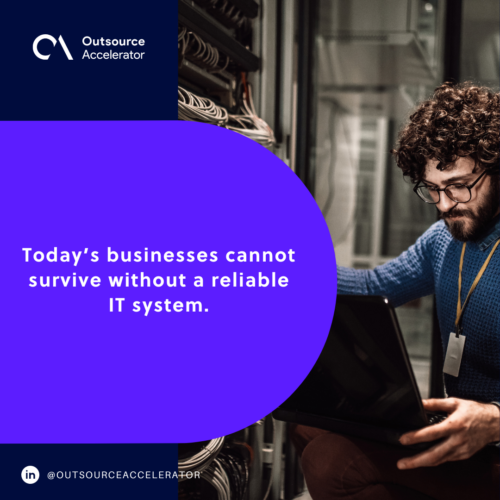
Today’s businesses cannot survive without reliable IT. For example, they must run a website, back up key files, and keep clear lines between teams. All of these are vital parts of modern work.
On top of that, online threats keep growing as more people gain internet access. So you need skilled people to guard this part of your business. As a result, your IT needs are best handled by experts if you want to thrive.
Benefits of managed services
In IT security, managed services often include on-site, proactive support. So the provider you hire works inside your office to help run your IT system.
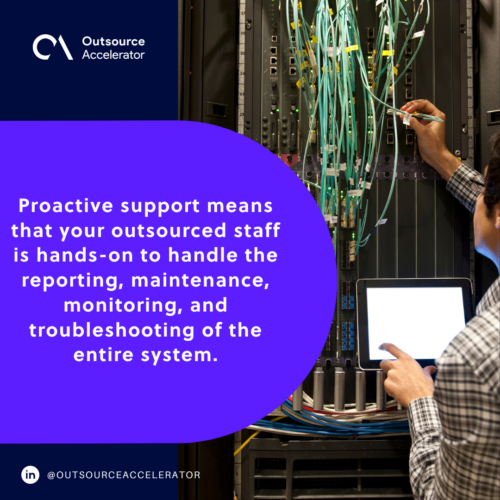
Proactive support means the team is hands-on. For example, they handle reporting, maintenance, monitoring, and troubleshooting for the whole system. As a result, you and your staff can focus fully on core work.
This setup helps most when your team is not strong on software upkeep. In fact, maintenance has become highly technical. Talks with software vendors are now complex and full of jargon. So if you are unsure what to say, you are at a real disadvantage.
Managed services from a reputable software outsourcing company can do the heavy lifting for you. Still, it helps to weigh when managed services beat plain outsourcing for your case.
Benefits of hosted services
Hosted services differ in one key way. Here, your outsourced staff and the infrastructure sit outside your office.
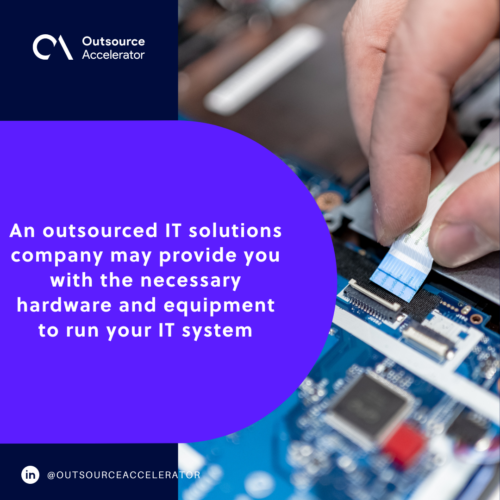
An outsourced IT solutions company may supply the hardware and gear to run your system. However, their people are not on-site to manage it. Of course, they are still on call for advice and support.
The benefits of hosted services are two-fold. First, they lower your infrastructure costs. So you use top-tier equipment from your provider, and they keep it working. Meanwhile, you simply use it.
Second, you keep sensitive work private, because your own team runs your strategies. So you keep control of key tasks, such as backup scheduling, passwords, security setup, and upgrades. As a result, you stay in charge of everything that matters.
Managed or hosted: how to weigh IT security outsourcing
So which model fits you best? It often comes down to control and cost. Managed services suit teams that want experts on-site to run daily security. Hosted services suit teams that want modern gear off-site, plus firm control over data.
Either way, you should not treat security as an afterthought. In fact, many firms now add Cybersecurity as a Service on top of both models. So they gain round-the-clock threat monitoring without hiring a full in-house team.
Other important IT infrastructure outsourcing considerations
Here are a few more IT outsourcing points to weigh before you sign.
Define your outsourced IT support parameters
First, decide which tasks your outsourced team will cover. So set clear limits from the start. As a result, you avoid conflict and manage expectations well. It also helps you plan for any sudden issue or crisis. For clarity, it helps to map the different IT support levels you may need.
Know your team’s IT competence and capacity
Next, assess your own team’s IT skills. Be honest about their strengths and gaps. Because of this, you can pick the service model that helps everyone most.
Consider your business’ short term and long term plans
Finally, split your long-term goals from your current needs. So the choice of provider gets clearer. For example, if you lag rivals on software, a software outsourcing company may be the right call. Strong data security in outsourcing should sit at the center of any long-term plan.
Get ready to choose your IT outsourcing provider.
Now you know the difference between managed and hosted services. You have also learned the main points to check. So you are ready to hire your IT outsourcing provider. If you want a fuller toolkit first, explore how managed services can support daily operations.
A secure, efficient IT system has never mattered more. Indeed, hiring a trusted, skilled IT security outsourcing partner is one of the best moves you can make. So take your time, check the fit, and choose with care.
Frequently asked questions
What is the difference between managed and hosted IT security services?
Managed services put a provider’s team on-site to run your security day to day. Hosted services keep the equipment off-site under your control. So one gives hands-on support, and the other gives flexible, provider-owned infrastructure.
Is IT security outsourcing safe for sensitive data?
It can be very safe with the right partner. So check their compliance records, encryption, and access controls first. As a result, you protect customer and company data while gaining expert help.
How much does IT security outsourcing cost?
Costs vary by scope, team size, and service model. Hosted services often cut hardware spend, while managed services add on-site expertise. So ask for a clear, itemized quote before you commit.
Should small businesses outsource IT security?
Often, yes. Small teams rarely have in-house security experts. So outsourcing gives them enterprise-grade protection at a predictable cost.
How do I choose the right IT security outsourcing provider?
Start by defining your needs and your team’s gaps. Then compare providers on skills, security standards, and support levels. Finally, check references so you can choose with confidence.






 Independent






