
5 most difficult things about hiring developers

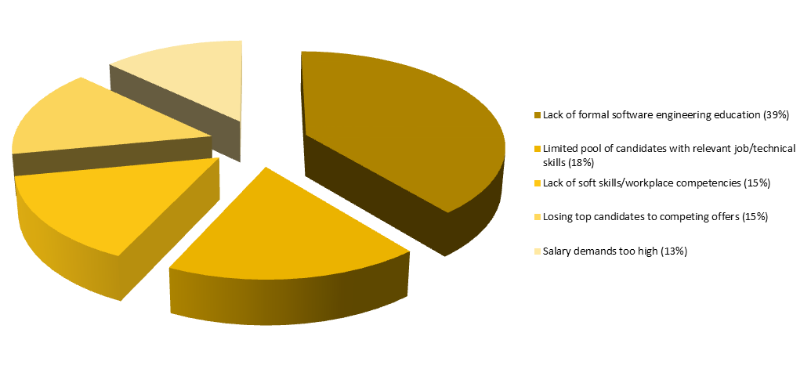
What are the hardest things about hiring developers?
The hardest things about hiring developers are a lack of formal training, a thin talent pool, weak soft skills, losing top people to rival offers, and high salary demands.
- Strong technical talent is scarce, and good candidates get snapped up fast.
- Soft skills and workplace fit are as hard to find as coding skill.
- An offshore team can ease all five problems at a lower cost.
DigitalOcean published a report on the top five struggles companies face when hiring developers. The report found these five difficulties:
- Lack of formal software engineering education (39%)
- Limited pool of candidates with relevant job or technical skills (18%)
- Lack of soft skills or workplace competencies (15%)
- Losing top candidates to competing offers (15%)
- Salary demands too high (13%)
Other issues on the list tie back to the requirements that recruiters add to the job description. Priorities between recruiters and developers do not always line up. So these gaps can cause problems later on.
However, note that most of these issues can be avoided. You may ask how. The answer is simple: hire an offshore team that works as an extension of your local software development. So let us look at how these problems can be solved by hiring your own offshore developers. For the wider view, see our guide to offshore software development.
Five most difficult things about hiring developers
Here we look at the five hardest parts of hiring developers, and how offshoring can help.

Lack of formal software engineering education
An offshore provider gives you skilled, seasoned developers. In most cases, these are software developers at a medior to senior level. They have also worked with clients across many industries. On top of that, offshoring firms keep honing their teams through regular training. As a result, they stay current with the latest tools and tech.

Limited pool of candidates with relevant job or technical skills
Like any BPO firm, offshore software companies keep a wide pool of developers. Offshore staffing providers such as ConnectOS give companies access to skilled developers without the overhead of traditional hiring. This model is close to recruitment process outsourcing, which hands the hiring work to specialists.
If you are hiring developers, always start with three checks. First, confirm the developers you need are available. Next, make sure their skills match your job. Finally, check that the price fits your budget.

Lack of soft skills or workplace competencies
To hire the right people, focus on both soft and technical skills during the process. Also, do not forget to check their organizational skills. You may need staff in your office, yet you should stay open to flexible work too. Another thing to consider is team building. This way, your developers build strong working bonds. As a result, they feel more inspired and dedicated to the job.

Losing top candidates to competing offers
Developers often seek better options, especially when rivals make competing offers. The good news is that you can avoid this. So for your offshore team, get to know each candidate well. In particular, learn their salary expectations early, so you do not lose them to another firm. Offshore staffing also brings extra offshore staffing benefits that help with retention.

Salary demands too high
Tech salaries keep climbing. A good offshore software company still hires top talent without overpaying. It also gives developers the secondary benefits they deserve. On top of that, it respects their personal needs. Keep this in mind: when an offshore firm looks after its developers well, you get a fully dedicated team. That is exactly what you want in a developer provider. For broader hiring, see our guide on how to hire overseas workers, and our overview of software development outsourcing.
How offshoring solves these hiring challenges
Each of the five problems above shares one root cause. In short, good developers are scarce and costly to find at home. Offshoring tackles this at the source. For a start, a provider already holds a deep bench of vetted talent. So you skip the long, costly search.
The provider also handles training, benefits, and retention for you. As a result, your developers stay current and stay put. On top of that, you get senior skills at a fair rate, which eases the salary squeeze. The model scales too. When your project grows, you can add people fast without new office space. So instead of fighting five hiring battles at once, you hand the hard parts to a team built to solve them.
Frequently Asked Questions
Why is hiring developers so difficult?
Skilled developers are scarce, and demand is high. So good candidates get multiple offers fast. On top of that, soft skills and salary fit add more hurdles.
How does offshoring help with hiring developers?
An offshore provider keeps a deep pool of trained developers. As a result, you fill roles faster and at a lower cost. The provider also handles training and retention for you.
What skills should I look for when hiring developers?
Look for strong technical skills, clear communication, and good organization. Also check how they work in a team. The right mix matters more than code alone.
How do I keep developers from leaving for other offers?
Learn their salary expectations early, and offer fair benefits. Also build a culture people want to stay in. So regular team building and clear growth paths help a lot.






 Independent






