
Tech outsourcing for startup success

Why is tech outsourcing a smart move for startups?
Tech outsourcing for startups is a growth strategy: it gives small teams expert talent, faster launches, and lower costs without the weight of a large in-house hire.
- First, it cuts the cost of salaries, recruiting, and office overhead.
- Next, it opens a global talent pool with the exact skills you need.
- Finally, it speeds up your build so you can launch and learn faster.
Every startup founder knows the feeling. You have a bold vision, high energy, and real pressure to ship fast. But how do you build great technology with a short runway and a small team? For many, the answer is to look outward. Tech outsourcing is no longer just a way to cut costs. Instead, it has become a key growth strategy. For a deeper look, see this guide to outsourcing for startups.
What is tech outsourcing?
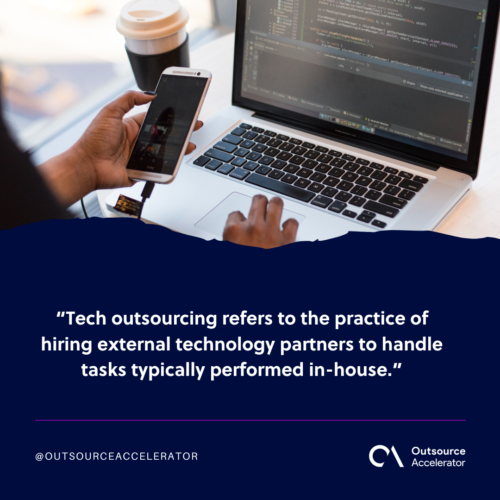
Tech outsourcing means hiring outside technology partners to do work once done in-house. It covers many types of IT services, such as:
- Software and web development
- Mobile app creation (iOS and Android)
- Quality assurance (QA) and software testing
- UI/UX design
- Data analytics and business intelligence
- Cloud infrastructure management and support
- Cybersecurity services
- IT support and help desk
- AI and machine learning development
Startups often hire specialist vendors or freelancers for these tech-related tasks. These deals can be project-based, time-bound, or ongoing. So the model flexes with your needs.
Outsourcing can also take different forms. For example, you can go offshore, nearshore, or onshore. Each option balances cost, time zones, and proximity in its own way.
How do startups benefit from tech outsourcing?
For startups that want impact without overspending, tech outsourcing brings clear gains. Here are the main ones.
1. Cost efficiency
Budget is a common challenge for startups. In-house hiring means salaries plus recruiting, training, benefits, and office costs. However, tech outsourcing removes much of that overhead. So you can tap skilled talent at a lower cost. As a result, you gain more financial flexibility.
2. Access to a global talent pool
Startups no longer depend on local hiring alone. Through outsourcing, you reach a diverse, skilled workforce worldwide. For example, you can find niche coders, data experts, or security pros fast. This global reach helps even when local talent is scarce. One flexible option here is staff augmentation.
3. Faster time-to-market
Speed is everything in the startup world. The faster you launch, the better your odds. So outsourcing helps you move quicker. For example, teams across time zones can work around the clock. In addition, experienced developers hit the ground running. As a result, you can test and improve ideas fast.
4. Focus on core business activities
Technology matters, but it is not always a startup’s core skill. In fact, busywork bogs down many teams. Resume Now noted it hits 51% of US employees. So by outsourcing tech, you can focus on what you do best. For example, you can double down on marketing, sales, or customer care. Meanwhile, trusted partners handle the technical heavy lifting.
5. Reduced risk and enhanced resilience
Startups can lower many risks through outsourcing. Instead of hiring and retaining scarce tech talent alone, you can hand that load to a provider. So you cut the risk of delays from sudden staff changes. In addition, you boost resilience. As a result, you can pivot fast when the market shifts.
Popular areas for tech outsourcing
Some tech functions make great candidates for outsourcing. Here are the top ones.
Application development
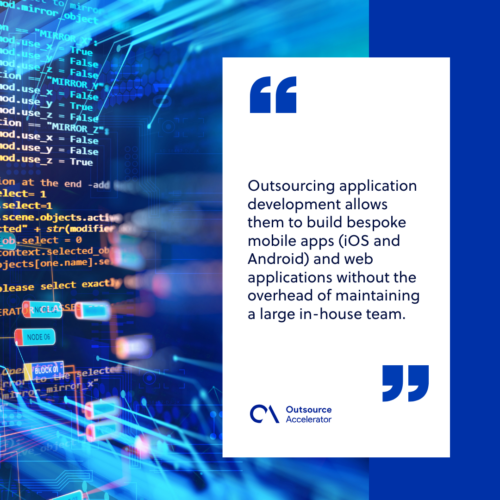
Startups often need custom apps for their unique models. So outsourcing app development helps without a big in-house team. For example, you can build mobile apps and web tools on demand. You can also outsource web development to launch even faster.
Automation development
Many startups outsource automation to save time. For example, Robotic Process Automation (RPA) handles repetitive tasks. Teams also set up automated workflows and custom scripts. As a result, routine work gets faster and more accurate.
Data encoding
Managing large volumes of data is a constant challenge. So Outsourcing data encoding keeps records clean and usable. This supports your databases and analytics. In addition, it spares your staff from tedious manual entry.
Software development
Core software sits at the heart of many startups. So software development outsourcing covers a wide range of needs, such as:
- Building Minimum Viable Products (MVPs)
- Developing complex backend systems
- Running quality assurance (QA) testing
- Handling ongoing maintenance
As a result, startups gain access to special skills and frameworks. In turn, they speed up the product roadmap.
Hire a tech specialist from Clark Staff
For startups seeking a tech partner, alignment matters more than a quick pick. Clark Staff stands out as a true ally. It is rooted in the Philippines’ deep talent pool. It does not just fill roles. Instead, it builds tech teams that fit your business and cut your time-to-market.
With Clark Staff, you gain a dedicated extension of your vision. So you get agile, expert support that fuels steady growth. Get in touch today.
Frequently asked questions
How much can a startup save with tech outsourcing?
Savings vary by role and location. Still, many startups cut tech costs sharply by hiring offshore. For example, they avoid office, benefit, and recruiting costs on top of salary.
What tech tasks should a startup keep in-house?
Keep your core product vision and key decisions in-house. So outsource support work and specialist builds instead. In this way, you stay in control of what makes you unique.
Is offshore or nearshore better for startups?
Offshore often costs less, while nearshore eases time-zone overlap. So the right choice depends on your budget and workflow. Many startups mix both as they grow.
How do you manage an outsourced tech team?
Set clear goals, shared tools, and regular check-ins. So everyone stays aligned across time zones. Good communication keeps projects on track.
When should a startup start outsourcing tech?
Many start early, often at the MVP stage. For example, outsourcing can speed up a first launch. As a result, founders validate ideas before they hire in-house.






 Independent






