
How bilingual support enhances customer experience


How does bilingual support improve customer experience?
Bilingual support improves customer experience by letting people get help in their own language, which builds trust and solves issues faster.
- Customers feel valued when they can speak in their preferred language.
- Bilingual support reduces confusion and speeds up problem-solving.
- It helps businesses reach new markets and stand out from rivals.
Bilingual support helps customers feel valued and understood. When people can speak in their own language, they tend to feel more at ease. As a result, satisfaction and loyalty both rise.
Bilingual support plays a key role in bridging language gaps. So it keeps communication clear and delivers a smooth customer experience. Firms that invest in it can lift their brand name too. In short, it cuts frustration, solves queries faster, and adds a personal touch that builds trust.
Whether in customer service, technical support, or sales, bilingual reps make a real difference. For example, they shape how customers see and engage with a brand.
What is bilingual support?
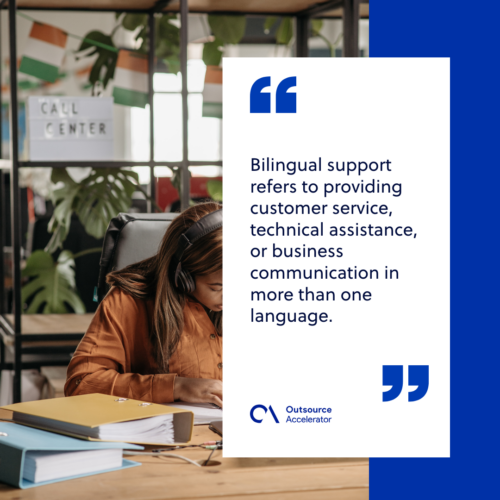
Bilingual support means giving service, technical help, or business communication in more than one language. You can do this with bilingual staff, AI chatbots, or outsourced bilingual support services.
Firms that add bilingual skills can serve a wider audience. As a result, they improve client retention and build a more inclusive customer experience. Many firms scale this through multilingual call centers.
4 Benefits of bilingual support for businesses
As firms grow and reach more diverse audiences, clear communication becomes vital. Apart from cutting the impact of language gaps, here are the other main benefits of bilingual support.
1. Improved customer satisfaction
When customers speak in their own language, they feel at ease and trust more. So bilingual support cuts confusion and helps resolve issues with care. In turn, it creates a more welcoming experience.
Support in many languages shows a firm cares about all its customers. As a result, this lifts satisfaction and brand loyalty.
2. Expanding market reach
Firms with bilingual support can enter new markets with ease. Because language is no longer a wall, growth comes faster. As a result, reaching non-English speakers opens doors to global chances and new revenue.
3. Competitive advantage
Firms that offer bilingual support stand out from rivals. In fact, many businesses still lack multilingual service. So this becomes a strong selling point.
By offering support in many languages, firms can appeal to a wider audience. As a result, they gain a stronger foothold in their industry. This is a key part of customer experience optimization.
4. Increased efficiency in problem-solving
Language gaps can slow down fixes and frustrate customers. However, with bilingual support, firms can talk clearly and solve issues faster.
Clear, precise talk cuts the need for repeat contacts. As a result, it streamlines service and lifts overall efficiency. New tools also help, as shown in our look at AI in multilingual customer support.
Industries that benefit from bilingual support
- E-commerce & retail. E-commerce platforms serve customers from around the world. So bilingual support is vital for handling questions and concerns. As a result, it helps retailers build strong ties with global buyers and raise conversion rates.
- Healthcare. Clear talk is vital in healthcare. With bilingual support, patients can share symptoms and understand instructions. In turn, they feel reassured on their care journey.
- Finance & banking. Money matters need clarity and care. So bilingual support helps customers grasp loan terms, investment options, and account details. As a result, it builds trust and cuts the risk of confusion.
- IT & tech support. Multilingual tech support helps customers fix issues in their own language. So they understand product features with less frustration. In turn, this improves the user experience.

Outsourcing bilingual customer support with Booth
Bilingual support is no longer a luxury. Instead, it is a must for firms that want to provide exceptional customer experiences and grow their reach. For many, outsourcing customer support is the fastest way to get there.
By outsourcing bilingual support, firms gain skilled reps without the cost of hiring and training. For example, Booth offers well-trained multilingual staff who blend into your team with ease.
This top-rated provider ensures clear talk, cultural understanding, and higher satisfaction. As a result, companies can focus on growth. To learn more about the wider model, see our guide to outsourcing customer service.
Visit their website today to get started.
Frequently asked questions
What is the difference between bilingual and multilingual support?
Bilingual support covers two languages. Multilingual support covers three or more. So the right choice depends on how many markets you serve.
Do I need bilingual staff or AI chatbots?
Both can work well. AI chatbots handle simple queries fast. However, bilingual staff bring warmth and nuance to harder cases. So many firms use a mix of both.
Is outsourcing bilingual support cost-effective?
Yes, it often is. Outsourcing cuts hiring and training costs. As a result, firms gain skilled reps without a large overhead.
Which industries need bilingual support the most?
E-commerce, healthcare, finance, and IT all gain a lot. In each, clear talk is vital. So bilingual support helps build trust and solve issues faster.
Key takeaways
- Bilingual support gives help in more than one language across service, tech, and sales.
- It lifts satisfaction, opens new markets, and sets a firm apart from rivals.
- Industries like e-commerce, healthcare, finance, and IT gain the most.
- You can deliver it with staff, AI chatbots, or outsourced teams.
- Outsourcing bilingual support offers skilled reps without high overhead costs.






 Independent





