
7 ways to turn poor customer satisfaction into business growth


How can you turn poor customer satisfaction into growth?
You can turn poor customer satisfaction into growth by listening to feedback fast, fixing the root cause, and following up until the customer feels heard.
- Unhappy customers leave quickly, and word of mouth spreads the damage.
- Keeping a customer costs far less than winning a new one.
- Every complaint is a chance to rebuild trust and loyalty.
Customer satisfaction is the lifeblood of any business. When it dips, the fallout can be wide and costly. Bad experiences lead to negative reviews, a weaker brand, and lost loyalty.
This hurts sales now, and it also makes retention and growth harder later. Dissatisfied customers are quick to tell others, and word of mouth can make or break you. In fact, keeping a customer costs far less than finding a new one. So when satisfaction falls, the financial hit can be steep.
Still, do not panic. Turning poor customer satisfaction around is entirely possible. Below, we share seven practical ways to turn frustration into growth. Many of them pair well with proven customer retention strategies.
What causes poor customer satisfaction?
Customer satisfaction is key to success, yet many companies still struggle to meet expectations. First, it helps to name the main causes. Once you spot them, you can act.
Slow response times
Customers expect fast replies. In fact, according to the Sprout Social Index, 69% of consumers expect a response within 24 hours of reaching out on social media. Long waits or service delays lead to frustration and dissatisfaction.

Poor product or service quality
Subpar products or services slowly erode trust. A PwC survey found that in the U.S., 59% of customers will leave a company after several bad experiences, even if they once loved the brand. What is more, 17% will walk away after just one bad experience.
Lack of personalization
Generic service feels impersonal. A study by Epsilon found that 80% of consumers are more likely to buy from a company that offers personalized experiences. This shows just how much a personalized customer experience matters.
7 ways to address poor customer satisfaction effectively
Poor customer satisfaction can feel like a setback, but it does not have to be the end. In fact, turning unhappy customers into loyal fans can drive real growth. So address the root causes, act early, and treat each bad experience as a chance to improve. Here are seven ways to do it.
1. Actively listen to customer feedback
Listening is the first step. Use surveys, social media, and direct communication to learn what went wrong. It also helps to measure customer satisfaction so you can track progress over time. Then respond quickly and openly. This shows customers you value their views, which builds trust and loyalty.
2. Apologize and offer solutions
A sincere apology goes a long way. Address the issue head on, then offer a real fix, whether that is a refund, a replacement, or a personal service recovery. Customers value accountability. As a result, quick fixes often turn frustrated buyers into repeat ones.
3. Personalize the customer experience
Personalization is a powerful way to rebuild loyalty. Craft an experience that fits each person by using customer data such as:
- Previous purchases
- Browsing behavior
- Feedback
A personal touch helps customers feel valued. For example, you might send a follow-up email after a purchase, offer a discount on a related product, or note a customer’s birthday. Each small gesture builds a deeper connection.
4. Improve customer service
Poor satisfaction often starts with weak service. So invest in training your customer support team to handle issues both quickly and with care. Booth is a trusted offshoring provider with a well-trained team that can turn negative experiences around by solving problems while building rapport with customers.
A skilled team can reset a bad experience by fixing the problem and showing real understanding. Fast response times are crucial, because customers expect timely fixes, and delays only deepen frustration. Proactive service helps too. When you spot issues early and reach out first, you often stop dissatisfaction before it starts. Training agents in empathy in customer service makes this far easier.
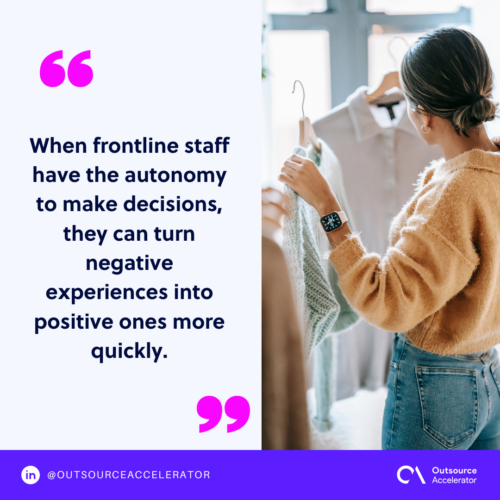
5. Empower employees to make decisions
Let frontline staff fix issues on the spot. When they can offer a discount, issue a refund, or give an instant solution, they turn bad moments into good ones faster. This lifts efficiency, and it shows a real commitment to quick fixes. Customers value fast resolutions, and staff feel more confident when they have the tools to help.
6. Follow up to ensure satisfaction
Once a fix is in place, follow up to check the customer is happy. This shows you care beyond the immediate issue. A quick call, email, or survey reassures them that their satisfaction comes first. As a result, positive follow-ups can rescue relationships and even build customer loyalty that lasts.
7. Leverage technology for continuous improvement
Technology is now key to tracking and lifting satisfaction. With tools like feedback software or CRM systems, you can watch customer sentiment in real time and act before issues grow. These tools spot trends, measure satisfaction, and reveal what customers need. So use them often to improve, solve problems fast, and build stronger relationships that drive growth.
Deliver the best customer experience
At the heart of every strong business is a focus on great customer experience. You can turn even hard moments into growth by:
- Actively listening
- Addressing issues quickly
- Personalizing interactions
So empower your team, use the right technology, and always follow up. When you put the customer first, you do more than fix complaints. You build lasting loyalty that moves your business forward.
Frequently asked questions about poor customer satisfaction
What are the main signs of poor customer satisfaction?
Watch for rising complaints, more negative reviews, slower repeat purchases, and higher churn. A drop in referrals is another quiet warning. Together, these signals show that trust is slipping before revenue does.
How does poor customer satisfaction affect revenue?
Unhappy customers buy less and leave sooner. Because winning new customers costs more than keeping current ones, each lost account raises your overall acquisition cost. Over time, weak satisfaction shrinks both revenue and margin.
How quickly should a business respond to an unhappy customer?
Respond as fast as you can, ideally within hours. Many consumers expect a reply within a day on social channels. So a quick, honest first response often matters more than a perfect one that arrives late.
Can outsourcing help improve customer satisfaction?
Yes. A trained support partner can add coverage, cut wait times, and bring proven service processes. This frees your in-house team to focus on complex cases while routine issues get fast, consistent handling.






 Independent






