
Outsourcing evolution: From cost-cutting solution to strategic partnership


This article is a submission by TechSpeed. TechSpeed is an innovative BPO and data processing solutions provider that employs a client-centric approach to deliver telecommunications technologies, BPO solutions, data entry services, and industry expertise.
What is the outsourcing evolution?
The outsourcing evolution is the shift from using outsourcing only to cut costs to using it as a long-term strategy that drives growth, innovation, and digital transformation.
In short, this change shows up in three ways:
- Companies now expect partners, not just low-cost vendors.
- Outsourcing gives access to global talent, new technology, and scale.
- The focus has moved from saving money to building a lasting advantage.
We tend to think of outsourcing as a cost-cutting measure. And it is. Moving non-core work to a partner can lower what you spend on hiring, labor, and resources. Still, there is a lot more to be gained than savings alone.
Today, a growing number of businesses think about outsourcing in a new way. They view it as a long-term way to improve how the whole company runs. The right partner can open the door to global talent, special skills, and fast-moving technology. Meanwhile, your in-house team gets the freedom to focus on what it does best.
Because of this, firms now see business process outsourcing (BPO) as a strategic partnership. It can spark new ideas, support digital change, and speed up growth. So what is behind this change in thinking? Below, we take a closer look at how views on this practice have shifted. We also keep one eye on the future of BPO.
Before the outsourcing evolution: Cost-cutting and efficiency
For most of its history, outsourcing meant one thing: cost-cutting. Traditionally, the top goal was to avoid expenses like:
- Hiring
- Onboarding
- Buying physical assets
- Rolling out new technology
In short, the main reason to outsource was budget. Outsourcing let companies do more with less. As a result, it became a lean way to scale, grow, or both. This remains a valid and popular reason to outsource today.
However, trends now reveal a much wider set of benefits. In addition to lower costs, a strong BPO partnership can make your business more nimble, more efficient, and more innovative. For a fuller view, it helps to weigh the pros and cons of outsourcing before you commit.
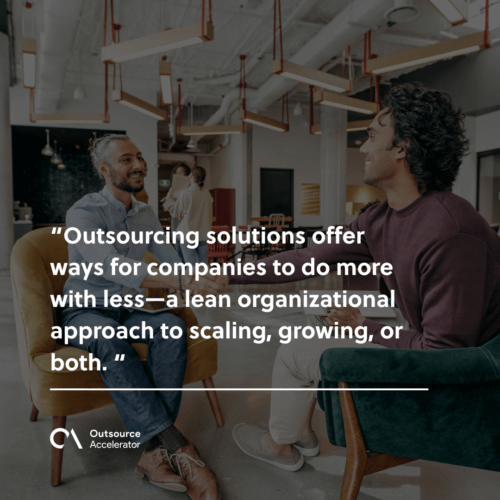
The outsourcing evolution: Strategic long-term partnership
Outsourcing is now a linchpin of the global economy. As a result, companies expect far more from their partners than they used to. The relationship is no longer just transactional.
It is not enough for a provider to cut costs by handling back-office tasks or data work. These services still matter. However, they must sit inside a deeper partnership. Both sides should share the same long-term goals. So what does that look like in practice?
5 forces driving the outsourcing evolution from transaction to strategic
Let’s take a closer look at the main forces behind this change.
1. Focus on core competencies
The single biggest driver of the outsourcing evolution is focus. This model frees your in-house team to do its best work. It matters even more than cost savings.
Deloitte’s Global Outsourcing Survey has long found that most firms outsource non-core work for this reason. So their own people can focus on core strengths. As a result, teams get more room to work with energy and creativity. In turn, this lifts morale, improves efficiency, and sparks more innovation.
2. Digital transformation
Technology is moving fast. Tools like AI, machine learning, and advanced data analytics are reshaping how we work. However, rolling out new technology can be costly, risky, and disruptive.
Firms lean on BPO partners to reach new technology. For example, Deloitte’s 2024 survey found that 83% of executives now use AI within their outsourced services.
So these partnerships are about much more than cost. The right partner can put your business on the leading edge. Meanwhile, you avoid the risk and disruption of doing it all in-house. Many firms pair this with smart automation to move even faster.
3. Access to global talent
Employers in many industries have struggled with talent shortages. Meanwhile, the race for people with special skills has grown fierce. The outsourcing evolution is partly a response to that struggle.
Deloitte’s research points to critical business needs and access to intellectual capital as leading reasons to outsource. BPO providers open the door to a global talent pool. As a result, businesses can tap skills they cannot easily find at home. This also lets companies scale quickly and adapt with little risk.
4. Scalability
Speaking of scaling, Deloitte also highlights global scalability as a top benefit of outsourcing. A strategic partner gives you access to larger labor pools, facilities, and technology. So you skip the many steps and costs of building all of that in-house.
As a result, a steady partnership lets you scale up or down as demand shifts. The outsourcing evolution is rooted in this desire to grow safely. Because of this, many firms choose long-term partners they trust. In turn, they can respond to any market with agility and minimal risk.
5. Outsourcing as the ultimate small businesses and start-up hack
At one time, people saw outsourcing as a tool for big companies alone. But today, it plays a growing role for startups and small businesses. Small firms must compete in crowded markets with limited resources and reach.
So moving non-core work to the right partner helps a lot. It gives access to special skills, technology, and scale they could not reach alone. As a result, small teams can focus inward and build their core strengths.

One of the best startup hacks is knowing how to grow with outsourced teams. This approach raises profit margins with little upfront cost or risk.
The continuing outsourcing evolution: Collaborative innovation
The next phase will likely bring even deeper teamwork between clients and providers. Top providers want a lasting strategic role in a complex economy. For example, this includes:
- Using new technology and special skill sets
- Handling sensitive data needs
- Expanding access to the global talent pool
As more companies treat providers as true partners, trust and transparency will matter more. These trends also shape the broader direction of outsourcing in the years ahead. Finally, expect a sharper focus on mutual growth. In the end, the outsourcing evolution rewards those who build real, lasting partnerships.
Frequently asked questions
What does the outsourcing evolution mean?
It means outsourcing has grown from a simple cost-cutting tool into a long-term strategy. Today, firms use it to reach talent, adopt technology, and scale. So the goal is growth, not just savings.
Is outsourcing still a good way to cut costs?
Yes. Outsourcing still lowers spending on hiring, labor, and resources. However, most firms now want more than savings. They also want speed, skills, and flexibility from their partners.
How does outsourcing support digital transformation?
A good partner brings new technology and skills without the usual risk. For example, you can tap AI and data tools through a provider. As a result, you move faster while your team stays focused on core work.
Can small businesses benefit from the outsourcing evolution?
Yes, and often more than large firms. Outsourcing gives small teams access to skills and scale they could not build alone. So they can compete in crowded markets with limited resources.
What will the future of outsourcing look like?
Expect deeper, longer partnerships built on trust and shared goals. Providers will handle more technology, data, and talent needs. In the end, the focus will shift toward mutual, lasting growth.






 Independent






