
Advantages and disadvantages of outsourcing


What are the main advantages and disadvantages of outsourcing?
The main advantages and disadvantages of outsourcing come down to lower costs and expert help on one side, and less control and hidden risks on the other.
- Advantages: cost savings, skilled talent, better technology, and sharper focus.
- Disadvantages: less control, culture gaps, security risks, and hidden costs.
- Success depends on how well you choose and manage your provider.
Running a business is not easy, and the challenges grow as the company grows. Knowing the advantages and disadvantages of outsourcing helps you make a smart choice.
Technology keeps changing fast, so you have to adapt as you run your business. You may also face hurdles during tough times, such as high inflation or a labor shortage.
Because of this, business owners should always look for better ways to work. Outsourcing has long been a strategic way to unlock a company’s full potential. However, like any move, it has its own pros and cons.
Outsourcing as an efficient business strategy
Outsourcing is when a company hires a third party to handle some of its business tasks.
Over the years, the outsourcing industry has grown to meet changing market needs. To learn more, see our guide on how outsourcing can help your business.
Outsourcing adds value because it helps you reach your goals. So it frees you and your team to focus on what you do best, from daily tasks to systems work.
Your provider takes full responsibility for the tasks you hand over. This is why you must choose carefully. Companies like HireSmart Staff, for example, are trusted and well established in this space.
Advantages and disadvantages of outsourcing
Let’s explore the key advantages and disadvantages of outsourcing at a glance.
Advantages
- Save on costs
- Access to seasoned talents
- Access to the latest technology
- Focus on core business functions
- Better risk management
Disadvantages
- Loss of control
- Conflict in company culture
- Security risks
- Hidden costs
- Shifting time zones
Advantages of outsourcing
There are many reasons companies outsource. In general, it helps them boost output and strengthen their bottom line. You can also read more about the benefits of outsourcing and what drives its growth.
Here are some of its main advantages.
Save on costs
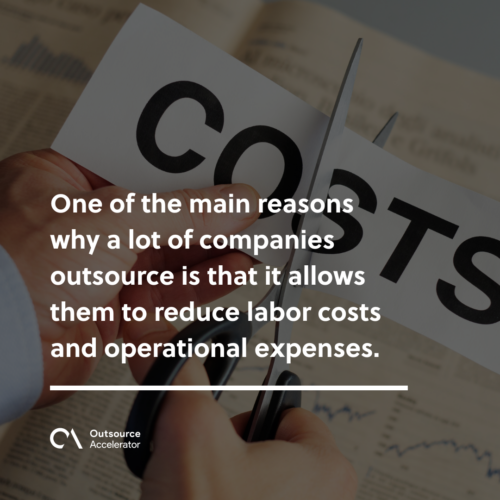
One big reason companies outsource is to cut labor and operating costs.
When you hire in-house staff, you must provide training, resources, and workspace. Outsourcing costs less than full-time staff because offshore rates are lower.
It also saves time on hiring, since expert recruiters vet your staff for you.
Access to seasoned talents
Providers have a pool of experts with diverse skills from many industries. With offshore outsourcing, you can work with global talent at a lower cost. If you are weighing your options, compare offshoring and outsourcing first.
Access to the latest technology
Besides skilled staff, providers invest in the tools they use, since it is core to their work. So this gives them an edge over other providers.
As a result, you get to use better tools and world-class equipment. In turn, this improves your profit and efficiency.
Focus on core business functions
Companies often overlook core work as they grow. Outsourcing non-core tasks frees you and your team to focus on what matters most.
Better risk management
Because providers offer experts in specific fields, they lower the risk of poor performance.
They also keep your operations running, even when staff turnover is high. Most importantly, outsourcing is a great way to build business continuity. So your provider can help you plan for disruptions.
Disadvantages of outsourcing
Outsourcing offers many benefits, yet some companies still hesitate to try it. Note that there are downsides too, so it helps to know the common outsourcing risks.
As a business owner, you should weigh these drawbacks before you decide.
Loss of control
Handing off tasks means giving some functions to your partner. However, that does not mean you lose full control, since they still report to you.
Remember that your provider will have its own way of doing things. So you have to give it some room to work.
Conflict in company culture
When managed poorly, outsourcing can hurt your company culture, especially with in-house teams.
Your offshore team has a different culture, language, and work style. Because of this, gaps can cause confusion if you do not blend your culture with theirs.
Outsourcing may also worry in-house staff who fear being replaced. So orient your employees and let them work with the offshore team now and then.
Security risks
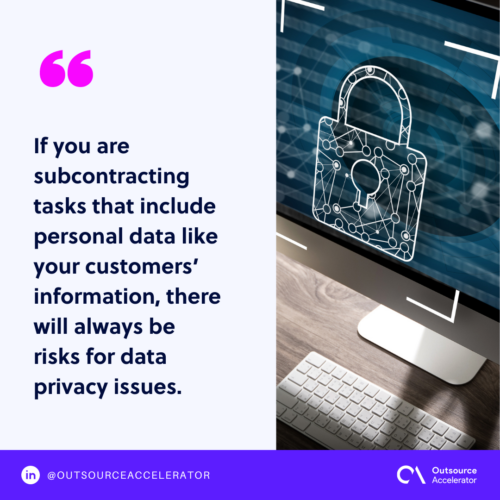
If you share personal data, such as customer details, data privacy risks appear. Still, we now live in an age of strong data protection. For more, see these tips on data security in outsourcing.
A good provider keeps your client information safe. So add a security clause to your contract or have them sign a non-disclosure agreement.
Hidden costs
Outsourcing saves money, yet some providers hide costs in long contracts.
Because of this, discuss all costs upfront as you negotiate. In addition, read the terms carefully before you sign, or you may face surprise fees.
Shifting time zones
This applies when you offshore to a country in a different time zone. The biggest challenge here is communication and shared working hours.
So you have to set meetings at times that work for everyone. Luckily, many communication tools make this easier today. These tools help you and your remote staff work together and track progress.
A different time zone can also help some companies. For example, if you offshore your contact center, you can serve customers over longer hours, in some cases around the clock.
Advantages and disadvantages of outsourcing in a nutshell
If you have thought about outsourcing, knowing how it affects your business is key.
Outsourcing has become a strategic move for growing companies. In general, they outsource for the cost savings and time savings it brings.
Providers also invest in both their people and their technology to serve clients well. So they always use the latest tools, which gives them a market edge.
On the other hand, some companies still hesitate to hire offshore. Part of this is the fear of losing control over tasks and staff.
Others worry about the safety of private data. Some also stay unsure about the big timezone differences.
However, what they often miss is that these downsides can turn into strengths. In many cases, they are simply misconceptions that need clearing up.
Is outsourcing good for your business?
Now that we have covered the advantages and disadvantages of outsourcing, remember that it may not suit everyone.
Success depends mostly on how you communicate and work with your provider. Still, when you weigh the pros and cons, the pros often outweigh the cons.
Frequently asked questions about the advantages and disadvantages of outsourcing
What is the biggest advantage of outsourcing?
Cost savings is often the biggest advantage. You avoid many in-house expenses and get lower offshore rates. As a result, you free up budget for core work.
What is the biggest disadvantage of outsourcing?
Loss of control is a common worry. However, good contracts and clear reporting help you stay in charge. So the risk is smaller than many people think.
Is outsourcing safe for sensitive data?
It can be safe with the right steps. For example, use a security clause and a non-disclosure agreement. A trusted provider will protect your data.
How do I choose a good outsourcing provider?
Check their track record, skills, and security practices. In addition, discuss all costs upfront and read the contract closely.
Does outsourcing work for small businesses?
Yes, small businesses can gain a lot from outsourcing. It gives them expert help and lower costs without large in-house teams.
Key takeaways
- The advantages and disadvantages of outsourcing must be weighed together.
- Top advantages include lower costs, skilled talent, and better technology.
- Top disadvantages include less control, security risks, and hidden costs.
- Clear contracts and strong communication reduce most outsourcing risks.
- For most companies, the pros of outsourcing outweigh the cons.






 Independent





