
Remote employee stipend: What you need to know

What is a remote employee stipend, and why offer one?
A remote employee stipend is money an employer gives staff to cover work-from-home costs like equipment, furniture, and software. You offer one to support your team, boost output, and attract talent.
- It helps staff set up a safe, productive home office.
- It saves both sides money on gear and travel.
- It makes your job offers stand out to top talent.
A remote employee stipend is a simple way to support your work-from-home (WFH) team. As a result, both employers and staff save on equipment and furniture costs.
A survey by Owl Labs found that 21% of employees named remote employee stipends as one of their top three benefits. So read on to learn more about remote work stipends and how they help your company.
What is a remote employee stipend?
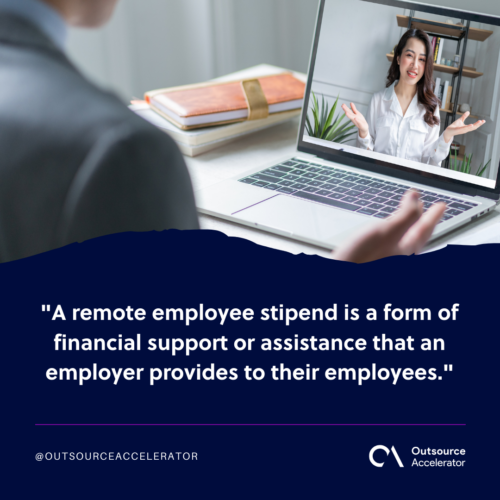
A remote employee stipend is financial support an employer gives to staff. In short, it covers items and expenses tied to remote work.
The amount and what it covers can vary. It depends on what each employee needs and how much the company can give to everyone. So a clear policy keeps things fair.
Examples of a remote employee stipend
A remote employee stipend can cover anything work-related. Here is a quick breakdown of the common options.
- Furniture – This includes ergonomic desks, chairs, and footstools. As a result, staff avoid work-from-home fatigue, muscle pain, and issues like carpal tunnel or tendonitis.
- Lighting – If the home workspace lacks natural light, a stipend can cover lamps and desk lights to prevent eye strain.
- Hardware – A stipend helps staff buy devices like computers, laptops, headsets, or printers.
- Software – Staff also need the right work software, which a stipend can cover.
Beyond these basics, some firms also cover internet bills, phone plans, or coworking day passes. For a fuller list, review the remote working equipment your team may need. In addition, many companies fold stipends into wider remote employee perks.
Advantages of a remote employee stipend
A remote employee stipend brings several perks that can improve your team’s daily life.
Cost savings
Working in a physical office can be pricey. Owl Labs found that staff spend around $862 per month to work in an office. Meanwhile, remote staff can cut that by about half, to roughly $431 per month.
Working from home also saves on travel. As a result, staff keep more funds for work-related needs. These are just a few of the wider benefits of remote work.
Boosts productivity
Staff can use a stipend to build their ideal work environment and pick their own gear. As a result, they get the tools they need to do great work. In addition, employers can relax, since the money goes to a good, practical cause.
Helps with recruitment
A Glassdoor survey found that four out of five employees prefer perks over a pay raise. So a remote employee stipend is a strong draw for new hires.
Employers can add stipends to their compensation plan, which shows they will back staff financially. As a result, workers feel valued and want to join. It can also ease common employee retention problems down the line.
How to offer a remote employee stipend at work
Employers can offer a stipend as a one-time payment or on a set schedule, such as monthly or quarterly.
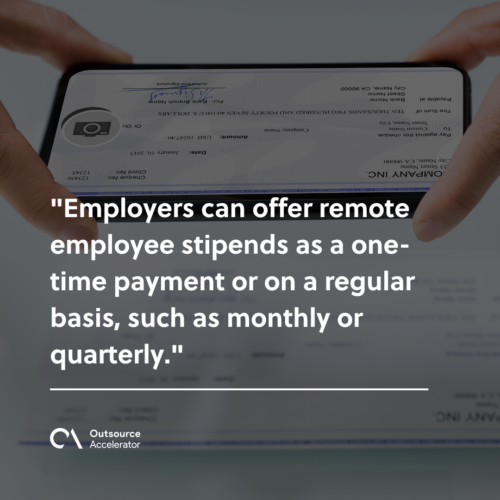
First, decide how much to offer and how often. For example, you could give $250 a month or $1,000 as a one-time payment. Next, set clear limits so the budget stays on track.
It also helps to write everything into a company stipend policy. So state all key details, such as:
- How much each person can receive.
- Which spending categories are eligible.
- What the return policies are.
Finally, keep receipts and simple records. As a result, the stipend stays fair, clear, and easy to audit. Remote work keeps growing, and recent work-from-home statistics show why more firms now offer this benefit.
If you need help reading your stipend policies, an outsourcing company like Remote Employee is the solution. This premier offshore outsourcing provider handles many admin tasks. In addition, it can help you build a stipend plan that fits your company.
Frequently asked questions about remote employee stipends
How much should a remote employee stipend be?
It depends on your budget and your team’s needs. Many firms give $250 a month or a one-time sum near $1,000. So set an amount that stays sustainable.
Are remote work stipends taxable?
Often, it depends on how you structure the payment and your local rules. Some reimbursements are tax-free with receipts. So check with a tax or payroll expert first.
What can a remote employee stipend cover?
It can cover furniture, lighting, hardware, and software. In addition, some firms cover internet, phone, or coworking costs.
Is a stipend better as a monthly or one-time payment?
Both work. A one-time payment helps with setup costs. Meanwhile, a monthly stipend covers ongoing needs like internet. So pick the model that fits your goals.
Do stipends help with hiring and retention?
Yes. Many workers value perks over a raise. As a result, a clear stipend makes offers more attractive and helps keep staff longer.
Key takeaways
- A remote employee stipend covers work-from-home costs like gear, furniture, and software.
- It saves money for both staff and employers.
- It boosts productivity and makes job offers more appealing.
- A clear written policy keeps the stipend fair and easy to manage.
- A partner like Remote Employee can help you design the right plan.






 Independent





