
Why you need to hire a citizen data scientist for your business


Why should you hire a citizen data scientist?
A citizen data scientist helps your business turn data into insight fast, without the high cost of a full data science team.
- They blend domain know-how with hands-on data skills.
- They speed up decisions by working close to the problem.
- They cost less than hiring more specialist data scientists.
Businesses use data to gain insight, make better calls, work smarter, and stay ahead. Traditionally, they turn to IT specialists and data scientists to manage this work. However, a new role has turned up: the citizen data scientist. A parallel low-code role, the citizen developer, does the same for software by building business apps without a formal developer background.
These people now sit at the front of data-driven work. Armed with domain knowledge and analytical skill, they bridge the gap between tech complexity and practical insight. As big data grows, more firms look at what a citizen data scientist can do. So this article covers the role, the key skills, and the impact they bring.
What is a citizen data scientist?
A citizen data scientist is a non-professional who analyzes and reads data for an organization. This person uses self-service analytics platforms and data visualization tools to find insight, without leaning on experts for help.
Citizen data scientists come from many backgrounds. Often, they are largely self-taught. This differs from traditional data scientists, who hold advanced degrees and deep training in statistics, math, and computer science. In recent years, the role has grown as firms try to empower more staff to work with data. As a result, teams can speed up innovation and decisions in a data-centric economy. For bigger needs, some firms also turn to data management outsourcing to support these efforts.
Roles and responsibilities of a citizen data scientist
The role mixes domain-specific knowledge with analytical skill. Tasks can vary by firm and field. However, they usually include the duties below.
Data exploration and analysis
Citizen data scientists explore and analyze data with self-service tools. They also cleanse and preprocess data so it is accurate and ready for use.
Model development and implementation
A citizen data scientist uses methods like machine learning and statistical analysis to build models. These models can predict or guide action. In turn, they help solve business problems or improve a process.
Data visualization and communication
They are expected to share findings in a clear way. For example, they use visuals, dashboards, and reports. So executives and stakeholders stay well-informed. Many also rely on cloud business intelligence to make reports easy to share.
Collaboration and teamwork
Citizen data scientists often work with other teams. Together, they gather data, set goals, and build solutions. As a result, they help grow a data-driven culture across the firm.
Continuous learning and improvement
Because they are non-professionals, they must work hard to stay current. So they keep up with new tools, methods, and trends. In addition, they build skills through self-study, online courses, workshops, and events.
Skills to look for in a citizen data scientist
A strong candidate blends technical skill, domain know-how, and clear communication. Here are some skills to weigh when you seek a citizen data scientist for your team.
- Data literacy: They need a solid base in data literacy. This includes data concepts, data types, and data handling.
- Domain expertise: They should know their field and how it relates to the data.
- Analytical thinking: They must analyze data, spot patterns, and draw useful insight.
- Tool proficiency: They should be at ease with self-service tools, like Tableau or Microsoft Power BI, to handle data and find insight.
- Problem-solving skills: They should frame business challenges as data problems and find solutions.
- Communication: They should work well with cross-functional teams.
When to hire a citizen data scientist
Here are some cases where hiring a citizen data scientist can really help.
- Skills gap: They offer a fix for rising data volumes and fast-changing needs.
- Ad-hoc projects: They suit quick projects where fast insight drives a decision.
- Scalability: Training one can scale as your data analysis demands grow.
Why it is important to have a citizen data scientist
A citizen data scientist adds real value to a business. They boost both speed and agility. Here are the main reasons the role matters.
Encouraging a data-literate culture
As staff work with data, data literacy grows across the firm. So the presence of a citizen data scientist helps build a data-driven culture. In turn, more people see data as a valuable asset.
Domain-specific knowledge
A citizen data scientist often knows their role or industry deeply. As a result, they ask sharper questions and spot meaningful patterns. They also apply insight to solve problems in fresh ways.
Agile decision-making
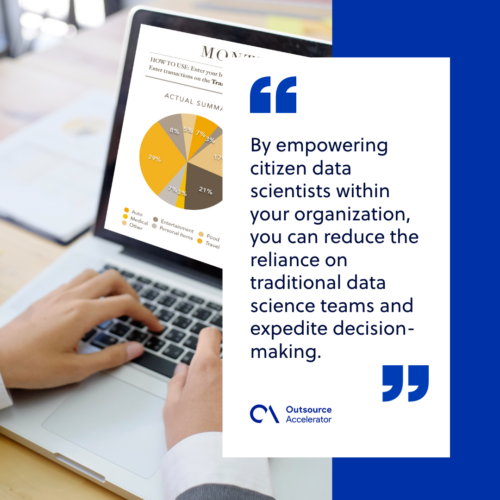
When you empower these staff, you lean less on busy data science teams. So decisions move faster. Quick analysis by those closest to the issue means quicker responses to change. For deeper needs, predictive analytics tools can extend what they do.
Cost-efficiency
Hiring and keeping data science talent can be costly. However, training current staff to become citizen data scientists costs less. As a result, you get more value from your workforce.
Democratizing data access
Traditional data science skill can sit inside a few teams. A citizen data scientist broadens access to analytics tools and insight. So more people can join the data process.
When to raise a citizen data scientist from your ranks depends on your needs and goals. So review your current data setup, culture, and strategy first. For larger projects, big data consulting can add extra support. This way, you make an informed call about the role.
Frequently asked questions
What is the difference between a data scientist and a citizen data scientist?
A data scientist holds advanced training in statistics and coding. A citizen data scientist is often self-taught and uses no-code tools. However, both turn data into useful insight.
Do you need coding skills to be a citizen data scientist?
Not really. Most use self-service tools like Tableau or Power BI. So strong data literacy and clear thinking matter more than code.
How does a citizen data scientist save money?
You train current staff instead of hiring scarce experts. As a result, you cut hiring costs. You also get faster insight from people who know the business.
When should a business hire one?
Hire when you face a skills gap or need fast, ad-hoc insight. It also helps when data demands keep rising. In these cases, the role scales well.
What tools do citizen data scientists use?
They use self-service analytics and visualization tools. Common picks include Tableau and Microsoft Power BI. These let them handle data without heavy coding.






 Independent






