
Staffing vs. Recruiting: Key differences explained


Staffing vs. Recruiting: What is the key difference?
In staffing vs. recruiting, staffing fills immediate roles fast, while recruiting takes a strategic, long-term approach to building your workforce.
- Staffing focuses on quick, short-term hires to meet current needs.
- Recruiting focuses on long-term fit, culture, and growth.
- So the best choice depends on your timing and goals.
People often use staffing and recruiting to mean the same thing. Both help you build a team. However, they are two different approaches.
When it comes to staffing vs. recruiting, knowing the nuances is key. It helps businesses build strong, flexible teams. If you need help with this, you can contact ConnectOS to build capable offshore teams. This article looks at both processes, their functions, and their impact on success.
What is staffing?
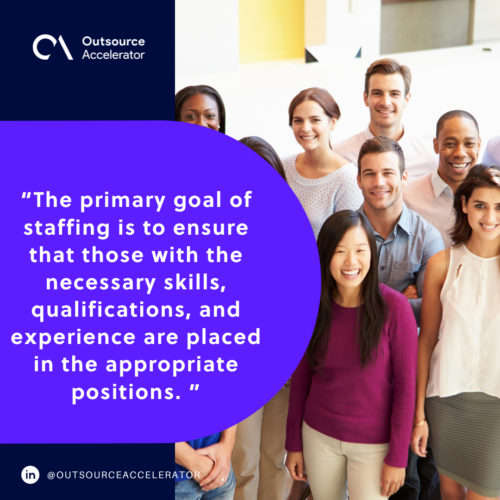
Staffing means finding, selecting, deploying, and managing employees for set roles. In short, it puts the right people in the right jobs. The main goal is simple. It ensures that people with the right skills and experience fill the right roles.
Staffing is key to building and keeping a capable workforce. As a result, it supports smooth, day-to-day operations. Many firms pair it with offshore staffing to scale teams quickly.
Tips for working with staffing agencies
Here are some tips for working with a staffing agency:
- Clearly define your immediate needs. So give detailed job descriptions with clear tasks, skills, and qualifications.
- Set up regular communication. Keep an open, steady line. So you can share changes in your needs, culture, or job specs.
- Discuss timelines and urgency. Say how urgent each role is. As a result, expectations and plans stay aligned.
- Provide timely feedback. After you meet candidates, give quick, useful feedback. This helps the agency refine its search.
- Understand fee structures. Make sure you know the agency’s fees and any extra costs.
What is recruiting?
Recruiting is the process of seeking, attracting, and hiring qualified people for open roles. It is a broad function. In fact, it goes beyond immediate staffing needs. Recruiting also involves strategic planning to build a strong workforce for the long term.
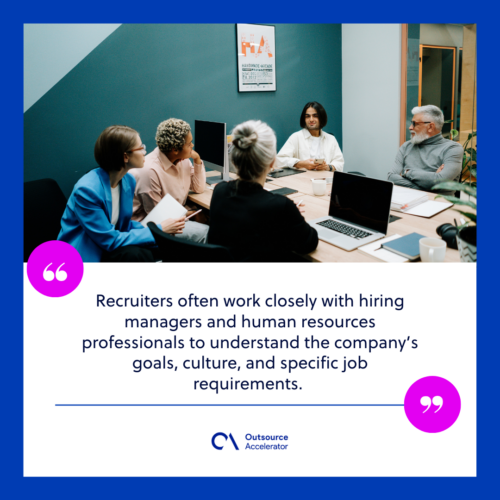
Recruiters work closely with hiring managers and HR staff. So they learn the company’s goals, culture, and job needs. They also weigh cultural fit, growth potential, and shared values. As a result, effective recruiting puts the right people in place to drive productivity. Some firms extend this reach through talent acquisition partners.
Tips for working with recruiting agencies
Here are some tips for working with recruiting agencies:
- Outline long-term hiring plans. First, share your vision for growth and the talent you expect to need.
- Build a strong employer brand. A strong brand draws top talent. As a result, the whole process works better.
- Keep building the relationship. Share updates on new projects or shifts in hiring. So the agency stays proactive.
- Value quality over quantity. Instead, ask the agency to send strong candidates, not a flood of applications.
- Use their industry expertise. Also, seek their view on market trends, salary benchmarks, and retention tactics.
Staffing vs. Recruiting: Side-by-side comparison
In human resources, staffing and recruiting are two key tasks. They are closely linked. Still, they differ in some important ways.
Scope
In scope, staffing centers on the short-term. It fills roles fast to meet current needs. Staffing agencies often keep a pool of qualified candidates ready for speed.
Recruiting takes a broader, long-term view. As a result, recruiting agencies seek candidates who are likely to stay for years.
Nature of activities
For example, staffing covers job posting, resume screening, and matching people to open roles. In fact, staffing agencies handle the whole process. They even manage the performance and exit of temporary workers.
Recruiting covers a wider set of tasks. For example, it includes workforce planning, employer branding, sourcing, and relationship building. They work closely with companies. Still, the final hiring choice rests with the employer.
Timeframe
Staffing needs a fast response to fill roles quickly. So agencies aim for quick turnaround to keep operations running. Many pair this with staff leasing to add people on short notice.
Recruiting allows a slower, more careful approach. It focuses on the best long-term fit. As a result, the process may include a deeper evaluation and assessment.
Relationship building
Staffing agencies build ties with a large pool of candidates ready for quick placement.
Meanwhile, recruiting builds ties with a smaller pool of people who want permanent roles. So they invest more time in candidates who match the company’s goals and culture.
Cost
Staffing agencies usually charge by the hours or days that temporary staff work. The cost can vary with skill level and the length of the assignment.
Recruiting agencies usually charge a placement fee. It is often a percentage of the new hire’s yearly salary. As a rule, the fee is due once the candidate is hired.
Strategic alignment
Staffing tends to be reactive. It responds to current openings and shifts in staffing levels.
Recruiting is proactive by nature. It aligns with the company’s strategic goals. In addition, it weighs future talent needs and skill gaps.
Quality vs. Quantity
Staffing often aims to fill roles fast with qualified people. So it may put quantity first to meet urgent demand.
Recruiting puts quality first. It seeks people who meet current needs and also match the company’s culture and long-term goals.
Employer branding
Staffing may not focus much on employer branding. After all, the urgency is on filling roles fast.
Recruiting sees the value of a strong employer brand. For example, it showcases the company’s values, culture, and growth paths.
In short, staffing meets immediate needs with a focus on speed. Recruiting takes a broader path to build a lasting talent pool. So the choice depends on your specific needs and goals.
Staffing vs. Recruiting: Which is better to use?
When you fill roles in your organization, the choice depends on your needs and goals. So there is no single right answer for every team.
Whether one is “better” depends on your timing, objectives, and vision. In truth, there is no one-size-fits-all solution. So rather than pit the two against each other, a smart approach uses their synergies. In the end, the best route may blend both strengths. For fast growth, many firms also lean on recruitment process outsourcing.
Staffing vs. Recruiting: Common FAQs
Here are quick answers to the questions people ask most about staffing vs. recruiting.
Is staffing the same as recruiting?
No. Staffing fills roles fast for current needs. Recruiting takes a long-term view of hiring. So the two overlap but are not the same.
When should I use a staffing agency?
Use a staffing agency when you need people quickly. For example, seasonal peaks or short projects fit this route well.
When should I use recruiting instead?
Use recruiting for permanent, high-impact roles. It focuses on fit and long-term value. As a result, it works well for core team building.
Can a business use both staffing and recruiting?
Yes. Many firms blend both. So they cover urgent gaps and long-term growth at the same time.
Key takeaways
- Staffing fills roles fast to meet current, short-term needs.
- Recruiting builds a long-term workforce aligned with company goals.
- Staffing charges by time worked, while recruiting charges a placement fee.
- So use staffing for speed and recruiting for lasting fit.
- In the end, a blend of both often works best.






 Independent





