
Ways to strengthen remote work culture in a virtual team


How can you strengthen remote work culture in a virtual team?
You strengthen remote work culture by building trust, sharing a clear vision, using the right tools, and keeping communication open across every time zone.
- A strong remote work culture keeps distributed teams connected, engaged, and productive.
- Technology, communication, and flexibility are the three core elements that hold it together.
- Trust, shared goals, clear policies, and regular feedback turn a scattered team into one unit.
The number of people who work remotely has grown sharply over the past decade. As a result, remote work culture is now a major trend in the workforce.
Many companies use virtual meetings to keep remote teams connected and engaged. These meetings also help team members who cannot reach the office due to location or time.
A strong remote work culture builds a more flexible and productive workforce. So employees can work from anywhere without losing their link to the company and its vision.
What is remote work?
Remote work is an arrangement where employees do their jobs outside the usual office. For example, they can work from home, a coffee shop, or a coworking space, as long as they have internet.
This setup lets companies hire people anywhere in the world. Reputable offshoring providers like DOXA Talent make it easy to hire talent with many skills and backgrounds. In turn, this widens the pool of people you can bring on.
The benefits of remote work include:
- Freedom to choose working hours and location.
- Better focus on tasks, without office noise and interruptions.
- Less pressure to socialize with coworkers or managers.
- More happiness than daily commuters often report.
For a fuller picture, see these primary benefits of remote work and how they add up.
What is remote work culture?
Remote work culture is the set of values and attitudes toward working from remote locations. It shows up in the daily atmosphere and in the way remote teams relate without meeting in person.
Main elements of remote work culture
Remote work culture is a growing trend adopted by many companies worldwide. Here are the three main elements that define it.
Technology
Technology is a huge part of remote work culture. Digital tools let people work remotely, work together, and stay in touch with their virtual teams.
It matters for every modern organization, not just remote ones, because technology empowers staff. In fact, one EY survey found that 82% of workers would pick a job with well-integrated technology over one without. Strong employee engagement tools take that further and keep teams involved.
Communication
Communication is the biggest factor in whether a remote work culture succeeds. So it deserves real attention from the start.
To build a good system, make sure everyone sees how regular contact drives team success. Then pick the best platform for the whole team to use.
Also set clear rules on how to reach each other, both in person and online. Because of this, no one is left guessing how to get an answer. Clear routines also support smoother cross-team collaboration across departments.
Flexibility
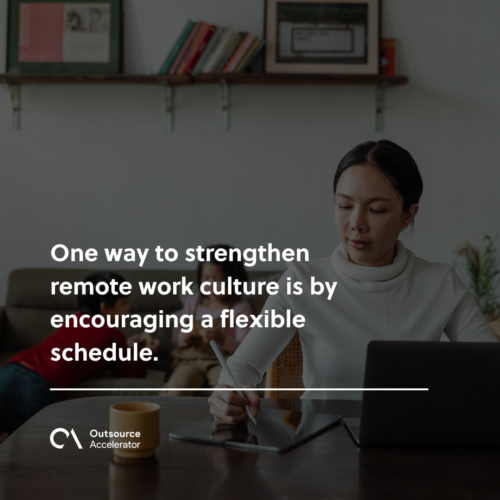
One way to strengthen remote work culture is to encourage flexible schedules. For example, avoid setting business hours in stone.
You also need a balance of online and offline events, such as conference calls, video chats, and time in person. Flexible schedules make people more productive. In turn, that lifts engagement and satisfaction for employers and employees alike.
How to build a strong remote work culture virtually
Size does not matter here. Studies show that organizations with a strong remote work culture are more productive and innovative.
For example, cloud-based provider ConnectSolutions found in research that productivity rose among 77% of remote workers. Another 30% got more done in shorter periods. Many firms see similar gains after strong remote work adoption.
To get the same results, use these tips for building a successful remote work culture in your virtual team.
Foster trust
Trust matters in any business. Still, it is even more vital in remote work culture. Building trust in a virtual team keeps a healthy work atmosphere alive.
So employees need to be open and honest, even without daily face-to-face contact. Managers should also make sure the whole team knows who everyone is and what they do.
Next, encourage your team to jump on chances to work together. For example, if a task needs clarity, urge people to ask in the group chat rather than wait on one person.
Finally, avoid micromanaging your team’s time. Let them finish tasks their own way, and focus on output instead of total hours.
Share your vision and mission
The best way to shape remote work culture is to involve everyone. So share the company’s vision and mission with all staff, no matter the time zone or distance.
Building a strong remote work culture is easier when everyone shares the right mindset. One way to do this is through virtual meetings where all employees can add their input. Strong benefits of virtual teams show up fastest when goals are shared this way.
Use the right tools
A remote work culture also relies on the right tools for each task. For example, your company can use a digital workplace platform to keep the virtual team working together.
Make sure remote employees have all they need. Some essentials include a reliable internet connection, a dedicated workspace, a phone, and a computer.
Define your policies
Everyone has different working patterns, especially in a remote workplace. As a result, you need clear policies so employees always know what to expect.
So discuss the daily tasks, including everyone’s shifts, and invite questions. Clarity leads to better teamwork and a smoother remote work culture.
Gather employee feedback
Remote work is not easy for first-timers. If your staff are used to an on-site model, they need time to adjust to the new setup.
To fix issues and correct mistakes, collect feedback from your employees often. Through this, you learn what works for them and what does not.
This builds an atmosphere of openness and honesty. In turn, that further strengthens the remote work culture.

Remote work culture in a post-pandemic society
Corporate culture keeps evolving. Remote work culture grew as traditional companies switched to remote setups to hire globally and reduce costs.
The good news is that remote staffing companies like Cloudstaff provide certified remote specialists. These experts adapt quickly to many kinds of remote work cultures.
Cloudstaff supplies suitable remote workers for every company. The firm also uses modern facilities and technology to deliver strong service to clients.
Remote work can feel impersonal. Still, it is important to keep a culture that fits your goals and values.
The setup can be hard at first. Even so, many employees now insist on staying home to work. So employers must shape a positive remote work culture to support staff and keep morale high, wherever people work.
Frequently asked questions about remote work culture
Here are quick answers to common questions leaders ask about remote work culture.
What makes a strong remote work culture?
A strong remote work culture rests on trust, clear communication, and shared goals. In addition, it needs the right tools and fair, flexible policies. Together, these keep a distributed team aligned.
How do you keep remote employees engaged?
Set clear goals and give regular feedback. Also recognize good work in front of the team. Meanwhile, mix online and offline moments so people feel part of one group.
What tools support remote work culture?
Teams usually rely on video calls, chat apps, and shared project boards. In addition, a digital workplace platform keeps files and updates in one place. The best mix depends on your team’s daily tasks.
How do you measure remote work culture?
Start with simple signals like productivity, retention, and staff feedback scores. For example, short pulse surveys show how people feel week to week. Over time, these trends reveal what to fix.
Can a fully remote company still have a strong culture?
Yes. A fully remote firm can build a strong culture with clear values and steady communication. So the key is intent, not office walls.






 Independent





