
Real estate investor virtual assistant for hire


What is a real estate investor virtual assistant?
A real estate investor virtual assistant is a remote professional who handles the daily admin and lead work so investors can focus on closing deals.
- They manage tasks like data entry, cold calling, and property research.
- They cost far less than an in-house office assistant.
- They let realtors and investors spend more time on sales and growth.
Demand for virtual assistants keeps growing as more firms adopt hybrid and remote work. A real estate investor virtual assistant is one of the fastest-rising roles in this trend.
Many startups and small to medium businesses now use virtual assistants because they drive more value to their business at a fair cost. Through VAs, owners get the flexibility to contract out exactly the work they need.
Typically, virtual assistants handle general admin support. However, the real estate investor virtual assistant has become a popular niche role.
What are the roles of a virtual assistant?
First, let us look at real estate virtual assistants in context. So we start with virtual assistants in general.
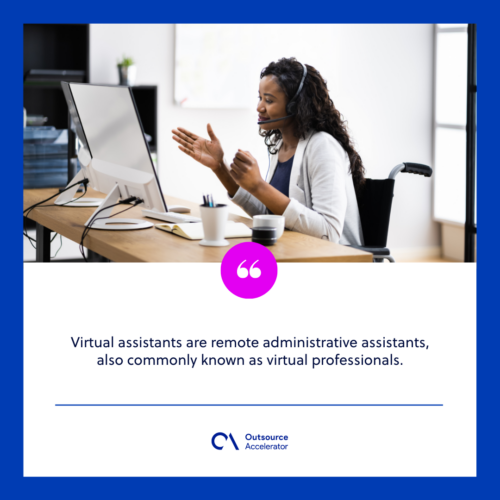
Virtual assistants are remote admin professionals. They help owners, managers, and leaders get many tasks done.
In addition, virtual assistants take on other duties too. For example, here are some common ones:
- Handle admin tasks like scheduling, email, and calendar work.
- Book travel and accommodation.
- Create presentations.
- Do transcription, data entry, and basic research.
A VA’s duties depend on the client’s needs and the contract terms. Other VAs also do clerical work like bookkeeping. Some run social media, and some write blog posts.
Virtual assistants for real estate businesses
Real estate virtual assistants serve companies and entrepreneurs in the property sector. So they know the industry well.
People in the real estate business spend much of their time chasing leads and closing deals. Still, they also juggle daily chores. For example, they organize calendars and contracts or update property databases.
As realtors or investors, their main job is to market and sell property well. So hiring a VA lets them focus on deals and growth. For broader support, many firms also look into real estate outsourcing across their back office.
A real estate investor virtual assistant may handle several daily tasks:
- Data entry and management.
- Cold calling and lead generation.
- Research on specific property details.
- Follow-up emails.
In addition, a VA costs a lot less than an in-house assistant. After all, in-house staff need training, resources, and office space.
Most real estate VAs charge an hourly rate. Meanwhile, they already have the basics they need, like a computer and internet. So they can start quickly.
These VAs often need little training because they already know the industry. For sharper outreach, many also follow proven cold calling best practices.
Other realtors and real estate investors save a lot by hiring VAs in countries with lower pay. For example, many US realtors choose real estate VAs based in the Philippines.
How can virtual assistants help real estate investors?
Besides admin work, a real estate VA can take on more roles. For example, here are the main ones.
Marketing and PR management
Some VAs train in social media management. So they post listings for vacant units. They also reply to inquiries and reviews across social platforms.
Real estate research
The property market is very competitive. So pros must stay current with news, laws, and rules.
A real estate VA can also act as an inside salesperson. In addition, they track market trends, study competitors, and check pricing by location. To fill their pipeline, many apply smart lead generation techniques.
Schedule appointments
Real estate agents often have packed schedules. So real estate VAs use tools like Calendly or Google Calendar to book meetings.
They also send timely reminders. That way, clients rarely miss an appointment. For dedicated booking help, some teams add a real estate appointment setter.
Customer service and phone support
A real estate VA can make follow-up calls to prospects. They can also answer incoming calls and reply to clients by email. So no lead goes cold.

Where to find virtual assistants for real estate businesses
Business Process Outsourcing (BPO) companies can help you source VAs for specific tasks. In fact, outsourcing firms are often the best way to find skilled real estate VAs at lower cost.
These firms also make sure their VAs follow industry best practices before they work for clients. Cloudstaff, for example, is one of the best cloud staffing providers if you want efficient VAs. For specialized rentals, a property management virtual assistant can help as well.
There are also freelance sites like Upwork and Fiverr, where clients pay an hourly rate. Still, these sites take a cut and pay VAs through their own systems.
Frequently asked questions
What does a real estate investor virtual assistant do?
They handle the daily tasks that slow investors down. For example, they do data entry, cold calling, lead research, and follow-up emails. So investors can focus on deals.
How much does a real estate VA cost?
Most charge an hourly rate, and it varies by skill and location. However, a VA still costs far less than an in-house assistant. You also skip office space and equipment costs.
Do real estate VAs need training?
Usually, they need very little. Many already have real estate experience. So they can start with only a short onboarding.
Where can I hire a real estate VA?
You can use a BPO firm or a freelance platform. However, a BPO partner often vets skills and best practices first. As a result, you get a stronger match.
Can a VA help with lead generation?
Yes, lead generation is a core VA task. They build prospect lists, qualify leads, and run follow-ups. That way, your pipeline stays full.






 Independent






