
The right way to use personal selling to your advantage


What is personal selling and how does it work?
Personal selling is a face-to-face sales method where a rep builds trust, shows the product, and guides the buyer to a yes.
Here is why it still matters:
- It warms leads and builds a real bond with the buyer.
- It suits complex, high-value products that need a clear demo.
- It lets the rep answer questions on the spot and close with care.
Selling online is now the norm. As a result, sales and marketing teams chase the right market and reach buyers in many places.
However, firms can still gain from an old-school method like personal selling. It is one of the main skill sets for a seller. In addition, it warms leads and builds a stronger tie with the audience.
Like any sales method, personal selling works best when done right.
What is personal selling?
Personal selling is a face-to-face method used in sales. It leans on the rep’s people skills, attitude, and manner to help a buyer decide.
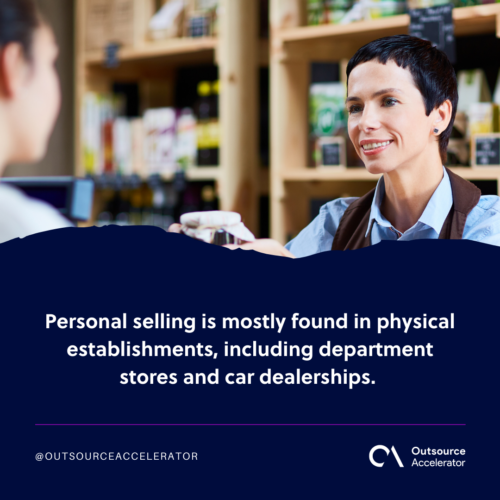
You will often see personal selling in stores and car lots. There, reps show buyers how a product works and how it makes life easier. Sometimes, they even offer free trials so clients can test it first.
Some products fit this method well. For example, real estate, industrial gear, and complex items suit it best.
Why personal selling is crucial
Personal selling is key for many firms, above all in B2B sales. In fact, small firms hire reps to call clients and visit them when needed.
A firm’s approach may shift between people and organizations. However, the goals stay much the same:
- Encouraging prospects. Personal selling lifts the odds of closing on high-priced items. By meeting buyers in person, firms learn their needs and offer better value.
- Selling more complex items. Firms can explain and show complex products with ease. So buyers spend less time on how it works and more time on the perks.
- Increasing customer relationships. Personal selling also strengthens a firm’s relationship with its customers. As a result, buyers come back for future purchases.
The selling process: How does personal selling work
Sellers use the following steps to make a sale.
Prospecting and qualifying
First, prospects are gathered and qualified through lead generation. Reps do prospecting through cold calls, referrals, and email signups. They are then screened against the firm’s standards.
In this step, leads may pass through a sales funnel too. This is common when they come from a website or social media. Many teams sharpen this stage with proven lead generation techniques.
Approach
Next, a seller reaches the buyer, in person or by call. As a result, the rep learns the buyer’s needs and tastes.
This also shows the rep how to tailor the offer. Depending on the case, a seller can use several approaches when they meet a buyer:
- Premium approach. Here, the seller offers a giveaway during the intro.
- Referral approach. Here, they name a mutual contact who referred the buyer. So they build trust fast.
- Question approach. Common with new buyers, this move uses questions to spark a chat.
Presentation or demonstration
Now the seller shows the product to the lead. For example, they may demo how it works or run a short slide deck.
A more modern demo mixes two things. It shows the product and answers the buyer’s questions in real time.

Objections
Not every buyer says yes at first. It may take a few follow-ups to win them over. Still, a “no” should not discourage someone from selling.
So part of the process is handling objections. In fact, a good seller stands out by how well they answer doubts and move past a setback.
Closing sales
Whether the buyer says yes or no, a rep must close their sales well. Even skilled reps find this step awkward. For new reps, it is often the hardest part.
Closing takes patience and effort. Reps can use these sales closing techniques to make it easier:
- Question close. The rep asks if the offer meets the buyer’s needs. So the choice stays open for them.
- Assumption close. Here, the rep assumes the buyer will buy. Then they move to next steps, like quantity and delivery.
- Take-away close. Here, the rep offers a lower price. As a result, the buyer weighs the deal and what they may miss.
Sales follow-up
Finally, the sale is not fully over once a buyer says yes or no. Instead, the rep must check that the order arrived and works well.
For those who said no, the rep can follow up later. So the door stays open for a future deal.
Personal selling strategies to use for your advantage
Personal selling takes time and effort. This is because reps meet buyers with different needs and traits. However, a good rep blends the following strategies to fit each one.
Getting to know buyer personas
First, a rep should stick to the firm’s buyer persona. Then they can screen leads by budget, demographic, and taste to check the fit.
Striking a conversation
Reps should not just fire off questions. Instead, they should spark a real chat by finding common ground.
Effective storytelling
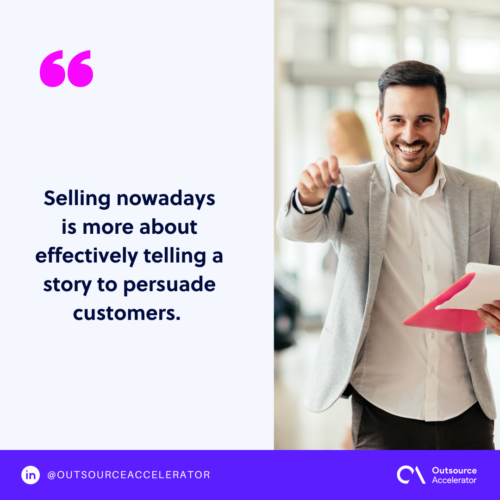
Selling today is more about effectively telling a story. So reps do not just list specs and features.
Instead, they share success stories and kind words from past clients. As a result, buyers see how the product changed real lives.
Pros and cons of personal selling
Like other methods, personal selling has clear ups and downs.
Personal selling pros
- Give better details. Reps can share more about a product. So buyers see it in action before they decide.
- Directly answer inquiries. Buyers skip long call queues. Instead, they ask the rep right away and decide faster.
- Establish personal connections. It also builds real ties, since buyers see the effort to reach them.
Personal selling cons
- Costly. Personal selling costs more than other methods. So firms must invest time, effort, and money to make it work.
- Fewer customers to reach. It also limits reach. Often, reps cover just one city or region.
- Loyalty risks. Buyers may bond with one rep. As a result, the firm risks losing them if that rep leaves.
Best practices in personal selling
This method works best when done right. Here are some best practices for success. They also help you keep a healthy sales pipeline as deals move along.
- Research, research, research. Always study a buyer before you meet. So you know their profile and the product well.
- Follow the selling process. Stick to the steps, above all for objections. As a result, your pitch stays clear and structured.
- Be confident. Still, trust your pitch. Too much focus on the script can make buyers uneasy.
Frequently asked questions
What is personal selling in simple terms?
Personal selling is direct, one-to-one selling. A rep meets a buyer, shows the product, and helps them decide. As a result, trust grows and deals close.
What products suit personal selling?
High-value and complex products fit best. For example, real estate, industrial gear, and B2B software all suit it. These items need a clear demo and a human touch.
How is personal selling different from other prospecting?
Personal selling relies on face-to-face contact. In contrast, outbound prospecting often starts with cold calls and emails. So one warms a lead in person, and the other opens the door at scale.
What are the main steps in personal selling?
The steps are prospecting, approach, demo, objections, closing, and follow-up. First, you find and qualify leads. Then you guide each one to a decision and stay in touch.
Is personal selling still worth it today?
Yes, for the right products. It costs more and reaches fewer people. Still, it builds trust and closes high-value deals that online ads cannot.
Key takeaways
- Personal selling is a face-to-face method built on trust and a clear demo.
- It suits complex, high-value products in both B2B and retail settings.
- The process runs from prospecting to follow-up, with objections in between.
- Research, a set process, and confidence drive the best results.
- It costs more and reaches fewer buyers, but it builds strong, lasting ties.






 Independent





