
Offshoring HR functions for global companies

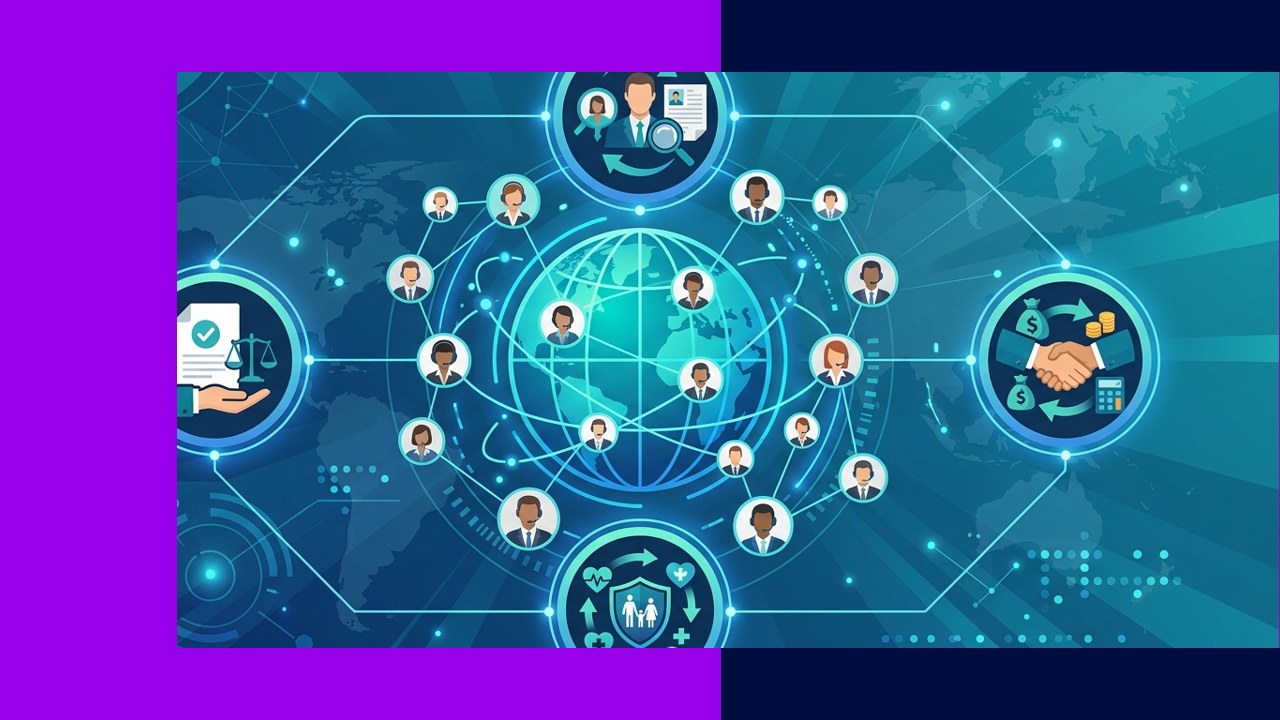
- Global companies most often offshore transactional HR work such as payroll, benefits administration, recruitment, and HR helpdesk support, while keeping strategy and sensitive decisions in-house.
- The main draws are lower cost, follow-the-sun coverage across time zones, and access to specialized talent that is hard to hire locally.
- The main risks are data privacy, local labor law compliance, and employee experience, so structure the model around clear ownership and strong controls.
Offshoring HR functions for global companies has moved from a cost experiment to a standard operating decision. As headcount spreads across countries, HR teams face more payroll runs, more benefits rules, and more hiring demand than a single in-house team can absorb.
The question is no longer whether to move some HR work offshore, but which functions to move, and how to structure the arrangement so service quality and compliance hold up.
This guide breaks down which HR functions companies commonly offshore, the benefits and risks involved, and a practical way to structure the model.
Which HR functions global companies offshore
Not all HR work is equally suited to an offshore team. The functions that move well tend to be rules-based, high-volume, and process-driven.
Those that stay in-house tend to involve judgment, culture, and confidential decisions.
Payroll processing
Payroll is the most commonly offshored HR function because it is repetitive and governed by clear rules. Offshore teams run calculations, file taxes, and manage payslips, often at a fraction of local cost.
Benefits administration
Enrolments, changes, claims support, and vendor coordination are transactional and volume-heavy. An offshore team can handle the administrative load while in-house HR keeps ownership of plan design and negotiations.
Recruitment and RPO
Sourcing, screening, scheduling, and pipeline management scale well offshore. Many companies use a recruitment process outsourcing model to add hiring capacity quickly without expanding internal headcount.
HR helpdesk and shared services
A tier-one helpdesk answers routine employee questions on leave, policy, and payslips. Offshore teams are well placed to cover these queries around the clock, escalating only the complex cases to in-house staff.
HRIS administration and compliance support
Data entry, record updates, reporting, and audit preparation inside the HR information system are structured tasks. Offshore staff can also support compliance documentation, while final legal accountability stays with the company.
The benefits of offshoring HR
The case for offshoring HR rests on three practical advantages rather than cost alone.
Lower operating cost
Labor arbitrage remains the headline benefit. Moving transactional HR to lower-cost locations can reduce the cost of each process significantly while freeing in-house staff for higher-value work.
Follow-the-sun coverage
An offshore team in a different time zone extends the working day. Employee queries submitted overnight can be resolved by morning, which matters for a workforce spread across regions.
Specialized talent
Offshore hubs in the Philippines, India, and Eastern Europe hold deep pools of payroll, benefits, and recruitment specialists.
Within the Philippines, KMC Solutions gives global companies direct access to that depth, covering recruitment, payroll processing, and benefits administration from managed facilities across Metro Manila, Cebu, and Clark.
According to SHRM’s guidance on outsourcing the HR function, companies turn to outside partners to reduce overhead and refocus internal teams on strategic priorities.
For a broader view of the model, this overview of outsourced human resources covers the core functions in more detail.
The risks and how to manage them
The risks of offshoring HR are real, but each has a known mitigation.
Data privacy
HR handles some of the most sensitive personal data a company holds. Under the General Data Protection Regulation, “personal data is any information that relates to an individual who can be directly or indirectly identified,” and cross-border processing must meet strict security standards.
Contracts should specify data handling, access controls, and breach response.
Local labor law
Employment rules on pay, leave, and termination differ by country. An offshore team can process the work, but the company must keep legal accountability and, where needed, local expert review to avoid non-compliance.
Employee experience
Employees judge HR by how it feels to reach a person and get help. A poorly managed offshore helpdesk can erode trust, so service standards, escalation paths, and clear language support are essential.
HR functions well-suited vs poorly-suited to offshoring
Use this comparison to decide what to move and what to keep close.
| HR function | Fit for offshoring | Why |
|---|---|---|
| Payroll processing | Well-suited | Rules-based, high-volume, deadline-driven |
| Benefits administration | Well-suited | Transactional enrolment and claims support |
| Recruitment sourcing and screening | Well-suited | Scales quickly without added internal headcount |
| HR helpdesk (tier one) | Well-suited | Routine queries, round-the-clock coverage |
| HRIS administration | Well-suited | Structured data entry and reporting |
| Employee relations and disputes | Poorly suited | Requires judgment, context, and confidentiality |
| Compensation and plan design | Poorly suited | Strategic decisions tied to company direction |
| Leadership and culture programs | Poorly suited | Depend on local context and executive trust |
How to structure the model
A workable structure keeps ownership clear and controls tight.
Split by task, not by department
Move the transactional layer of each function offshore and keep strategy, escalations, and confidential cases in-house. This avoids handing over a whole function before the team is ready.
Define service levels and metrics
Agree on response times, accuracy targets, and error thresholds up front. Measure them monthly so quality issues surface early rather than after employees complain.
Build governance and data controls
Assign a named in-house owner for each offshored process, restrict system access to what the role requires, and document how personal data is stored and transferred across borders.
Key takeaways
- Offshore the transactional layer of HR (payroll, benefits admin, recruitment, helpdesk, HRIS) and keep strategy, disputes, and plan design in-house.
- The benefits are lower cost, follow-the-sun coverage, and access to specialized talent in established offshore hubs.
- Manage data privacy, local labor law, and employee experience with clear ownership, service levels, and strong data controls.
- Start with a measurable function like payroll, prove the model, then expand.






 Independent





