
Offshore staffing in the Philippines: Guide for entrepreneurs


What is offshore staffing in the Philippines?
Offshore staffing in the Philippines means hiring a skilled, English-speaking team through a local BPO provider to cut costs and scale fast.
- The country offers a large, well-trained talent pool.
- Labor costs stay lower than in most Western markets.
- Providers give flexible, scalable staffing plans.
Offshore staffing is a huge industry in the Philippines. With fresh graduates and career shifters seeking new roles, the sector keeps growing fast. From humble roots, the country’s offshore staffing industry rose and thrived over the years. In fact, BPO firms and offshoring companies took root in central business districts. As a result, they opened lucrative career paths for skilled local professionals.
That is why the Philippines has been dubbed the call center capital of the world. The industry’s rising revenue also expanded the country’s economy. Today, the BPO sector’s impact stays stronger than ever. Along with OFW remittances, it is one of the biggest contributors to the Philippine economy. Still, it helps to weigh the pros and cons of offshore outsourcing before you start.
How big are the outsourcing and offshoring industries?
If we go by the numbers, database firm Statista.com values the global outsourcing market in the tens of billions of dollars. Many businesses in nearly every sector face pressure to cut costs. So more of them turn to outsourcing to stay lean and keep operations running.
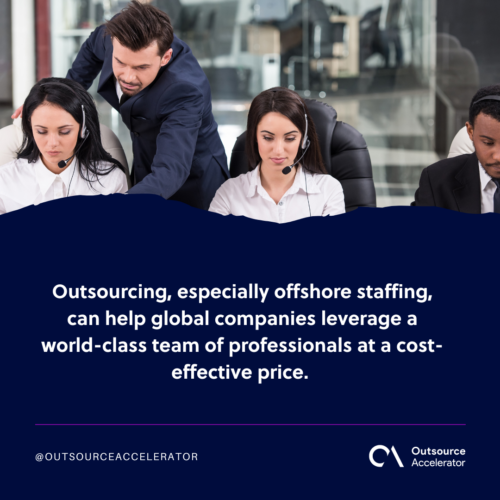
As a countercyclical sector, outsourcing often grows when budgets tighten. In fact, offshore staffing lets global firms tap a world-class team at a fair price. In addition, BPO providers offer scalable, flexible plans. So clients avoid rigid, year-long contracts that do not work. Looking ahead, the outsourcing industry is projected to boom and grow stronger than ever.
Philippines to remain the world’s BPO capital
The Philippines is a melting pot of cultures, backgrounds, and delightful differences. Like any developing country, it offers a low-cost yet efficient path over direct hiring. So many multinational BPO and offshore firms flock to the archipelago. With its fluent English speakers and eager minds, the local workforce stands out in a crowded market. As a result, the Philippines remains a top outsourcing destination for global brands.
Getting started with Philippine outsourcing
In the Philippines alone, the BPO industry has created over a million jobs. It serves both industry beginners and career shifters. So it is safe to say your outsourcing choice helps others’ livelihoods too. Many firms offer BPO services here, from customer support and lead generation to back-office roles and sales.
From Europe to Asia, it is not hard to find a firm that offers what you need. In fact, a wide range of roles are outsourced to the Philippines each year. Here is a quick guide on how to get started with outsourcing to the Philippines.
Know what you want
First, know your goals and expectations before you outsource. So list all your staffing needs, targets, budget, and other key details. Next, take time to plan and set clear business goals. Once everything is in place, you can book a consult with an established BPO firm.
Find a trusted staffing provider
Once your goals and budget are set, it is time to find a trusted staffing provider. This partner should grasp your business needs. As a result, they can build a custom solution just for you. In the professional world, clear communication is crucial. So keep an open channel between both sides. When you discuss short and long-term goals, keep the big picture in mind. Also, make sure your targets stay realistic within the right time frame. Once you find a trusted partner, outsourcing gets much easier. For deeper guidance, review these reasons the Philippines is a smart choice.
Collaborate and communicate
Through offshore staffing, you can be as involved in hiring and supervision as you like. So keep open communication to build a productive partnership. In turn, your BPO provider stays transparent, flexible, and adaptable. For best results, follow these offshore team best practices from day one.
Outsourcing statistics to look out for
Since the late ’80s, outsourcing and offshoring have grown fast. So it is no surprise they now form a core part of many industries. According to Fortunly, “More than 93% of organizations are considering or have already adopted cloud services to improve outsourcing.” This staggering figure grew as more firms handed services to third parties.
Like any senior expert, leaders keep seeking practices that are cost-effective. As a result, they look for methods that bring out the best in their business over the long run. Long-standing offshore firms like MVP Asia Pacific help other groups reach their full potential. In fact, they integrate offshore teams into each department. So with tailored services and proven processes, offshore outsourcing has never been this easy.
Frequently asked questions about offshore staffing in the Philippines
Why is the Philippines popular for offshore staffing?
The country has a large, English-speaking talent pool. It also offers lower labor costs. As a result, firms get skilled teams at a fair price.
What roles can I outsource to the Philippines?
You can outsource many roles. For example, customer support, lead generation, sales, and back-office work all fit well.
How do I start offshore staffing in the Philippines?
First, list your goals and budget. Next, find a trusted staffing provider. Finally, keep communication open to build a strong partnership.
Is offshore staffing only for large companies?
No. Small firms and startups gain too. In fact, flexible plans let any business scale up or down with ease.
Key takeaways
- Offshore staffing in the Philippines gives access to skilled, low-cost teams.
- The BPO sector is a top driver of the Philippine economy.
- Start by setting clear goals and a firm budget.
- Choose a trusted provider who understands your needs.
- Open communication keeps the partnership strong.






 Independent





