
Scale wiser: 6 signs your team is ready to offshore specialists

When is your team ready to offshore specialists?
Your team is ready to offshore specialists when in-house staff are overwhelmed, hiring is slow, costs are climbing, and you need to scale without losing focus.
- Offshore specialists give you skilled talent at a lower cost than local hiring.
- They free your core team to focus on growth, strategy, and customers.
- Timing matters, so read the signs before you make the move.
Competition keeps rising, and talent gaps keep widening. As a result, more companies hire seasoned remote professionals to stay on track.
Trusted partners like Boomering help teams scale faster and work smarter. In turn, you gain cost savings and strong performance without the weight of traditional hiring.
But how do you know your team is ready? Timing is everything, and the wrong moment can cost you. So this guide covers six clear signs. It also shows how top offshore specialists unlock your next stage of growth.
6 can’t-miss signs you need offshore specialists
Scaling is not just about doing more. Instead, it is about working smarter. Offshore specialists give you world-class talent, leaner operations, and a cost-effective way to grow. These six signs show when your team is ready to take that step.
1. Your in-house team is overwhelmed
When projects pile up and deadlines slip, your team has hit capacity. This is a clear signal to delegate work to remote experts. Doing so helps prevent burnout and protects quality. As a result, your core staff can focus on high-impact work.
2. Talent shortages are slowing you down
Hiring locally can feel like finding a needle in a haystack. In the US, nearly every state faces some level of labor shortage. Because of this, expansion stalls and key projects drag. However, offshore providers give you access to skilled global talent. So you cut recruitment time and fill hard-to-source roles.
3. Operational costs are skyrocketing
If labor costs eat into your margins, offshoring offers a better path. Offshore specialists deliver quality work at a fraction of the cost. As a result, you keep performance high while lowering overhead. For many firms, offshore staffing frees budget for innovation, marketing, and expansion.
4. You need to scale quickly
Sudden growth is exciting, but it can turn chaotic fast. Rapid expansion often outpaces your internal resources. Offshore teams give you the agility to grow without losing control. So whether you launch a product or enter a new market, they help you keep pace.
5. Productivity has plateaued
Stagnation often points to tired processes or stretched resources. When one team carries a growing workload, output tends to flatten. Offshore specialists bring fresh energy and new skills. As a result, they can jumpstart efficiency and spark innovation across departments.
6. You’re losing focus on core goals
Spending too much time on non-core tasks is a red flag. So hand repetitive, time-heavy work to offshore teams. Then your internal staff can focus on growth, strategy, and customer experience. Spotting these signs early gives your business a real edge. In short, offshore experts are a long-term resource, not a quick fix.
Important considerations before offshoring specialists
Offshoring can be a winning move, but success is not automatic. To get the most from offshore specialists, you need both a budget and a plan. First, it helps to understand the difference between offshoring and outsourcing. Then look at the bigger picture and ask the right questions.
- Business goals and timing. Match offshoring to clear growth targets. Whether you want cost savings, speed, or new skills, clarity drives better choices.
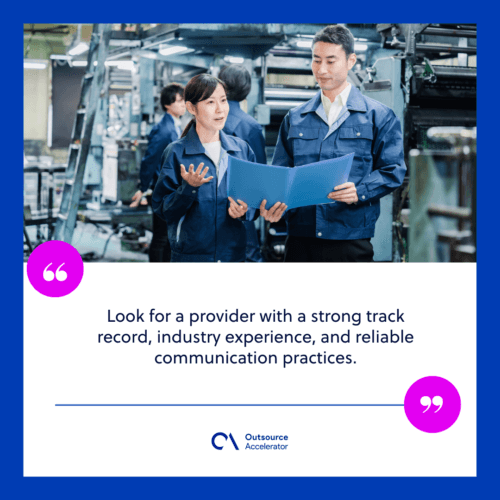
- The right service provider. Not all partners are equal. So look for a strong track record, industry experience, and reliable communication.
- Cultural compatibility. Smooth teamwork starts with shared understanding. Consider how well the team’s work style, language, and values fit your culture.
- Data security and compliance. Protecting sensitive information should be a top priority. Choose providers who follow strict protocols and meet relevant rules.
- Clear communication channels. Time zone gaps can slow you down or help you. So set regular check-ins, shared tools, and clear expectations early.
- Scalability and flexibility. Pick a model that grows with you. The flexibility of offshore staffing lets your setup adapt as needs change.
Thoughtful choices early lead to a smoother experience and stronger results.
Boomering as a go-to partner for tapping into offshore specialists
Boomering helps growing businesses expand through dedicated offshore specialists and custom support. Its proven models help teams work smarter and move faster. As a result, you can stay focused on what matters most.
Want an edge without stretching your resources? Book a chat with the Boomering team and unlock a world of talent built to move your business forward. The right team is closer than you think.
Frequently asked questions about offshore specialists
What is the difference between offshore specialists and local hires?
Offshore specialists work from another country, often at a lower cost. Local hires sit in your market and time zone. However, offshore talent opens a far wider skill pool. So you can fill roles that are scarce at home.
How do offshore specialists help control costs?
They deliver strong work at a fraction of local wages. So you keep quality high while spending less. You can then reinvest the savings into growth. Some firms also use staff leasing to simplify setup.
Are offshore specialists only for large companies?
No. Small and midsize firms use them too. In fact, you can start with one role and scale later. This keeps risk low as you test the model.
How do I keep offshore specialists engaged?
Bring them into your rituals from day one. Then share clear goals and give regular feedback. Recognition and steady communication also help. Because of this, your team stays motivated and productive.
Which tasks should I offshore first?
Start with repetitive or time-heavy work. Next, move to roles that are hard to fill at home. Finally, keep your core strategy in-house. This balance protects focus while you grow.






 Independent






