
Multilingual call centers: All you need to know


What are multilingual call centers?
Multilingual call centers are support hubs where agents handle calls in several languages, so companies can serve customers around the world in their own language.
- They cover languages like Spanish, Mandarin, French, and German, not just English.
- They help brands reach global markets and lift customer satisfaction.
- They handle inbound and outbound calls, plus support, sales, and reception.
Buying a product from overseas is common today. However, sometimes it arrives with damage or a fault. So you call the shop’s support line for help.
But what if no one on the other end speaks your language? This is where multilingual call centers come in.
What multilingual call centers offer
Most call centers work in one language only, usually English. However, not every customer speaks English.
Multilingual call centers solve this problem. Instead, they operate in many global languages, such as Spanish, Mandarin, French, and German.
Multilingual agents field calls from many countries. As a result, they reach a wider target market than English-only teams. For firms that want to test the model first, call center outsourcing is a simple place to start.
How multilingual call centers work
Several multilingual call center services exist in the industry. Each has features that set it apart from a standard call center. So here are the traits that define how a multilingual call center works.
Expanded audience reach
If your product reaches overseas markets, some buyers will not speak English. Sooner or later, they will need help.
So a multilingual call center helps you connect with that global audience. It offers support in each customer’s own language. As a result, satisfaction goes up.
Bilingual and multilingual call center agents
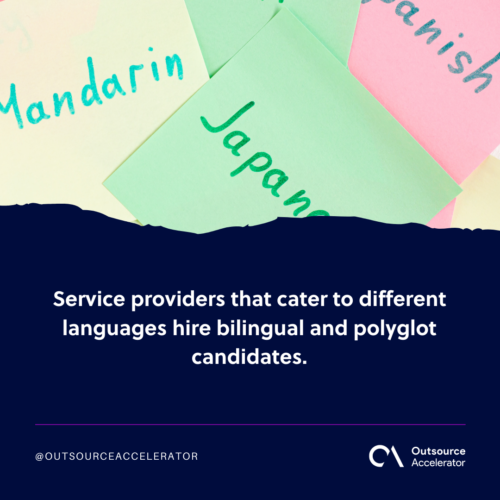
Providers that cover many languages hire bilingual and polyglot agents. For example, Connext is one premier third party that offers agents fluent in Spanish and English for the healthcare sector. Because of this skill, these agents often earn strong pay.
That is fair, since learning a new language takes time, effort, and commitment. Many firms also build bilingual customer service representatives into their core teams.
A wider range of services
From phone troubleshooting to reservation help for non-English callers, a multilingual call center can assist almost anyone. So it becomes a great way for a company to grow into new areas beyond the call center itself.
Next-gen technology
Contact hubs worldwide run on the latest tools. As a result, providers become more competitive, efficient, and reliable. This tech also helps them deliver world-class service to clients.
Cost-effective solutions
Industry pros know it is often cheaper to outsource than to hire and train in-house. This is even more true for multi-language support. After all, recruiting and training bilingual agents in-house can cost a lot. The wider benefits of customer support outsourcing make the case even stronger.
Services you can outsource to multilingual call centers
As the name suggests, multilingual call centers focus on phone work. However, you can also outsource tasks like email support can be outsourced to BPO companies that offer multilingual functions.
For call center services, here are the top roles you can outsource to a multilingual call center.
Inbound and outbound calls
Like English-only agents, multilingual agents handle both inbound and outbound calls. Inbound calls come from clients, customers, and prospects. Meanwhile, outbound calls are the ones agents make from inside the center.
Agents train for both types. So they stay ready for either one, since account changes are common in this field. Many buyers start with inbound call center solutions before they add outbound work.
Customer service and care
This is one of the most common services these hubs handle. Customer care teams manage questions, complaints, feedback, and escalations.
With bilingual agents, this team can reach far more customers. For example, a company can set up a special hotline for non-English speakers.
Virtual receptionist services
Remote receptionists are on the rise, along with remote-only companies. With this setup, leaders never miss an important call, even when they are away.
So multilingual call centers can serve firms in non-English markets. As a result, clients feel free to speak in their own language.
Telemarketing and telesales
Both telemarketing and telesales need an empathetic touch to close deals. And what feels more personal than a rep who speaks the prospect’s language?
So a multilingual approach often leads to more sales. As a result, teams hit their weekly targets more often. If you want a reliable partner for bilingual sales reps, Wing Assistant is a strong choice.
Over-the-phone tech support
Tech support is one of the hardest yet most rewarding parts of customer service. Still, agents need real patience to guide callers through fixes over the phone.
English can confuse even native speakers. So a multilingual call center helps a company reach a bigger audience. As a result, agents solve issues without stumbling over grammar.
Is remote work an option for multilingual call centers?
Remote call centers have grown fast, since more jobs can now be done from home. So the answer is yes. Remote work is a real option for multilingual contact centers.
A remote setup also draws skilled candidates worldwide. As a result, a multilingual call center can build teams in many languages with ease. For a fully managed route, a bilingual contact center can handle the whole operation for you.
Frequently asked questions
What is a multilingual call center?
It is a support hub where agents handle calls in several languages. So companies can serve customers worldwide in their own language.
What is the difference between bilingual and multilingual call centers?
A bilingual center handles two languages, often English and Spanish. A multilingual center covers three or more languages.
What services can a multilingual call center handle?
They handle inbound and outbound calls, customer care, and virtual reception. In addition, they cover telemarketing, telesales, and tech support.
Are multilingual call centers cost-effective?
Yes, for most firms. Outsourcing costs less than hiring and training bilingual agents in-house.
Can multilingual call centers work remotely?
Yes. A remote model works well and draws talent from around the world. As a result, providers can build language teams fast.
Key takeaways
- Multilingual call centers serve customers in many languages, not just English.
- They expand your reach into global markets and lift customer satisfaction.
- They cover inbound and outbound calls, support, sales, and reception.
- Outsourcing bilingual support costs less than building an in-house team.
- A remote model helps providers build language teams from around the world.






 Independent





