
What is medical records management?


What is medical records management?
Medical records management is the organized way healthcare teams collect, store, and protect patient information so it stays accurate, secure, and easy to access.
- It covers patient histories, lab results, and treatment plans.
- It keeps data safe and compliant with health laws.
- It often runs on electronic health records for speed.
Medical records management handles patient data in a clear, systematic way. So records stay accurate, secure, and easy to find. The work includes collecting, storing, organizing, and maintaining medical files. For example, it covers patient histories, lab results, treatment plans, and billing.
Modern systems often use electronic health records (EHRs). These give a digital way to store and reach medical data. As a result, providers can streamline workflows, share data safely, and cut manual errors.
5 Benefits of effective medical records management
Good medical records management is a core part of modern care. In fact, it helps patients, providers, and whole organizations. Here is a closer look at five key benefits.
1. Improved patient care
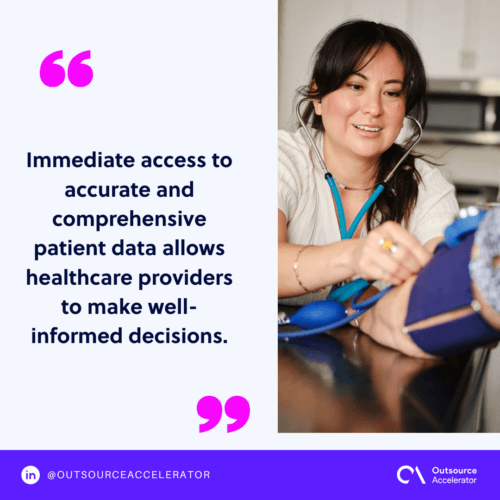
Fast access to accurate patient data helps providers decide well. So diagnoses come sooner and treatment plans fit the patient. As a result, health outcomes improve.
Accurate records also lower the risk of medical errors. Because of this, patient safety goes up.
2. Enhanced operational efficiency
A streamlined system cuts time spent on admin work. For example, staff waste less time hunting for files or fixing errors.
So workflows improve. Plus, staff can focus more on patient care and less on paperwork. Many teams add healthcare back office support to keep admin tasks moving.
3. Regulatory compliance
Health rules like the Health Insurance Portability and Accountability Act (HIPAA) matter a lot. So well-managed records help you meet these standards. As a result, you avoid fines, legal issues, and harm to your name.
4. Data security
Advanced systems use encryption and access controls. So they guard sensitive patient data from breaches.
5. Cost savings
Automation and clean workflows cut costs. For example, they reduce waste and errors. So organizations can move resources to other key areas and lift the quality of care.
Challenges in medical records management
Managing medical records is a complex job. It calls for care around efficiency, security, and compliance. Like any part of healthcare, medical records management brings its own challenges. Here are the main ones.
1. Data security and privacy. Guarding patient data from cyber threats and unauthorized access stays a top concern.
2. Integration issues. Many facilities struggle to link new record systems with old tools.
3. Managing high volumes of data. Healthcare creates huge amounts of data each day. So it needs scalable storage and smart organization. Without good systems, staff can feel overwhelmed. This is where medical data entry services can ease the load.
4. Regulatory changes. Rules like HIPAA change often. So teams must update practices, train staff, and track new rules. As a result, compliance takes steady effort.
5. Staff training. Poor training leads to errors, delays, and breaches. Because of this, ongoing education and support are a must.
The future of medical records management
Despite these challenges, the future looks bright. New technology, higher patient expectations, and a push for cost-efficient solutions are driving change. So here are the key trends shaping what comes next.
Artificial Intelligence (AI) and automation
AI tools are reshaping medical records management. For example, they speed up data analysis and organization.
So these systems cut manual work, reduce errors, and boost accuracy. As a result, providers can focus more on patient care.
Patient-centric approaches
New systems put patients first. They let people view and manage their own records.
So this builds transparency and trust. Plus, it helps patients make informed choices about their care.
Outsourcing and specialized staff
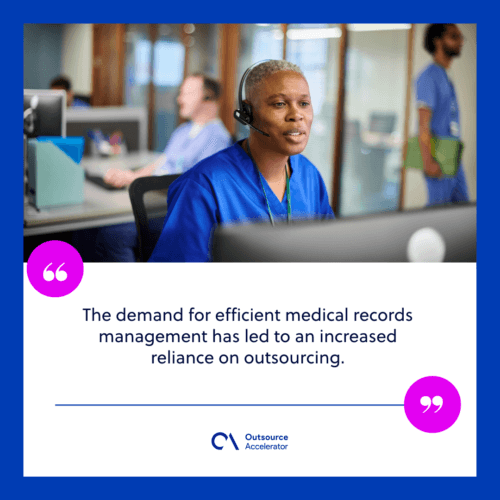
Demand for efficient records has driven more outsourcing. Skilled pros from firms like Connext handle key tasks. As a result, they support compliance, accuracy, and cost savings for healthcare groups. This trend fits the wider rise of healthcare outsourcing and steady revenue cycle management.
Why work with Connext?
Connext is a trusted partner in medical records management. It offers tailored solutions for your organization’s needs.
The firm supports high-growth healthcare groups. For example, it serves healthcare tech companies, medical groups, pharmaceutical firms, biotech companies, revenue cycle management companies, and telehealth providers.
Here is why healthcare providers choose Connext:
- Industry expertise. With years in healthcare data, Connext knows how to keep records accurate and secure.
- Commitment to security. Connext is Type 2 SOC 2 Compliant and runs a security audit each year. All staff take quarterly IT security training and use Connext equipment for work.
- Dedicated support. Connext gives ongoing support and training so your staff can use the system well.
Partner with Connext to transform your medical records management process!
Visit their website to learn more about how they can help your organization achieve operational excellence and deliver superior patient care.
Frequently asked questions
What does medical records management include?
It includes collecting, storing, and organizing patient data. For example, it covers histories, lab results, and billing. It also keeps records secure and compliant.
Why is medical records management important?
It supports better care and safety. As a result, providers make faster, informed decisions. It also helps meet HIPAA rules.
How do EHRs help records management?
EHRs store data in a digital form. So providers can share it safely and cut manual errors. Because of this, workflows get faster.
Can you outsource medical records management?
Yes. Many providers use specialized firms for this work. As a result, they gain accuracy, compliance, and cost savings.
How is patient data kept secure?
Systems use encryption and strict access controls. So only approved staff can view sensitive files.
Key takeaways
- Medical records management keeps patient data accurate, secure, and easy to access.
- It improves care, efficiency, compliance, security, and cost savings.
- Key challenges include data security, integration, and staff training.
- AI, patient-first tools, and outsourcing are shaping its future.
- A trusted partner like Connext supports compliance and accuracy.






 Independent





