
A 10-step guide on how to start a catering business


Most catering businesses don’t start with a spreadsheet. They start with a kitchen full of smells, a few friends who believe in your cooking, and a nagging thought that maybe, you could turn food into something more than a weekend hobby.
But turning that thought into a profitable business? That takes structure, research, a lot of planning, and yes, more than a few late nights.
This guide breaks down the process of how to start a catering business into ten manageable steps.
Whether you’re dreaming of elegant weddings or casual office lunches, we’ll help you move from concept to client-ready.
Why start a catering business?
The catering industry has rebounded post-pandemic, and according to IBISWorld, the U.S. catering market is projected to hit $16 billion in 2025.
Low startup costs, scalable services, and the flexibility to start small make it appealing for first-time entrepreneurs.
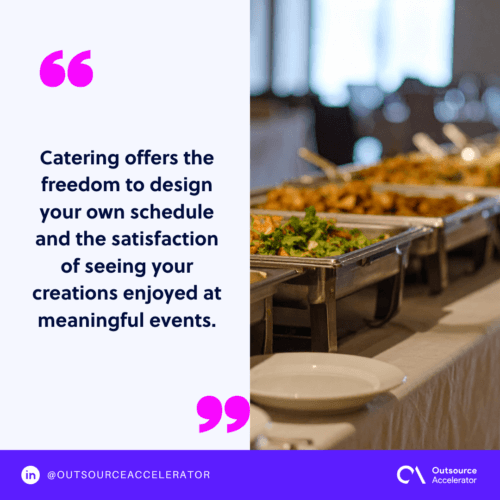
Catering offers the freedom to design your own schedule and the satisfaction of seeing your creations enjoyed at meaningful events.
Unlike restaurants, you don’t need a storefront, making it more accessible financially. It also gives room for creativity. You get to make and decide on custom menus, themed events, and curated experiences.
How to start a catering business in 10 steps
Starting a catering business might sound like a mix of chaos and creativity. In many ways, it is. But with the right steps, you can build something sustainable and profitable:
Step 1: Is catering your calling? Ask yourself a few hard questions
Do you genuinely love cooking for others, even under pressure? Are you prepared for long, irregular hours, tight deadlines, and high client expectations? It’s important to ask and answer these difficult questions.
When you’ve decided or realized that you really want to establish a catering business, the next thing is to assess your culinary skill set. It’s not just about taste. Presentation, consistency, and portion control also matter.
Identify your unique selling proposition (USP) as well. What makes your food or service different from everyone else’s? That difference will shape your brand.
Quick checklist:
- Reflect on your long-term commitment and stamina
- Ask for honest feedback from others on your food and hosting skills
- Write down your USP in one sentence
Step 2: Craft your strategic catering business plan
Market research is your first real business task. Who needs catering in your area? What are they willing to pay? Look into local competitors and spot the gaps.
From there, define your niche. Are you offering gourmet plated meals or buffet-style lunches? Target weddings, corporate events, or private parties? Your service model shapes everything.
Then, map out your startup and operating costs. You should consider everything from the equipment, transport, staffing, insurance, to marketing.
Include cash flow forecasts as well. It doesn’t need to be perfect, but it must be realistic.
Quick checklist:
- Identify your top local competitors
- Choose one target customer group
- Draft a one-page financial overview
Step 3: Navigating legalities: Licenses, permits, and health regulations
Decide on a business structure, whether that’s sole proprietorship, partnership, or LLC. Each has tax and liability implications, so consult a CPA or business attorney.
Then, apply for your business license and food service permit. These requirements vary by state and county. You also need to check local health department rules. You’ll likely need regular inspections and food handler certifications.
Don’t skip insurance either. At a minimum, get general liability and product liability coverage. You may also need commercial auto and workers’ compensation insurance.
Quick checklist:
- Schedule a call with a small business attorney
- Contact your local health department for checklists
- Get insurance quotes from at least two providers
Step 4: Fund your vision by securing capital and managing finances
Startup costs for small catering operations range from $10,000 to $50,000, depending on equipment and kitchen setup.
Itemize costs carefully: venue rental, transport vehicles, uniforms, and initial inventory.
Consider funding options like personal savings, small business loans, or grants. Some local governments offer support for food entrepreneurs.
Set up a basic accounting system using tools like QuickBooks or Wave. Track expenses meticulously, especially the cost of goods sold. Keep cash flow stable by requesting deposits from clients.
Quick checklist:
- Build a three-month startup cost spreadsheet
- Research two funding options
- Choose accounting software and set up expense categories
Step 5: Design your menu and pricing strategy
Design a menu that matches your niche but also allows flexibility. Nowadays, it’s also important and great to include options for common dietary needs (vegetarian, gluten-free, dairy-free, etc).
When it comes to pricing, it’s about balance. Factor in ingredients, labor, transportation, and overhead, plus a profit margin. You can even offer tiered pricing packages for different event sizes.
And don’t forget to test your menu. What works in your home kitchen might need tweaking for scale.
Quick checklist:
- Finalize core menu packages
- Get feedback from test clients
- Create a pricing calculator spreadsheet
Step 6: Set up your operational hub (kitchen and equipment)
Decide if you’ll use a home kitchen (if legally allowed), rent a commercial kitchen, or partner with a shared-use commissary. Check zoning and health code regulations first.
Essential equipment includes food warmers, prep tables, coolers, knives, chafing dishes, and transport bins. If you can, invest in high-quality gear for longevity.
Layout matters too. Organize for smooth workflow: prep, cook, pack, clean. Efficiency here saves time and reduces mistakes.
Quick checklist:
- Confirm kitchen zoning and permits
- Create a list of required equipment by task
- Draw a basic workflow layout for your space
Step 7: Build your dream team (hire, train, and outsource)
Start small. You may only need a few part-time staff to help with cooking and service. Prioritize reliability and attitude over experience.
Train your team in both food safety and customer service. Run mock events to prepare them for real ones. Clear roles and expectations reduce day-of confusion.
Consider outsourcing non-core tasks like bookkeeping, marketing, or deep cleaning. Freeing yourself from administrative work lets you focus on client experience and food quality.
Quick checklist:
- Write job descriptions for core roles
- Prepare a training checklist
- Identify tasks to outsource
Step 8. Promote your catering business
Build your brand with a logo, business cards, and a professional website (if capable). Food presentation is also big in social media, with 62% of customers making a habit of checking a food business’s pages before being a patron.
Set up profiles on channels like Instagram, Facebook, TikTok, and Google Business. From these platforms, you can post and promote high-quality photos and videos of your food and how your business operates.
You can also run promos by offering discounted tastings for local event planners, venues, and businesses.
To market your catering business, you can attend wedding expos, corporate events, and local networking meetups. Offer referral bonuses to clients and vendors. Follow up after events with a thank-you and request a review.
Quick checklist:
- Schedule local networking events
- Draft email templates for client follow-ups
- Create a review request message
Step 9. Master event execution (logistics and operations)
Create an intake form for whatever chosen communication platform you use to standardize bookings. Include event type, guest count, dietary needs, budget, and timeline.
Plan each event in phases: Prep, pack, transport, serve, and cleanup. Use checklists to avoid forgetting key items. Have a backup plan for weather, power outages, or staff shortages.
After each event, follow up with the client for feedback. Adjust your process accordingly.
Quick checklist:
- Build a reusable event checklist
- Prepare a backup plan template
- Create a client feedback survey
Step 10: Grow your catering business (expansion and sustainability)
Once you’re consistently booking clients, shift your focus to retention. Offer loyalty discounts and personalized thank-you gifts to your clients.
When your catering business has grown enough, you can expand by adding new services like bar catering, rentals, or cooking classes. Partner with venues or event planners for exclusive referrals.
Keep learning. Follow food trends, track customer feedback, and update your menu regularly. Growth is about staying relevant and listening well.
Quick checklist
- Brainstorm new service ideas
- Identify potential venue partners
- Review your menu every quarter for updates
Your recipe for catering success
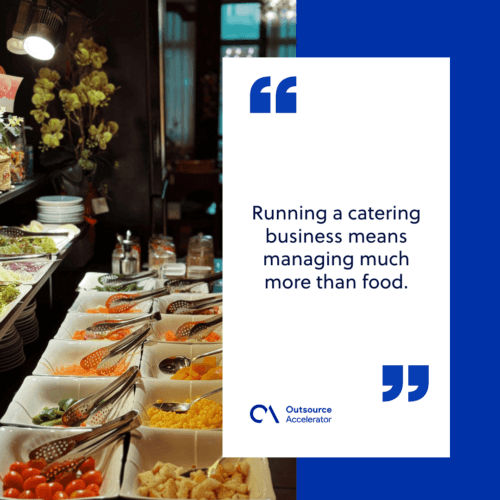
Running a catering business means managing much more than food. You’re juggling logistics, guiding a team, and keeping your cool even when 200 hungry guests are looking your way.
It’s the kind of work that requires planning, fast thinking, and stamina. That all happens behind the scenes while everyone else is enjoying the party.
But we know it’s also deeply rewarding, that’s why you’re here reading this guide. Because once you know how to start a catering business, you’re not just serving food, you’re shaping experiences.
A couple’s wedding day, a team’s first big product launch, a grandmother’s 80th birthday, your meals are there, anchoring those memories. The flavors, the presentation, the seamless flow of the event, those are the details people remember.
It’s the kind of work that creates connection, not just between you and your clients, but among the people gathered around your food.
So, if you’re serious about turning your love of food into a business, this guide gives you the structure to do it. Start where you are. Cook what you know. And build something that feels like yours.






 Independent





