
Getting to know Gen Z in the workplace


Who is Gen Z in the workplace, and why do they matter?
Gen Z in the workplace are the youngest workers, born from the mid-1990s to the mid-2000s, and they bring digital skills, independence, and a strong push for fairness.
- They are true digital natives who adapt to new tools fast.
- They value diversity, flexibility, and quick career growth.
- They reshape work culture toward remote and flexible setups.
The modern workforce keeps getting more diverse. So understanding each generation’s traits matters more than ever. In short, it helps you build a calm and productive workplace. Now enter Gen Z, the newest group in the professional world.
Let us look at the ins and outs of Gen Z in the workplace. First, we cover their impact. Next, we explore the challenges they face. Finally, we show how companies can engage this generation well.
Defining Gen Z in the workplace
Gen Z refers to the generation born between the mid-1990s and mid-2000s. People also call them Gen Zers, post-millennials, iGeneration, zoomers, centennials, or homelanders.
They are the first true digital natives. As a result, they grew up immersed in technology. They stay constantly connected and juggle many platforms at once. They are also the largest generation worldwide, at around 26% of the global population.
In South Korea, they join with Millennials to form Generation MZ. This is because the two groups share many traits.
Characteristics of Gen Z in the workplace
Gen Z brings a unique set of traits to work. Their distinct work ethic shapes modern teams. So it also challenges old ways of working.
Tech-savvy
What it means. Gen Z grew up with smartphones, the internet, and social media. So they feel at ease with technology. They often prefer digital tools for work.
Why it matters. They pick up new software fast. As a result, they add real value in roles that need digital skills.
Independent
What it means. Gen Zers like to work on their own. They rarely need constant supervision. In fact, they are self-starters who take the initiative.
Why it matters. Their independence can lift efficiency. Because they need less guidance, you can trust them to manage their own tasks.
Emphasis on diversity and inclusion
What it means. Gen Z in the workplace cares deeply about equality and inclusivity. So they want fair workplaces where everyone is treated well.
Why it matters. This focus leads to more inclusive teams. As a result, firms that embrace it can attract and keep a more varied and talented group. Strong talent acquisition gets easier too.
Entrepreneurial spirit
What it means. Many Gen Z workers think like founders. They are creative, open to new ideas, and keen to explore.
Why it matters. Their drive brings fresh ideas and new ways to solve problems. So they often find clever ways to grow the business.
Multi-taskers
What it means. Gen Zers handle several things at once. This comes from their heavy use of digital platforms.
Why it matters. This skill helps in fast-paced work. As a result, they can manage many parts of a project at the same time.
Impact of Gen Z in the workplace
The presence of Gen Z in the workplace brings several clear effects.
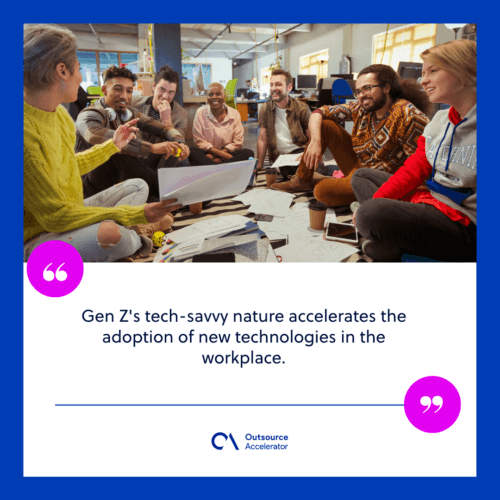
- Technological advancement. Their tech-savvy nature speeds up the use of new tools. So their input helps modernize daily processes.
- Diversity and inclusion. Their focus on fairness pushes firms to adopt inclusive policies. As a result, this creates a more equitable work environment.
- Innovation. Their entrepreneurial spirit fuels new ideas. In turn, they bring fresh approaches to problem-solving.
- Changing work culture. They prefer flexibility and independence. Because of this, more firms now offer remote and flexible options.
Challenges of Gen Z in the workplace
Gen Z brings many strengths. Still, they also pose a few clear challenges.
- Communication style. Gen Z may prefer digital communication over face-to-face talk. So this can strain team dynamics.
- Impatience. Their digital upbringing trained them for instant results. As a result, they may clash with slow, old-style hierarchies.
- Short attention spans. Constant digital stimuli can shorten focus. In turn, this can affect deep work on long tasks.
- Balancing autonomy. Gen Z values independence. Even so, they may need guidance to balance autonomy with teamwork.
- FOMO and distraction. Always-on connectivity can bring fear of missing out and distractions. So employers must help teams stay focused.
- High expectations. Gen Zers expect fast growth and clear advancement. Firms that know this are likelier to retain and engage this generation.
How companies can engage with Gen Z in the workplace
To connect well with Gen Z in the workplace, companies can take a few steps.
Embrace technology
Invest in modern tools to build a tech-friendly workplace. For example, use cloud-based project software. In turn, strong remote team management lets everyone work together from any location.
Foster inclusivity
Prioritize diversity and inclusion at work. So create a culture where all staff feel valued and respected. For example, set up inclusion committees or employee resource groups. These spaces encourage open talk and real action.
Encourage innovation
Give younger staff room to share ideas. Next, invite them into decisions and problem-solving. For example, hold regular brainstorming sessions. Then reward the best contributions with recognition or incentives.
Provide learning opportunities
Offer steady learning and development programs. These help young workers grow their skills and stay engaged. For example, give access to online courses and mentorship. Strong upskilling programs keep their skills sharp and relevant.
Offer flexibility
Gen Z in the workplace values flexibility. So consider remote options and flexible hours. These support better work-life balance and autonomy. As a result, the whole team gains, since flexibility shows you care about people’s well-being.
Harnessing the potential of Gen Z in the workplace
Gen Z in the workplace is set to make a substantial impact across industries. So companies should embrace their traits and preferences. That way, they can harness this potential in full.
This generation can drive positive change. They do it through diversity, innovation, and digital fluency. As a result, working with them fosters growth and adaptability in a fast-changing world.
Frequently asked questions about Gen Z in the workplace
What do Gen Z employees want most from a job?
They want fair pay, flexibility, and a clear path to grow. In addition, they value purpose and inclusive teams. So firms that offer these tend to attract and keep them.
How do you motivate Gen Z at work?
Give regular feedback and real recognition. Next, offer learning and quick chances to advance. For example, pair them with a mentor. As a result, they stay engaged and keep improving.
How is Gen Z different from Millennials at work?
Both groups value flexibility and purpose. Still, Gen Z is more digital-first and more independent. They also expect faster growth. In short, they push even harder on diversity and transparency.
What management style works best for Gen Z?
A coaching style works well. So set clear goals, then give autonomy to reach them. Frequent check-ins help more than tight control. Because of this, trust and output both rise.






 Independent





