
Improving efficiency through outsourced fulfillment services


What are fulfillment services?
Fulfillment services handle the full order journey for a business, from order processing and warehousing to shipping and returns.
- They cover order processing, inventory control, and delivery.
- Outsourcing them frees your team to focus on core work.
- The right partner boosts speed, accuracy, and customer satisfaction.
Companies always look for ways to work smarter and run leaner. One clear way is to use outsourced fulfillment services. As a result, a reliable partner can take on order processing, warehousing, inventory, and returns. So your team spends less time on logistics and more on growth.
Defining fulfillment services
Fulfillment services cover the handling of orders from purchase to delivery. So the tasks include:
- Order processing
- Warehousing
- Inventory control
When businesses buy fulfillment services from a dedicated provider, they can focus on their strengths. As a result, they keep a smooth, effective supply chain. This model also supports e-commerce outsourcing as online orders grow.
Types of fulfillment services
There are several fulfillment services. Each one covers a different part of the supply chain. Here are the most common types.
Order fulfillment
Order fulfillment sits at the core of any fulfillment service. So it includes:
- Receiving and handling customer orders
- Selecting and packing items
- Delivering orders to customers
Businesses that outsource this step gain precise, prompt delivery. As a result, customers stay happy and come back for more.
Warehousing and inventory management
Good warehousing and inventory control help firms meet demand while they cut costs. So a fulfillment partner can manage storage, layout, and stock tracking. In turn, this ensures products stay ready for order fulfillment. As a result, businesses avoid shortages and strengthen their supply chains. Many pair this with warehouse automation for faster, more accurate handling.
Returns and exchange handling
Returns and exchanges are common in business. However, they can be complex and time-consuming. So a fulfillment partner can handle the reverse process, including:
- Inspecting products
- Managing inventory
- Facilitating customer refunds or exchanges
As a result, it saves time and lifts customer satisfaction through a smooth returns experience.
Challenges in fulfillment services
Outsourcing fulfillment brings many gains. Still, firms should know the drawbacks too. So understanding these challenges is key to a smooth process.
Complex logistics
Fulfillment involves complex logistics. For example, this means shipping goods, tracking orders, and working with carriers. So a reliable partner helps you manage these tasks and deliver on time. This is where e-commerce logistics support makes a real difference.
Quality control
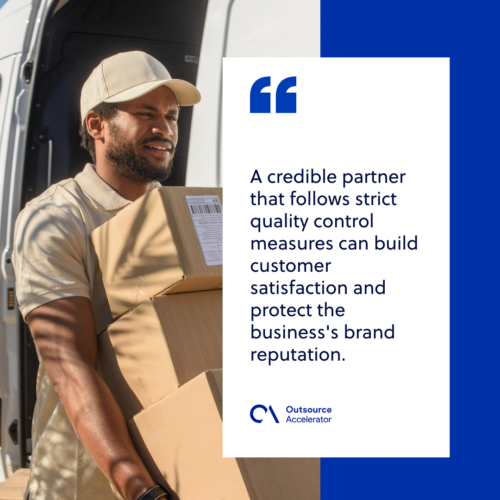
Consistent quality in packing and product condition is vital before shipping. However, weak quality control leads to damaged goods and unhappy customers. So strong checks help you meet customer expectations. As a result, a credible partner protects both satisfaction and brand reputation.
Communication and transparency
Clear communication and openness matter in any partnership. So set up transparent communication and real-time data access with your provider. As a result, you gain a clear view of order progress, stock levels, and any issues. In turn, this supports quick fixes and smooth teamwork.
Advantages of outsourcing fulfillment services
Outsourcing fulfillment offers clear gains. So businesses can optimize operations and focus on core skills.
Save time and resources
One main reason firms outsource fulfillment is cost savings. As a result, they avoid spending on warehouse space, equipment, and technology. In addition, they gain from economies of scale, since providers handle many clients’ orders and spread the cost.
Scalability and flexibility
Fulfillment needs shift with seasons or sudden growth. However, outsourcing lets you adjust without extra investment. So a trusted partner can handle changing order volumes fast. As a result, this helps most during busy seasons or rapid growth. A specialized logistics BPO can scale with you as demand rises.
Enhanced customer experience
Correct, on-time fulfillment creates a positive customer experience. So providers can offer faster shipping, real-time tracking, and smooth returns. As a result, customers stay loyal and satisfied.
Choosing the right fulfillment partner
The right partner is key to a successful outsourcing plan. So weigh the factors below when you assess candidates.
Assess business needs
First, evaluate your exact needs. Look at your order volumes, product types, regions, and industry rules. As a result, you can find a provider that truly fits your goals.
Technology and integration
Good fulfillment relies on strong tech and smooth integration. So check each partner’s tech tools, such as:
- Real-time stock tracking
- Automated orders
- E-commerce platform connections
As a result, a tech-savvy partner streamlines work and gives you accurate data for better decisions.
Service level agreements (SLAs)
A clear service level agreement (SLA) sets expectations and accountability. So look at SLAs that spell out key measures like order speed, accuracy, and on-time delivery. As a result, this lowers risk and confirms the partner meets your standards.
Future trends in fulfillment services
The fulfillment field changes with customer demand and technology. So firms that plan ahead can gain an edge. Below are the top trends shaping order fulfillment.
Automation and robotics
Automation and robots are reshaping how fulfillment works. For example, automated picking and robot helpers boost speed and cut mistakes. So businesses should weigh automation to lift productivity. Smart fulfillment logistics strategies often build on these tools.
Sustainable fulfillment
Sustainability matters more to shoppers and firms alike. So providers go green with eco-friendly packaging, energy-saving warehouses, and carbon-neutral shipping. As a result, working with eco-conscious partners shows your values and meets customer hopes.
Drones and autonomous vehicles
The rise of drones and self-driving vehicles opens exciting doors for fulfillment. Because they deliver fast, these tools could reshape the final leg of delivery. So businesses should track the rules and plan how to use them.

Explore and invest in tailored fulfillment solutions
Outsourcing fulfillment brings real gains for firms that want to boost efficiency. So a trusted partner helps you improve supply chains, lift customer experience, and plan for what is next. As you assess partners, weigh your needs, their tech, and their service promises. In addition, embrace automation, sustainability, and new tech. As a result, you set your business up for lasting success in a tough market.
Frequently asked questions about fulfillment services
What is the difference between fulfillment and shipping?
Shipping is only one step. Fulfillment is the whole process. So it covers order processing, warehousing, packing, shipping, and returns.
When should a business outsource fulfillment?
Outsource when order volumes grow beyond what your team can handle. In addition, consider it when warehouse and staffing costs climb. So many firms make the switch during rapid growth or busy seasons.
How much do outsourced fulfillment services cost?
Costs vary by order volume, storage, and shipping needs. Still, outsourcing often costs less than running your own warehouse. So you avoid heavy spending on space, staff, and equipment.
Do fulfillment providers handle returns?
Yes. Most providers manage the full returns process. For example, they inspect products, update inventory, and process refunds or exchanges.
How do I choose a reliable fulfillment partner?
Start by matching a provider to your order volume and product type. In addition, check their technology, their SLAs, and their track record. So a small trial run can confirm the fit before you commit.






 Independent





