
10 digital recruitment strategies to improve your hiring process


Today’s job market is tough. As a result, traditional recruitment methods may no longer be enough to attract and hire top talent.
So more organizations now turn to digital recruitment. These strategies use technology and online platforms to hire better.
ThriveMyWay gathered data that reflects this shift. It found that 80% of executives believe AI can boost performance and productivity in human resources.
Next, let us explore what digital recruitment is and why it helps. We also share ten tips to build a strong hiring strategy.
What is digital recruitment?
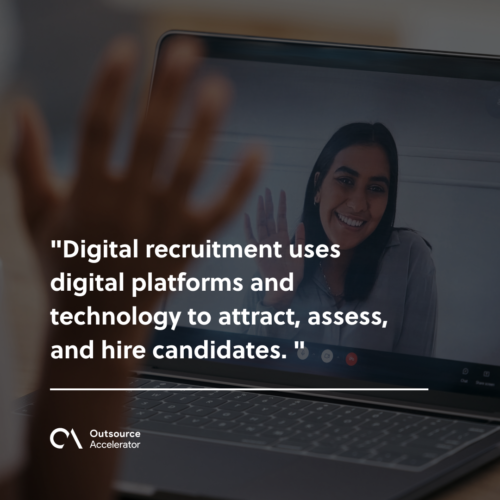
Digital recruitment uses online platforms and technology to attract, assess, and hire candidates.
- It covers every stage of hiring, from sourcing to onboarding.
- It relies on tools like job boards, social media, and video interviews.
- As a result, it widens your reach and speeds up the process.
Digital recruitment uses digital platforms and technology to hire the right people. For example, it runs from sourcing and attracting candidates to selecting and hiring the best fit.
Social media and online job boards keep growing. Because of this, digital recruitment is now a core part of modern hiring.
Digital recruitment process
To grasp the impact of digital recruitment, look at its key stages:
Sourcing
Sourcing means finding potential candidates through many channels. For example, these include job boards, LinkedIn, and social media.
With smart search filters and keywords, recruiters can narrow the pool fast. So they save time from the start.
Here are more ways to digitize sourcing. You can also apply proven candidate sourcing strategies:
- Define your ideal candidate. First, decide who you want. List the skills, experience, and qualifications the role needs.
- Create a digital talent pool. Keep a digital record of strong candidates. Use tools like applicant tracking systems (ATS) to manage it well.
- Keep candidates engaged. Use automated emails and newsletters to stay in touch. So they stay interested in your company.
- Build a strong reputation. Your online image matters. Show your culture and values through blogs, social media, and good reviews.
Attracting
After sourcing, attracting candidates comes next. So brands should use their online presence, from a clean website to strong job posts.
Show your culture and unique selling points. As a result, you attract people who share your values and goals.
Here is how to attract more candidates:
- Personalize applications. Address applicants by name and ask job-related questions. This shows you value their time.
- Explain the role clearly. Give detailed job descriptions and clear expectations. So there is no confusion.
- Stay in touch automatically. Use automated systems to send updates. Keep applicants in the loop.
Selecting
Digital recruitment offers many tools to assess candidates. For example, you can use online tests, video interviews, and pre-employment checks.
With these methods, recruiters can judge skills and cultural fit more easily. Clear screening methods also keep the process fair.
You can streamline selection in these ways:
- Use integrated technology. Connect your tools with your current systems. So the process runs smoothly.
- Introduce automation. Automate routine tasks like resume screening. As a result, you find top candidates faster and save time.
Hiring
Once selection is done, digital tools speed up the final steps. For example, you can use digital offer letters, e-signatures, and online background checks.
Digital solutions cut paperwork and improve the experience. Here are two to try:
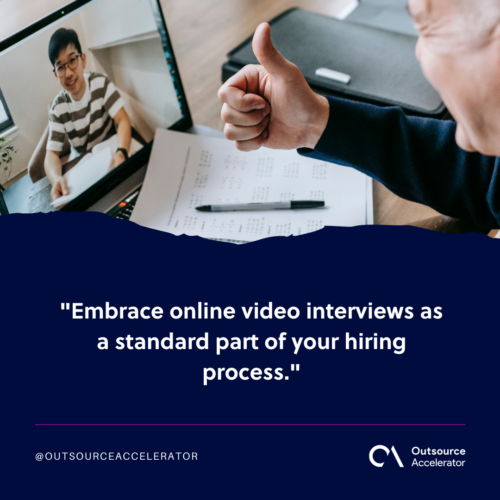
- Conduct online video interviews. Make video interviews a standard step. Tools like Zoom allow face-to-face chats, even in remote hiring. So you save time and still assess people skills.
- Make self-scheduling an option. Let candidates book their own interviews. This empowers job seekers and cuts scheduling clashes.
Onboarding
The process does not end when someone is hired. In fact, digital onboarding keeps it going.
You can use digital platforms for remote onboarding. So new hires get the info, training, and team ties they need.
Digital onboarding eases the switch for new hires. This helps even in remote or hybrid work. It also reflects strong onboarding practices.
Here are ways to boost onboarding through digital tools:
- Digital welcome packages. Share key documents like contracts, tax forms, and policies. Give secure access through a portal or email.
- Online training modules. Build interactive modules on company history, values, and policies. Add quizzes to check understanding.
- Virtual tours. Use video or 360-degree clips to tour the office. Highlight key spots like the cafeteria and meeting rooms.
- Online benefits enrollment. Let new hires enroll in benefits online. This covers perks like health insurance and retirement plans.
- Digital HR portals. Create a central HR portal for key info and requests. Keep these portals user-friendly.
- Online compliance training. Deliver compliance training and quizzes online. This matters most in strict, regulated fields.
- Digital team introductions. Host virtual intros so new hires can meet the team. Ask each member to share a short role overview.
Benefits of digital recruitment
Digital recruitment offers clear gains over traditional hiring. These benefits include:
Wider candidate reach
Online recruitment reaches a larger, more diverse talent pool. So you can connect with candidates around the world.
Time and cost savings
Digital recruitment cuts manual tasks and paperwork. As a result, automated systems manage applications, tests, and messages for you.
Enhanced candidate experience
A good application experience helps you attract and keep talent. Digital recruitment allows personal chats, quick replies, and fast feedback. So applicants feel valued the whole way.
Data-driven decision making
Online recruitment gives you useful metrics and analytics. These insights show bottlenecks and reveal what works. So you can improve with confidence.
Improved employer branding
A strong digital strategy lifts your brand. By showing your culture and values online, you attract talent who share your identity.
10 tips for building a powerful digital recruitment strategy
To get the most from online recruitment, you need a clear plan. Here are ten tips to build a strong digital recruitment strategy:
1. Make and share relevant content
Create content that shows your culture, values, and openings. Then share it through blogs, social media, and employee stories. So you engage more candidates.
2. Prioritize the candidate experience
Keep the process simple and easy to use. First, optimize your career site for phones. Next, make applications short and reply on time.
3. Build and maintain a good reputation
Protect your online reputation by listening and replying to feedback. Also, ask employees to share positive stories on Glassdoor and LinkedIn.
4. Develop a digital candidate selection process
Use online tests, video interviews, and other tools to assess people fairly. As a result, the process stays smooth and thorough.
5. Have a robust social media recruiting strategy
Use platforms like LinkedIn, Facebook, and X to reach candidates. Post openings, share news, and join industry chats.
6. Design feedback loops
Give constructive feedback throughout the process. So applicants learn their strengths and stay positive about your brand.
7. Use the appropriate tools
Invest in an ATS and other tech that fit your needs. Modern AI recruitment tools streamline tasks and improve team collaboration.
8. Educate and train your team
Keep your team current on the latest hiring trends and platforms. Also, train them on tools and digital communication. So they work with more skill.
9. Monitor recruitment metrics
Track key recruitment metrics like time-to-fill and cost-per-hire. Then use the data to refine your strategy.
10. Be consistent across the process
Keep your message and branding steady at every touchpoint. As a result, the candidate experience stays cohesive and strong.
How digital recruitment is relevant in today’s hiring environment
Digital recruitment matters more than ever today. Job seeking has changed, and digital platforms are everywhere.
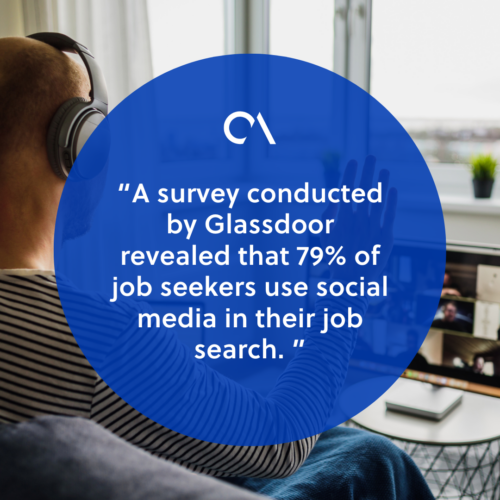
Candidates now rely on online resources to find and research jobs. A Glassdoor survey found that 79% of job seekers use social media in their search. So a strong digital presence is a must.
The shift to remote and hybrid work has also driven digital recruitment. As virtual hiring became common, companies adapted fast to keep attracting top talent.
Digital recruitment also reaches passive candidates. These people are not job hunting, but they may still be open to a good move.
With targeted ads and engaging content, you can catch their eye. So you can present a strong career opportunity at the right time.
Frequently asked questions
What is digital recruitment?
Digital recruitment uses online platforms and technology to hire. It covers sourcing, attracting, selecting, hiring, and onboarding. So it makes the whole process faster and wider in reach.
What are the stages of digital recruitment?
The main stages are sourcing, attracting, selecting, hiring, and onboarding. Each stage uses digital tools. As a result, the process stays efficient from start to finish.
What are the benefits of digital recruitment?
It widens your reach and saves time and cost. It also improves the candidate experience and gives useful data. So you can make smarter hiring choices.
How do you build a digital recruitment strategy?
First, share strong content and use the right tools. Next, track your metrics and train your team. Then keep your branding consistent at every step.
What tools support digital recruitment?
Common tools include job boards, an ATS, and video interview software. AI recruitment tools help too. Together, they streamline sourcing, screening, and scheduling.






 Independent





