
5 innovative communication games to level up your next virtual team building


What are communication games, and why use them for virtual team building?
Communication games are short, fun activities that help remote teams talk, listen, and connect better, so virtual team building feels engaging instead of awkward.
- They build trust and stronger bonds across a distributed team.
- They boost listening, clear speaking, and problem-solving skills.
- They make virtual team building lively, not stiff or forced.
Many organizations were not fully ready to adopt a work-from-home setup. As a result, one of the biggest challenges for remote teams is proper communication.
We do have plenty of tools and tech today. Still, talking face to face is different from a call, a text, or a chat message.
That is why remote teams should run virtual team building often. These activities help remote workers communicate better. So they also build relationships and trust, reduce conflict, and lift each person’s creativity.
To make your sessions fun and interactive, mix in some communication games. This way, everyone gets a chance to join in and enjoy the time together.
How communication games can benefit your remote team
It is hard to keep daily work running smoothly from home. So your remote team must stay in sync and work well together.
Adding communication games to your next virtual team building can help in these ways:
Productivity
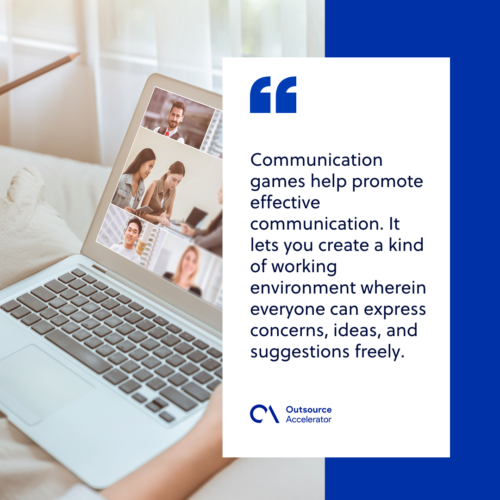
Communication games promote effective communication. They create a space where people share concerns, ideas, and suggestions freely.
As a result, your team feels comfortable to take on tasks and add ideas in brainstorms. Over time, these exercises improve teamwork, problem-solving, and overall output. For deeper wins, pair the games with proven remote team management tips.
Alleviates conflicts
Communication games help your staff get to know each teammate better. So they build a bond where people understand one another. As a result, misunderstandings and conflicts drop across the team.
The games also give people a fun way to sharpen their verbal skills. So they express ideas more clearly and simply. Distance may limit normal body language cues. However, these games help teams find other ways to connect that work just as well.
Fuels growth and innovation
Good communication fuels growth and new ideas. It also saves the team precious time, because everyone speaks clearly.
In addition, it lifts morale and supports employee retention. So think of communication games as a simple tool to spark growth and stronger listening. Strong employee engagement often follows. Interactive play also helps people read body language and facial cues, which matter a lot in virtual work.
Improve communication skills
To thrive at work, people must keep building their communication skills. This is vital for any remote team that wants to collaborate well.
Communication games are a great way to boost team dynamics. They encourage active listening, clear ideas, and smart problem-solving. As a result, teams avoid mix-ups and conflict. Simple habits like listening well, asking for feedback, and keeping messages short can lift both output and morale. The right team collaboration tool makes these habits even easier to keep.
5 communication games you can use on your next virtual team building
Now you do not need to worry about which communication games to run next. These games improve how the team talks. Meanwhile, they also create a fun, collaborative mood, which is key for good virtual team building.
Nonverbal cues, like body language and facial expressions, matter a lot online. So here are five fresh communication games for your next remote team building:
1. MTV cribs: Remote team edition
This game takes its cue from the TV show MTV Cribs. Here, remote staff make a short video tour of their homes.
So the team gets a peek into each other’s personal lives. As a result, it is a great way to know your coworkers better.
2. Icebreaker questions
Icebreaker questions are a simple way to spark positive chats and better workplace communication. They are also a fun way to know each colleague better. You can run them at the start or during the session.
First, ask each member’s name and role. Next, follow up with questions that get them to share about themselves.
Here are a few icebreaker questions to try:
- What did you eat for breakfast this morning?
- How do you stay motivated and productive while on remote work?
- If you could learn one new professional skill, what would it be?
Give each member set time to answer. Also, make sure everyone gets a moment to speak.

3. Truths and a lie
This classic game suits new remote teams well. It is a fun, easy way to introduce yourself.
The rules are simple. One member shares three truths and one lie about themselves. Then the others guess which statement is the lie. So the person who guesses right earns a point.
4. Pictionary
For this game, you need an app to play. One good option is Skribbl.
First, create a virtual room and have your team join before you start. Then each member gets a word to doodle. So they draw it within a set time, while the rest guess. Everyone who guesses right earns a point.
5. Virtual escape rooms
Virtual escape room games are popular online group activities. Just like Pictionary, you use an app or website to play.
These challenges test problem-solving and teamwork, much like a fun obstacle course. In an escape room, your team moves through rooms, answers questions, and solves puzzles. Finally, you crack the mystery and escape in time.
There are many ways to make virtual team building lively beyond games. So you have plenty of options online too. Many communication games are free to play. If you have extra budget, you can also use paid interactive games. To keep the momentum going, build a strong remote work culture that supports connection every day.
Frequently asked questions about communication games
What makes a good communication game for remote teams?
A good game is simple, quick, and inclusive. It should get everyone talking or listening. So look for games that need little setup and let each person take part.
How often should teams play communication games?
A short game every week or two works well for most teams. Because they build habits, regular sessions keep bonds strong. Still, keep them light so they feel fun, not forced.
Do communication games work for large remote teams?
Yes. For big groups, split people into small breakout rooms. So everyone gets a turn to speak. Then bring the teams back together to share results.
Are free communication games effective?
They can be. Many free games, like Two Truths and a Lie, work great. However, paid tools add extra features if you want more variety.
Key takeaways
- Communication games help remote teams talk, listen, and connect better.
- They build trust, cut conflict, and lift both morale and output.
- Simple options include MTV Cribs, icebreakers, Two Truths and a Lie, Pictionary, and virtual escape rooms.
- Run short games often, and split large teams into breakout rooms.
- Free games work well, while paid tools add more variety.






 Independent





