
Exploring the role of a case manager


What does a case manager do?
A case manager helps people navigate healthcare and social services by assessing needs, building care plans, coordinating services, and tracking progress.
- They connect clients with the right care and resources.
- They work closely with families and care teams.
- They improve outcomes and reduce wasted effort.
Case management plays a big role in healthcare and social services. It gives people the help they need to navigate complex systems. As a result, they can reach their goals with less stress. This article explains case manager duties, the main types, and how they differ from other roles. We also cover the perks of hiring a case manager and how to pick the right one.
What is a case manager?
A case manager is a support figure for people seeking help in healthcare or social services. They assess needs, build care plans, arrange services, and track progress. So the role calls for close teamwork. They work with the person, the family, and a wider team. This way, they cover every part of care. Strong patient care management sits at the heart of the job.
Different types of case managers
Different case managers focus on set areas. So they can offer tailored support and know-how. Let’s explore the three common types.
Medical case manager
A medical case manager helps people with complex health issues. They also guide clients through healthcare processes. For example, they arrange medical appointments and confirm the right treatments. They also keep communication smooth among providers. As a result, they improve care results and cut hospital revisits. Good patient care coordination makes this work.
Social services case manager
Social services case managers help people with housing, jobs, education, and money. They link clients with local resources. They also advise on eligibility and applications. So they make sure social needs are met. In turn, this helps people thrive in their communities.
Mental health case manager
Mental health case managers support people with mental health conditions. They build and run full care plans. These plans cover mental, emotional, and social needs. They also work with psychiatrists, therapists, and other experts. This ensures thorough care for the client. Employers can support staff too, by learning how to improve mental health in the workplace.
Case manager vs. Other professionals in the field
Case managers work with other pros, like social workers and care managers. Still, they hold unique roles and duties. Let’s compare a case manager with two common experts.
Case manager vs. Social worker
Both roles help vulnerable populations. However, their focus and scope differ. Social workers take a broader view. They tackle psychological, social, and environmental factors. A case manager, by contrast, is task-focused. So they coordinate services and resources to meet each need.
Case manager vs. Care manager
A care manager also helps people navigate the healthcare system. However, a care manager often focuses on one area. Mainly, they aid those with long-term or chronic conditions. A case manager, though, has a wider reach. So they work across many settings and groups.
Benefits of hiring a case manager
Hiring a case manager brings many gains for people who need help with care. Here are some of the key benefits.
Coordinated and individualized care
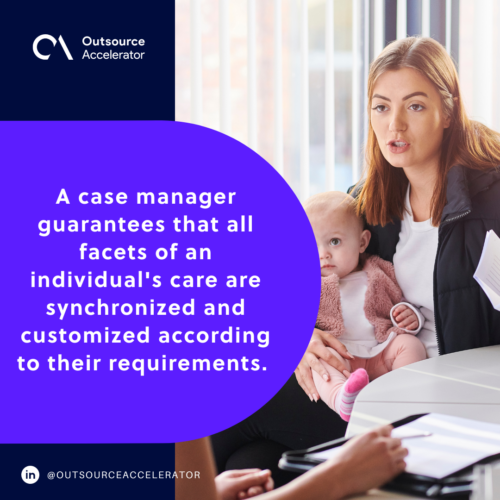
A case manager makes sure all parts of care are aligned and tailored. They open dialogue between providers and social agencies. As a result, care improves and duplicate services drop.
Improved health outcomes
Through coordination, case managers help people reach better health results. They confirm the right treatments and steady medication schedules. They also secure access to key support services.
Cost savings
A case manager helps lower healthcare expenses. They prevent needless hospital stays and readmissions. So clients can access cost-efficient care and avoid extra bills. Many providers pair this work with healthcare outsourcing to save even more.
Advocacy and support
Case managers act as client advocates. So they make sure each voice is heard and each worry is addressed. They also offer emotional support. In turn, they help people make well-informed choices about their care.
Streamlined care transitions
Moving between providers, hospitals, and care settings can be hard. It can also cause gaps in care. Case managers keep these shifts smooth. They coordinate services and offer support during change.
Expert guidance and resources
Case managers know the resources in their community well. So they help people tap the right support. For example, they point to financial aid, housing programs, or mental health resources. This way, all available help reaches the people who need it.
What to look for in a case manager
When you pick a case manager, several skills and traits matter. Look for a case manager who shows the qualities below.
Communication skills
Clear communication is vital to case manager duties. It helps them grasp client needs and work with many parties. It also helps them advocate well. So a strong case manager listens closely, asks good questions, and speaks with clarity.
Problem-solving skills
A case manager faces many hurdles in care coordination. So sharp problem-solving skills are a must. These skills help them clear obstacles and find creative fixes. They also help them adjust as things change.
Organization skills
The role is complex, so strong organization skills matter. Case managers juggle many tasks at once. They also keep accurate records and easy access to key details. Solid medical records management supports this.
Compassion and empathy
Empathy and compassion are key traits in this field. Case managers should connect with clients and grasp their unique situations. As a result, they can offer help with real care and understanding.

Choose the best case manager for successful case management
Case managers are vital in healthcare and social services. They offer tailored care, better health results, advocacy, and smooth transitions. When you choose one, weigh traits like communication, problem-solving, organization, and compassion. In the end, the right case manager helps you navigate complex systems and reach your goals with confidence.
Frequently asked questions
What are the main case manager duties?
They assess needs, build care plans, and arrange services. They also track progress and advocate for the client. So they coordinate care from start to finish.
What types of case managers are there?
The three common types are medical, social services, and mental health case managers. Each focuses on a set area. So each offers tailored support.
How is a case manager different from a social worker?
A social worker takes a broad view of a person’s well-being. A case manager, by contrast, is task-focused. So they coordinate services and resources.
Why hire a case manager?
A case manager improves care and health results. They also cut costs and ease transitions. As a result, clients get more from the system.
Key takeaways
- A case manager assesses needs, plans care, and coordinates services.
- The main types are medical, social services, and mental health case managers.
- They improve outcomes, cut costs, and smooth care transitions.
- Look for strong communication, problem-solving, organization, and empathy.






 Independent





