
Escape the small business trap: The E-Myth Revisited by Michael Gerber


What is The E-Myth Revisited about?
The E-Myth Revisited by Michael E. Gerber shows why most small businesses fail and how simple systems can fix that.
- It breaks the myth that being good at a craft means you can run a business.
- In addition, it teaches owners to work on the business, not just in it.
- It also uses a “Franchise Prototype” so the business runs without the owner present.
 The E-Myth Revisited
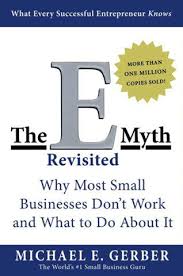 The E-Myth Revisited
 Why Most Small Businesses Don’t Work and What to Do About It by Michael E. Gerber
I. One Sentence Summary of the book
This book breaks the myths that surround starting your own business. In short, it helps you build a company that can run on its own.
II. Book Overview
The book clears away the false ideas that trap new business owners. For example, it shows how a simple wrong assumption can block your growth. Gerber then walks you through the life of a business. He starts at infancy and moves through to maturity.
Next, Gerber shows how to use the lessons of franchising. This works even if your business is not a franchise. Because of this, you learn to build repeatable systems.
Finally, he explains the key gap that owners often miss. There is a big difference between working on your business and working in it. Many owners who want to grow struggle here. Learning to delegate work as a founder is one way to close that gap.
III. Recommended for
Most owners learn the hard way. They fall first, then fix their situation on their own. Luckily, Gerber gives you a clear guide about plans and people. As a result, you can skip some of the pain.
He also offers a fair dose of reality. For example, he uses real numbers, strategy tips, and marketing insights. At times some examples feel small or plain. Still, the book delivers tough lessons in a short, simple way.
So this book suits both dreamers and doers. It fits anyone building the essentials of a small business. In short, it will help you grow in a productive way.
IV. Author Biography

Michael E. Gerber is a star of the small business world. In fact, Inc. Magazine once called him “the World’s #1 Small Business Guru.” He began this work decades ago to serve a real need in the market.
Over the years, his firms have helped many owners. As a result, small shops have grown into world-class operations.
V. Lessons Overview
Gerber argues that false systems cheat small business owners. Often, owners do the wrong type of work. So the returns fall short of the time and effort they put in. Because of this, many strong ideas still fail. Studying key entrepreneurship statistics shows how common this pattern is. Many owners fall for their own dreams and skip the basics.
These are the concepts that they follow:
- The Myth of the Entrepreneur
- The “Turn-Key Revolution”
- Development of business procedures
- Universal use of turn-key rules
“The people who own small businesses…work far more than they should for the return they’re getting.”
The myth of the entrepreneur. Legends about founders fill business history. The story says a bold person beats the odds and wins fame. However, this is rarely true. In reality, the first spark often turns into stress and doubt. Most firms start with barbers, bookkeepers, plumbers, and sales people. Then a life event pushes them to launch their own company.
“Great businesses are not built by extraordinary people but by ordinary people doing extraordinary things.”
Still, one bad assumption hurts them. They put too much faith in technical skill alone.
Three hats
Most owners fight a quiet tug of war. That is because they wear three hats at once. As a result, these roles fight for the owner’s limited time and energy.
“Luck and speed and brilliant technology have never been enough because somebody is always luckier, faster and technologically brighter.”
- “The Entrepreneur” is the dreamer who reaches for the stars.
- “The Manager” is the practical one who loves detail.
- “The Technician” does the hands-on work and knows the craft.
The Franchise Prototype
To thrive, a business must not lean on the founder alone. If it does, it is not a business. Instead, it is a stressful job for the owner.
A real business runs on a clear system. Because of this, it works well even when the owner steps away. The book calls this the “Franchise Prototype.” Gerber drew the idea from firms like McDonald’s and Burger King. Each has manuals that show exactly how to run the shop. To be clear, he does not say you must franchise. Instead, treat your business as if you could. So you need a detailed system to run it. A simple way to start is to document and automate routine business processes.
“The system runs the business. The people run the system.”
Your business and your personal life
Many owners mix their personal life into their work. Eventually, the business takes over their whole life.
“Without the numbers you can’t possibly know where you are, let alone where you’re going.”
Luckily, a few rules can protect your life from your business.
These are the rules:
- First, build a model based on the company’s core values.
- Next, design a system that staff with basic skills can run. As a result, the business leans on systems, not stars.
- Then make your system as clean as you can.
- In addition, write every procedure in clear staff manuals.
- Also, give customers the same service and products each time.
- Finally, set a dress code and a standard look for your offices.
“If your business depends on you, you don’t own a business. You have a job, and it’s the worst job in the world because you’re working for a lunatic.”
VI. Other learnings to look out for
Creating your own Prototype
Build your prototype with these steps in mind. A clear startup team structure makes each step easier.
“Your business is not your life.”
- First, name your primary goal.
- Next, state your strategic aim.
- Then define your organizational plan.
- Also, study your management plan.
- In addition, make your staffing plan clear.
- Finally, adjust your marketing plan.
VII. Personal Takeaways
- First, if the business runs your life, you have the worst job, not a company.
- In fact, owners often feel excitement, fear, fatigue, and doubt in turn.
- Also, at the start, the founder and the business feel like one thing.
- In addition, a strong operating system matters more than the product itself.
- For example, McDonald’s is the world’s “most successful small business.”
- Finally, in a smart company, the owner always plans ahead for growth.
VIII. Final Words
New businesses need real time and effort. Still, owners must keep their life and their company apart. So remind yourself of your dreams and goals often. You can learn more about the book on Gerber’s official company site.
IX. What other people are saying
You owe it to yourself to read this book. One reader said it changed their life. They run a small service firm with about 15 staff. For years they did all the manager work alone. The work was great, but the stress was high.
Needed advice for any organization. Another reader was a minister, not an owner. Still, the ideas helped their congregation. The best point was the role of the owner. In short, leaders must work on the group, not just in it. As a result, the church could grow past its usual limits.
A must for founders. One entrepreneur bought both the audio and the print copy. They called it one of the best books for a founder’s mindset.
From worker to leader. Another reader shared a few key nuggets. First, process has a real purpose. Next, you are the brain driving the body of your business. Finally, not making a decision is often the worst choice.
FAQ about The E-Myth Revisited
What does E-Myth stand for?
E-Myth means the “Entrepreneurial Myth.” It is the false belief that most firms are started by bold entrepreneurs. In truth, most are started by skilled workers who want to be their own boss.
What is the main lesson of The E-Myth Revisited?
The main lesson is simple. You should work on your business, not just in it. So build systems that let the company run without you.
What is the Franchise Prototype?
It is a way to design your business like a franchise. You write clear steps for every task. As a result, staff with basic skills can deliver the same result each time.
Who should read The E-Myth Revisited?
The book fits founders, small business owners, and future entrepreneurs. It also helps managers who want to build strong, repeatable processes.
Is The E-Myth Revisited still useful today?
Yes. The core idea still holds. Systems and clear roles help any business grow. Because of this, the book remains a popular pick for new owners.
Key takeaways
- In short, The E-Myth Revisited explains why most small businesses fail early.
- So owners must work on the business, not only in it.
- In addition, clear systems like the Franchise Prototype drive steady growth.
- Still, strong processes matter more than raw technical skill.
- Keep your business and your personal life apart to stay sane.






 Independent





