
Guaranteed hacks to try in small business branding


Does small business branding matter for a small company?
Yes, small business branding matters just as much as it does for big firms, because it builds trust, sets you apart, and turns first-time buyers into loyal customers.
- Branding is not only for large companies. Small firms need visibility too.
- A clear, relatable brand helps you win a niche and grow revenue faster.
- Simple, steady habits beat big budgets when you build a brand.
Starting a business is hard. Keeping one alive is just as hard. There are so many firms in the market now. So finding the right niche, pain point, and selling point takes real work. Still, learning the trade pays off. As a result, it builds the maturity and creativity that fresh small business branding needs.
Many owners think branding is only for big names. However, that is a myth. Small businesses need as much visibility as established ones. It can be a challenge at first. Still, done well, strong branding brings in steady revenue. For example, by outsourcing some tasks to firms like Acquire Intelligence (formerly Acquire BPO), small businesses can focus on growing their brand. Below are some proven tips for small business branding success.
Small business branding trends to know in 2026
Business brandings change fast. New products and tools arrive each year. As a result, the market wants better, fresher, and more relatable products. Today, small business branding still leans on hybrid work, remote sales, and strong online channels. These trends include the ones below.
Trend 1: Chatbots
Chatbots on your website and social pages help a lot. First, they give round-the-clock answers to customers across the globe. In addition, they log every query, so nothing slips through the cracks.
Trend 2: Online platform
Peer-to-peer marketplaces and other e-commerce sites keep a strong presence. Most of the world now leans on these platforms to shop. So this is a huge chance for firms of any size to tap new buyers.
Trend 3: Live product testing
Alongside online platforms, many brands use Facebook, TikTok, and YouTube to show off products. For example, live taste tests or simple challenges draw a crowd. As a result, they win the visibility a small brand needs. Steady social media management keeps these channels active between launches.
Trend 4: Collaboration
Content collaboration is now big across social media. So this is a golden chance to promote your brand with help from others. For instance, there is a wide range of influencer partnerships to pick from, from rising voices to famous names.

Effective small business branding strategies you should try
Small businesses have limited money and clout to lean on. Part of the growing pains of any startup is making a name for itself. In the first few years, it can be hard to find a niche and earn a fair return. However, with tested small business branding, you can shorten and soften that path. Some of the best branding moves are below. Many owners pair them with outsourcing for small business to free up time for the brand.
Branding Strategy 1: Personalization never fails
Every brand claims it is the best in the market. They also promise they are the cheapest. That is a given, so it will not set a small business apart. Instead, the most important part of small business branding is that it feels relatable. Customers need to see themselves in the brand and feel the urge to stay loyal. Good customer service also shapes how people view your product. As a result, the more practical it is, the stronger your bond with buyers.
Branding Strategy 2: Exclusive deals and promos
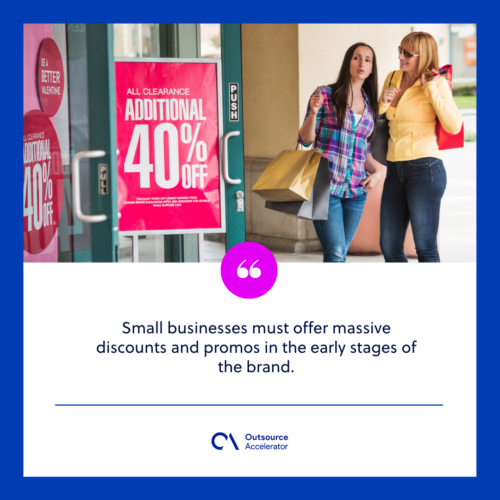
Everybody loves a discount. Even on a tight budget, many will squeeze in the purchase. So small businesses should offer solid deals in the early stages of the brand. This builds a loyal base. At the same time, it proves the quality of your products. Later, as the brand grows, you can ease back on promos. Markups will hold, because the value is now clear.
Branding Strategy 3: Algorithms dominate
The online world runs on algorithms. These platforms show users their interests, plus paid ads. The ads are frequent, often popping up every few minutes. Paid ads also come in many price tiers. So a small business can pick a package that fits its needs and budget.
Best practices for small business branding
A silver-bullet strategy for small business branding does not exist. Every company has its own story to tell. As a result, there are many versions of a single approach. Online success is not one fixed path either. It comes in many shades. Still, some common moves work again and again. Research by Lucidpress on brand consistency found that a consistent brand can lift revenue by up to 33%. The proven best practices are listed below.
Best Practice #1: Visuals matter
No matter the size, firms should invest in how their products look. People are drawn to clean, appealing visuals. In fact, good design signals skill, trust, and class. It does not need to be fancy. A sleek, smart look will do. If design is not your strength, you can outsource graphic design at a low cost.
Best Practice #2: Invest in the messaging
Slogans and taglines matter. They should sum up the goal of the business and the real benefit of the product. Witty lines create buzz and get shared online. The rule of thumb is simple. Stick to the core goal of the business. Strong content marketing then carries that message across every channel.
Best Practice #3: Online spending
Keep paid ad spending lean at first. Test which option works for your case. For example, run a small ad and track the result. Then adjust the budget once you see clear proof of what pays off.
Best Practice #4: Presence
Know the best online platform for your business. Different social media sites and e-commerce websites serve different market segments. So learn these dynamics first. Then you can spot which platform works best and invest for an online boost.

The key to effective small business branding
Every business has its own success story. Some do well in the first few months. Others need more time and a bit of luck. Either way, small business branding helps young firms scale. However, the key is knowing what works and what does not for your company. The market keeps moving online and getting more automated. So small businesses must use this shift to grow. In short, the fastest way to scale is a varied, steady branding approach.
Frequently asked questions about small business branding
What is small business branding?
It is the work of shaping how people see and feel about your small firm. This covers your name, logo, voice, visuals, and service. Done well, it helps buyers trust you and remember you. As a result, more of them choose you over a rival.
How much should a small business spend on branding?
There is no fixed figure, and you do not need a big budget. Start with a clear message, a clean logo, and steady social posts. Then add paid ads in small, tested amounts. Over time, you can scale spending as sales prove the return.
Can a small business outsource its branding?
Yes, and many do. Owners often hand design, content, and social tasks to outside teams. This frees up time to run the business. Meanwhile, skilled help keeps the brand sharp and current.
How long does small business branding take to work?
It takes patience, not an overnight win. Some firms see traction in a few months. Others need a year of steady effort. The key is to stay consistent, because trust builds slowly.
What is the most common small business branding mistake?
The biggest slip is sounding like everyone else. Claiming to be the “best” or “cheapest” means little on its own. Instead, focus on being relatable and useful. So show real value, and let loyal customers spread the word.






 Independent






