
8 best online learning platforms in 2026


What are the best online learning platforms in 2026?
The best online learning platforms in 2026 include iSpring LMS, Udemy, MasterClass, Skillshare, Udacity, Coursera, Pluralsight, and EdX.
- Each platform suits a different goal, from staff training to degrees.
- Prices range from free courses to monthly subscriptions.
- Teams use them for onboarding, upskilling, and certification.
List of the best online learning platforms in 2026
Technology keeps reshaping the business world. So organizations must keep up with fast-moving tech trends. As a result, they can grow and stay competitive.
For staff development, HR teams can use today’s tools in their training plans. Online learning platforms help employees build skills through many courses. So they support real professional growth.
Significance of online learning platforms today
Businesses now work in a highly digital setting. Remote and hybrid work are common, so teams rely on online tools to collaborate. Online learning platforms fit right into this shift.
However, online learning is not new. In fact, statistics show that 77% of US companies already used e-learning back in 2017. So the trend was rising well before remote work spread.
Besides remote work tools, these platforms matter more than ever. They serve students, yet they also help working professionals. As a result, they support staff from onboarding through advanced training.

These platforms act as one-stop resources. For example, they hold lectures, quizzes, and mentor chats in one place. Some also offer degrees or certifications. Meanwhile, others focus only on short courses.
5 key advantages of online learning platforms for the company
Online learning platforms help employers in several ways.
Cost-saving
Traditional training costs add up fast. For example, firms pay for trainers, rooms, food, and travel. However, digital training cuts most of these costs. So companies save a large part of their budget.
Continued access to resources
These platforms work anytime and anywhere. So employers can share resources on demand. As a result, remote employees can train from any location.
Global collaboration
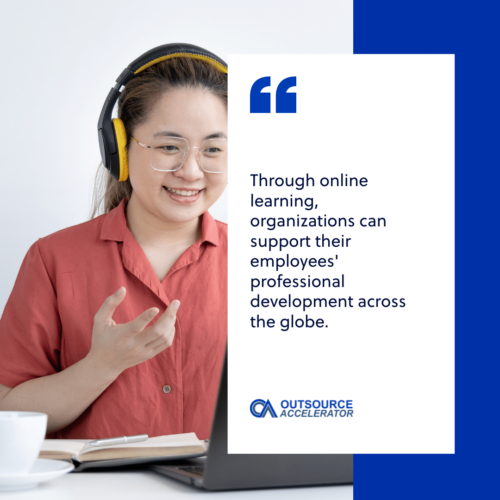
Online learning also suits global teams. So firms can support staff growth across regions. In addition, leaders from different countries can build course content together.
Employee retention
Today’s workers want flexible options. So they value training they can take at their own pace. As a result, morale rises, and staff are more likely to stay.
Consistent training quality
Online platforms keep training standards steady. In face-to-face sessions, quality can vary by instructor. However, digital courses give every employee the same high-quality content.
3 key advantages of online learning platforms for the employees
Employees gain clear perks too.
Support for career success
The business world moves fast. So workers must keep sharpening their skills. These platforms offer many courses. As a result, staff can learn new skills or deepen current ones.
Self-paced learning
Employees do not have to pause their day jobs. Instead, they can learn during breaks or free time. So training fits around real schedules.
Better soft skills
Courses run through webinars, video calls, or recorded lessons. So learners still engage with instructors and peers. As a result, they build both communication and tech skills.
8 best online learning platforms in 2026
Below are the top 8 online learning platforms for 2026. They suit business teams, students, and anyone eager to upskill.
1. iSpring LMS
iSpring LMS is a cloud-based learning management system built for fast, efficient staff training. Its clean interface makes it easy to create, assign, and track courses. So learners stay engaged, and managers see clear progress.
The platform supports video lessons and SCORM-compliant content. In addition, it includes a built-in tool for scrollable courses with quizzes. With automated alerts and detailed analytics, iSpring LMS streamlines training and drives measurable results.
It suits businesses of all sizes. As a result, teams get consistent training across remote and global sites. So employees build skills at their own pace without disrupting daily work. Flexible prices begin at $3.97 per user per month, billed annually.
2. Udemy
Udemy hosts a huge library of video courses for professionals and students. It also adds new courses every month. Popular categories include marketing, design, software development, business, and IT. In addition, it covers personal growth, music, and photography.
Instructors mix video, audio, and text in their lessons. So courses stay engaging. They can also add reading, quizzes, and group tasks. Lifetime access to a course starts at around $11 and can top $200.
3. MasterClass
MasterClass suits professionals in writing, music, acting, and cooking. Its courses often run more than 20 lessons. Famous experts teach them, such as Gordon Ramsay, Anna Wintour, and Shonda Rhimes.
Courses are video-based, with workbooks and discussions. The platform runs on a subscription that starts at around $15 per month. So members can take many courses within the plan.
4. Skillshare
Skillshare is less formal and more creative. For example, its courses focus on film, photography, animation, and writing. Besides video lessons, most classes include assignments. So learners practice what they study. A class can run from 20 minutes to several hours. Pricing starts at around $14 per month when billed annually.
5. Udacity
Udacity centers on IT professionals. It is known for its coding bootcamp style. Its courses cover artificial intelligence (AI), programming, cloud computing, and data science.
Classes often run in real time with instructors and coaches. So learners get hands-on practice and code reviews. Udacity’s courses start at around $399 per month.
6. Coursera
Coursera offers academic courses from universities worldwide. It has partnered with more than 200 institutions. So workers can earn certifications or even full degrees. Courses are priced individually, starting at around $30 per month. With Coursera Plus, users get unlimited access to thousands of courses each year.
7. Pluralsight
Pluralsight also serves IT professionals. For example, it covers cybersecurity, data science, and software development. It offers single courses, yet it favors its Paths collections. Each Path bundles courses for one specialty. Pricing starts at around $29 per month for a personal plan.
8. EdX
MIT and Harvard University founded EdX. It has partnered with top universities to offer real college courses and micro degrees. Real professors teach the classes, with lectures, readings, and quizzes. Most courses are free. However, a verified certificate costs around $49 per class.
Key takeaways
- Online learning platforms suit training, upskilling, and degrees.
- iSpring LMS is a strong choice for company-wide staff training.
- Udemy, Skillshare, and MasterClass fit broad, flexible learning.
- Udacity, Coursera, Pluralsight, and EdX serve technical goals.
- Prices range from free courses to monthly subscriptions.
Frequently asked questions
Which online learning platform is best for employee training?
iSpring LMS is built for staff training. So it makes course creation and tracking simple. As a result, teams get consistent results across sites.
Are online learning platforms worth the cost?
Yes. They cut trainer, room, and travel costs. In addition, staff learn at their own pace. So most firms see a strong return.
Which platform is best for technical skills?
Udacity and Pluralsight focus on IT and coding. Meanwhile, Coursera offers university-backed technical courses. So each suits different depth needs.
Can I earn a degree through an online learning platform?
Yes. Coursera and EdX offer certifications and full degrees. So learners can gain recognized credentials from home.
Do online learning platforms support remote teams?
Most work anytime and anywhere. So remote staff can train from any location. As a result, they suit global teams well.






 Independent





