
Analyzing customer sentiment the right way (without overdoing it)


What is customer sentiment analysis?
Customer sentiment analysis is the process of reading how customers feel about your brand, then using those emotions to guide better decisions.
- It tracks whether opinions about your company are positive, negative, or neutral.
- It draws on reviews, social posts, surveys, and direct messages.
- Done well, it helps you fix problems early and grow customer trust.
“The customer is king” is a popular idea that businesses follow every day. As a company, your job is to read customer sentiment and keep your market happy with what you offer. So every choice should start with how people actually feel.
Every customer interaction carries emotion and opinion. This is true for online ads, calls, and social media chats alike. In addition, these opinions shape the reputation your brand earns over time.
For example, positive insights make them spend more and stay with your company longer. Negative feedback, on the other hand, can make them think twice. Because of this, customer sentiment can guide how you manage opinions and support growth. Read on to learn how customer sentiment helps you and how to analyze it the right way.
A quick look at customer sentiment analysis
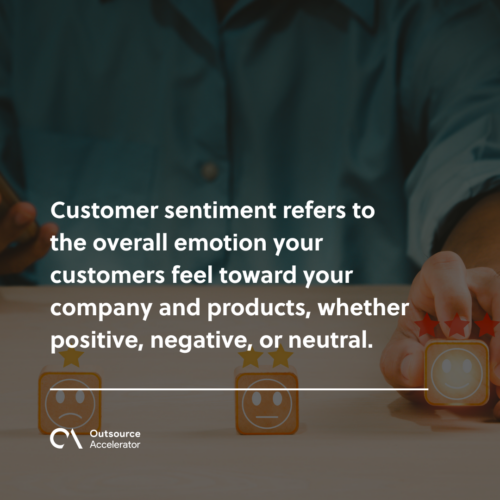
Customer sentiment refers to the overall emotion your customers feel toward your company and products. It can be positive, negative, or neutral.
Still, it differs from satisfaction. While customer satisfaction deals with specifics, such as the experience of using a product, customer sentiment sits more on opinions and thoughts about a business.
Customer sentiment analysis, meanwhile, is the way you work out those emotions from the language people use. Most of it comes from their opinions and responses on social media posts and website reviews.
So this work helps you read overall reactions to your product, reply to them well, and gather clear cues for improvement.
Why customer sentiment matters
Companies mainly use customer sentiment to improve the business and grow from the inside. In particular, it helps you build up several parts of your organization, which include the areas below.
Customer service
Customer service has become more demanding through the years. For example, Zendesk data shows that 73% of consumers will switch to a competitor after multiple bad experiences.
So a single misstep is reason enough to improve your support. This is where surveys should level up with sentiment analysis. As a result, you can learn which features make people happy and which ones frustrate them. Mapping the main areas of customer service makes those gaps easier to spot.
Product offerings
Customers love to see your products improve the longer they use them. In addition, customer sentiment points you to industry trends, market insights, and best practices on product release.
It also gives hints on the following:
- Major and minor problems of a product, such as bugs, security patches, and crashes;
- Future improvements to consider on the next release;
- Increased support on several platforms, whether on smartphones or desktops; and
- Additional support that can help with their needs.
Marketing strategies
Marketers can use customer sentiment to track the latest trends and insights that appeal to buyers. As a result, you can build campaigns that fit, attract and convert more leads, and earn a bigger return on investment (ROI).
For example, you can study your competitors’ products, spot their weak points, and improve your own before launch. Short videos and rising platforms, such as TikTok, can also grow your audience faster. In fact, strong sentiment data feeds straight into your customer service and support plans too.
Proactive operations
In general, customer sentiment pushes you to be proactive. Through posts, feedback, and reviews, you learn what customers want and act on it early. This focus also lifts long-term customer retention across the board.
Partnering with outsourcing firms like OP360 may also help you maximize customer satisfaction. Its dedicated team will help you enhance your brand by building customer feedback into your products and services.
Comparing direct and indirect sentiments
You can measure customer sentiment in two ways: through a direct or an indirect approach.
Direct sentiments are feedback and insights given straight to your business. Here, customers take time to reach out by email, feedback form, or direct message to share how they feel.
So this gives you the chance to talk with them directly and answer their questions in your replies.
On the other hand, indirect sentiments are reactions that come from social media posts, hashtags, and other content that reaches a wide audience.
Platforms such as Facebook, Twitter, and YouTube have a way of tracking mentions about your company. With this, you can see any positive or negative feedback about your services and products.
Sometimes you may even find a song made about it, like in this viral United Airlines feedback. Because of this, watching the right channels can protect your brand reputation before a small issue spreads.
How can you evaluate customer sentiment?
As a company seeking growth, you want to know how your audience talks and feels about your business. Luckily, online tools and simple best practices make this easier to do anytime.
Gather sentiments
As noted, customer sentiments show up directly and indirectly. They also take different forms, such as:
- Word of mouth. Word of mouth is the most basic yet effective way to market and gather sentiment. You can capture it through the “How did you hear about us” part of a form.
- Social media. This is the most complex yet rewarding form of sentiment. Most companies have a team that monitors social mentions on Facebook, Twitter, and Instagram.
- Customer reviews. Most sites now let you build review forms on your own website. Unlike social mentions, reviews are easier to collect and analyze because they come from one central place.
- Customer satisfaction (CSAT) surveys. Finally, you can add a feedback box at the bottom of your CSAT surveys, one of the clearest ways to gather sentiment.

Learn to read between the lines
Simple feedback can say a lot about overall satisfaction. Negative sentiment can throw off your momentum and discourage you. However, what customers really want is for you to listen and improve. So you should learn to read their reviews more deeply.
Using the iceberg principle, try to read the tone behind each review. As a result, you will be surprised by the value you can pull from them.
Act on the analyzed sentiments accordingly
In the end, customer sentiment should be one of your tools for making informed plans. So act on what you receive, and take needless negative remarks with a grain of salt.
As much as possible, keep your emotions in check and stay humble in your replies. This way, you avoid being painted in a bad light. Over time, you will notice higher satisfaction and stronger profit.
Mastering customer sentiment analysis today
Reviews and sentiment can make or break your company. This is because they tie closely to the experience people get with your products and services.
From these insights, you can work through problems in a granular way and build solutions step by step. So start gathering and acting on them with online tools for surveys and social media monitoring.
This work can get complex as your market grows. Because of this, many teams outsource it to a small, focused group that can handle it better. What matters most is that you act on the sentiment and use it the right way.
Frequently asked questions about customer sentiment
What is the difference between customer sentiment and customer satisfaction?
Customer satisfaction measures a specific experience, such as a single purchase or support call. Customer sentiment is broader. It captures the overall feeling and opinion people hold about your brand across many touchpoints.
Which tools help with customer sentiment analysis?
Survey platforms, review dashboards, and social listening tools are the most common. Many now add AI to sort comments by tone at scale. So a small team can track thousands of mentions without reading each one by hand.
How often should you measure customer sentiment?
Treat it as ongoing rather than a one-off project. Light weekly checks on social mentions work well, paired with a deeper review each quarter. This rhythm helps you catch shifts before they turn into churn.
Can customer sentiment analysis be outsourced?
Yes. Many firms hand the day-to-day monitoring to a dedicated offshore team. The team flags trends and urgent issues, while your in-house staff decides how to act on them.






 Independent






