
6 Mistakes to avoid in custom healthcare software development


What are the biggest mistakes in custom healthcare software development?
The biggest mistakes in custom healthcare software development are unclear requirements, thin budgets, weak user experience, poor team communication, skipped testing, and no post-launch support.
- Clear goals and realistic budgets keep a build on track from day one.
- Strong testing and good user experience drive adoption and cut costly rework.
- Ongoing support keeps the software secure, compliant, and useful over time.
Reliable software is no longer a luxury for healthcare providers. Instead, it is a basic need. It helps teams manage patient data, automate routine tasks, and focus on better care.
Industries like healthcare, e-commerce, finance, and logistics all gain a lot from custom software development.
For example, healthcare providers use custom tools to track patient records safely. E-commerce firms, on the other hand, rely on tailored platforms to handle orders. Meanwhile, banks use special tools for data analysis and risk checks.
However, custom healthcare software development brings its own set of hurdles. So this article highlights six common mistakes you must avoid on your build journey.
What is custom software development?
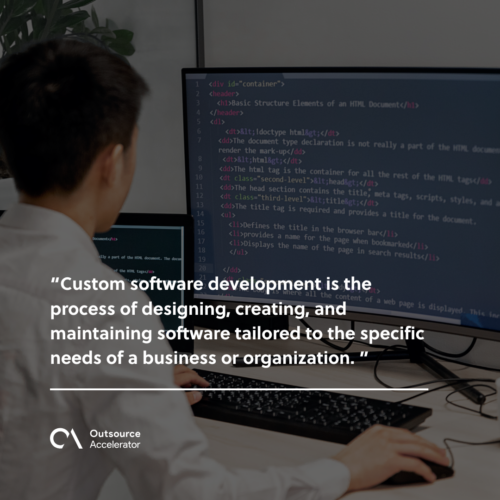
Custom software development is the work of designing, building, and maintaining software for the specific needs of one business. In short, it is software made to fit, not bought off the shelf.
Unlike ready-made tools, custom software solves unique problems and gives you more control. As a result, it offers far more flexibility. It can serve many goals, from smoothing internal work to improving customer experiences.
This approach helps a business gain an edge. Because the tools match real workflows, teams work faster and with fewer errors. In addition, custom software links easily with systems you already run. For a deeper look, see this guide to the stages of a software build.
How does custom software development boost work efficiency?
Statista projects the global software market to grow to over $896.20 billion by 2029. So demand for tailored tools keeps climbing fast.
Custom software boosts work efficiency because it fits the exact needs of one team. As a result, staff spend less time on workarounds. Here are some of the clear gains it brings:
- Tailored solutions. Custom software fits your real processes. So it cuts the need for workarounds and lifts output.
- Automation of routine tasks. Custom tools handle repeat tasks. As a result, staff focus on higher-value work.
- Scalability. As you grow, the software adapts to new users and data. So daily work keeps running smoothly.
- Better integration. Custom software connects with current systems. In addition, it cuts manual data entry and errors.
- Improved collaboration. Features like shared databases and task tools help teams work as one.
- Enhanced user experience. Software built for your staff is easy to learn. So training time drops and satisfaction rises.
Ultimately, custom software streamlines work and helps you get better results. Many firms pair it with outsourced healthcare support to stretch budgets further.
6 Common pitfalls of custom software development to avoid
Failing to plan for these common hurdles can waste money, delay launch, and leave you with poor results. So it pays to spot them early.
1. Lack of clear requirements
One of the biggest mistakes is skipping clear, detailed requirements at the start. Because the goal stays fuzzy, you get confusion, delays, and costly revisions later.
2. Underestimating time and budget
Custom software projects often run past their first time and budget estimates. So set realistic timelines and keep a buffer for surprises. For tips, see these ways to keep build costs in check.
3. Neglecting user experience
Custom healthcare software must be easy to use. However, if you ignore user experience, staff struggle to navigate it. As a result, adoption drops and work slows down.
4. Poor communication with the development team
Good communication drives every build. Still, many teams skip regular check-ins. Because of this, expectations drift apart and progress stalls.
5. Skipping testing and quality assurance
Rushing a build without testing leads to bugs and poor performance. So test at every stage to catch issues early. Strong quality assurance standards help prevent bigger problems later.
6. Lack of post-launch support
Once software goes live, many firms forget about upkeep. However, without updates, bug fixes, and monitoring, the tool soon turns outdated or unsafe. So plan support from the start.
Avoiding these pitfalls helps you reach a smooth, efficient custom software result. For smaller teams, this guide to custom software for small and midsize firms adds useful context.
Simplify your software development with Orangesoft’s expertise
Simplify your software journey with Orangesoft’s expertise. Whether you work in healthcare or another field, the team builds tailored, high-quality tools for your needs.
Learn more about Orangesoft’s services and how its seasoned experts can help.
Frequently asked questions about custom healthcare software development
Here are quick answers to what buyers ask most before they start a build.
How long does custom healthcare software development take?
Timelines vary by scope, but a focused first version often takes three to six months. Larger platforms with many integrations can run a year or more. So agree on phases and milestones early to keep momentum.
Is custom software worth it for a small clinic?
It can be, when off-the-shelf tools cannot match your workflow or compliance needs. For tight budgets, a small first release keeps spend low. Then you add features once the core proves its value.
How do you keep patient data secure during a build?
Build security in from the first sprint, not at the end. Use role-based access, encryption, and audit logs. In addition, test against the privacy rules that cover your region before you go live.
Should you build in-house or outsource the work?
It depends on your in-house skills and timeline. Outsourcing gives you a ready team and proven process. Meanwhile, an in-house build suits firms with steady, long-term software needs and the talent to staff them.






 Independent






